A limping dog should be assessed according to pain, ability to bear weight, injury history and other symptoms—not by a guessed diagnosis. Sudden inability to use a limb, major trauma, an abnormal limb position, severe pain or collapse warrants urgent veterinary assessment. A dog with a milder limp still needs a veterinary call, particularly when it persists, worsens or returns. Restrict running and jumping until you have guidance. Never give human pain medication without a veterinarian’s instruction: common human medicines can be dangerous for dogs.
Start with what you can see safely
Limping is a visible change in how a dog walks, but it does not identify the injured structure. VCA Animal Hospitals describes lameness as potentially involving bones, joints, muscles, ligaments, tendons, nerves or skin. A paw cut and a painful joint can produce similar-looking avoidance of weight-bearing. Your first job is to decide whether your dog appears stable enough for a careful phone call or needs emergency help. If the dog cannot stand normally, cries out in pain, shows an obviously deformed leg or has suffered significant trauma, avoid walking it around to ‘test’ the problem.
If the dog is standing comfortably, observe a few ordinary steps on a non-slip surface without encouraging strenuous movement. Notice which limb appears affected and whether the dog avoids putting weight on it entirely. Do not repeatedly make the dog walk for a video. Note when the limp began, whether it followed play, whether the dog has been licking a foot and whether the problem appears worse after rest or after activity. Those observations can help the veterinarian decide what examination and imaging, if any, are appropriate.
Know the situations that should not wait
Cornell’s emergency and urgent-care guidance distinguishes non-weight-bearing lameness and certain major injuries from problems that may be assessed through an urgent-care pathway. A dog unable to use a limb, with severe pain, significant bleeding, suspected fracture, collapse or breathing difficulty needs prompt emergency assessment. If a vehicle strike, fall or other major trauma occurred, internal injuries may not be obvious from the condition of a leg. Contact an emergency hospital rather than treating the visible limp as the only concern.
A dog that can walk but is increasingly uncomfortable also warrants timely guidance. New weakness, dragging paws, loss of coordination, severe back or neck pain or loss of normal function can point to problems beyond a simple foot injury. A phone call can establish whether the clinic wants to see the dog immediately, later that day or at a scheduled appointment. Do not rely on a universal internet rule such as ‘wait three days’; the right timing depends on severity, age and clinical history.
The paw may be the problem—but do not assume it
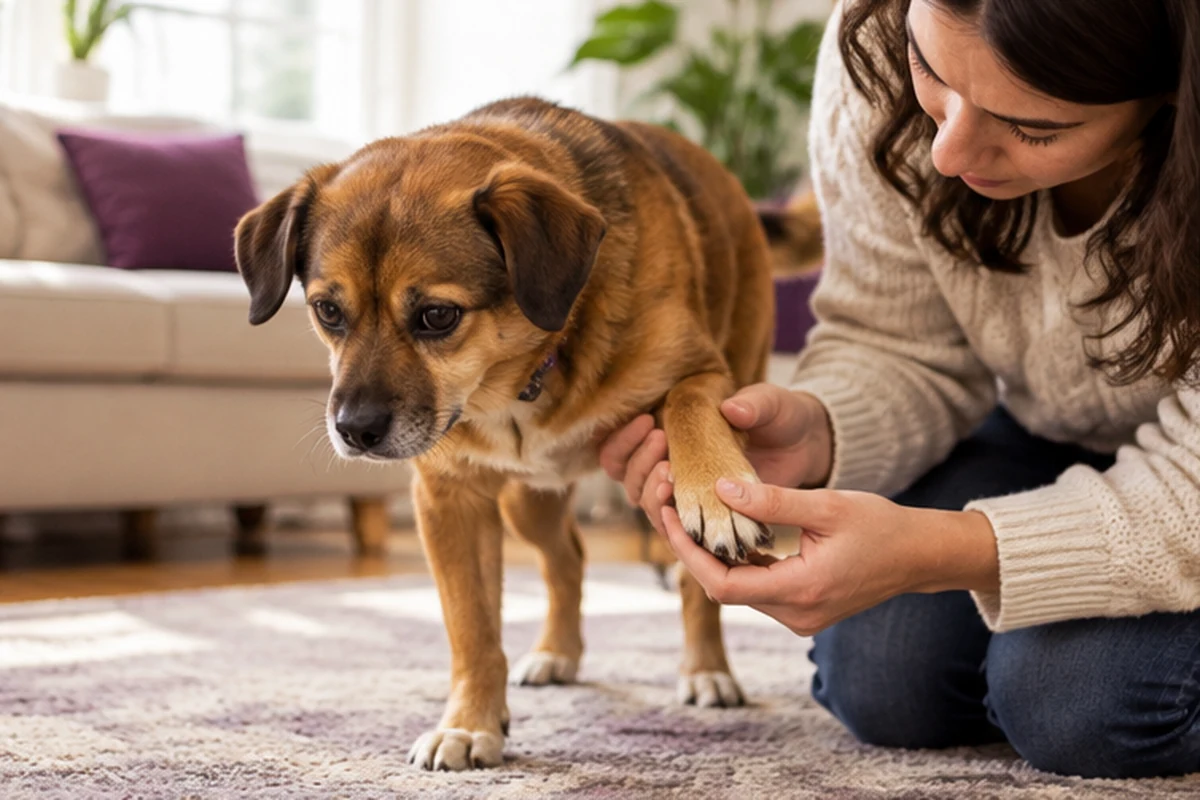
Because a small paw injury is sometimes visible, it is reasonable to look briefly for a broken nail, obvious cut or something caught between the toes if your dog is calm and allows it. VCA’s first-aid guidance advises caution: an injured dog may bite from pain, and manipulation can worsen certain injuries. Stop if your dog resists, cries out or seems frightened. Avoid bending joints, pushing on the leg or pulling at anything embedded deeply in the skin. A superficial look is not a full orthopedic examination.
Check whether swelling, redness or bleeding is visible, and note any licking focused on a single location. Keep the dog from running while contacting your clinic. A small nail injury may be painful enough to change gait, but so may a ligament problem that leaves no external mark. Finding a minor-looking scratch does not rule out a second injury. The safest useful information is what you noticed, when it began and how much weight the dog appears able to bear.
Sudden versus gradual limping tells a different story
A limp that begins during a jump or after a sharp turn creates a different clinical history from one that develops over several weeks. Acute problems can include soft-tissue injuries, nail injuries, joint injuries, fractures or dislocations; chronic or intermittent lameness has a broader possible list that can include arthritis, orthopedic conditions or neurologic problems. VCA emphasizes that the examination and history are needed to identify the cause. Neither pattern can be diagnosed accurately just from timing or the dog’s breed.
If the limp seems to disappear after warming up, do not conclude the dog is fine. Some dogs with discomfort move differently after rest. If it appears only after a long walk, that detail also matters. Keep a short record of the circumstances instead of turning it into a trial of how far the dog can run before limping again. For a dog with an existing condition, tell the veterinarian about previous episodes and treatments. Recurring limping is not automatically the same injury returning.
What the veterinarian may evaluate
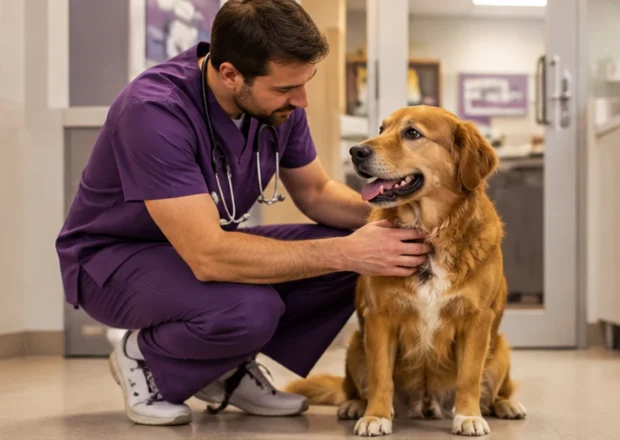
The clinic may begin with a medical history and observation of gait, then examine the paws, joints, muscles, back and neurologic function. Depending on the findings, the veterinarian may consider radiographs, other imaging or laboratory tests. Not every limp needs an X-ray, and an X-ray cannot detect every type of soft-tissue problem. Ask what the recommended test is expected to clarify and what decisions depend on its result. The team may also recommend sedation for certain examinations or imaging when comfort and positioning are important.
The clinician will consider the dog’s age, weight, activity, breed-related predispositions and earlier health conditions without using any of them as a substitute for examination. A growing puppy with a limp deserves a different assessment from an older dog with known joint disease. If the veterinarian recommends a recheck, ask which changes should lead to an earlier visit. A plan based on examination can evolve as swelling, pain and mobility change over the following days.
Activity restriction is different from treatment
While waiting for veterinary advice, limit vigorous activity such as running, jumping, stairs and rough play. Use a secure lead for necessary bathroom trips when safe, and provide a comfortable non-slip resting area. The purpose is to reduce opportunities to worsen a possible injury; it is not a diagnosis or a prescription for how many days of rest will be enough. A dog with a severe injury may need assistance moving, and the safest technique depends on size and suspected injury. Ask the veterinary team before attempting a homemade splint or unusual restraint.
Do not massage a painful joint or attempt stretching because an online video makes the technique look gentle. Ice or warmth may be appropriate in some circumstances, but the clinician should advise on the injury and timing. Most importantly, avoid giving aspirin, ibuprofen, acetaminophen or leftover pet medications unless specifically directed by a veterinarian. Even medicines previously prescribed for this dog may be inappropriate for a new problem or with other drugs the dog is receiving.
The cost of a limp depends on the cause
A veterinary visit for limping may involve an examination alone, or it may lead to imaging, pain management, referral or treatment. A cut pad, ligament injury and suspected fracture have different clinical pathways and price structures. Instead of searching for one ‘dog limp cost,’ ask the clinic for an estimate of the recommended first step and which additional services might follow different findings. A clear estimate should distinguish the consultation from diagnostics, medication and any return visits.
If the veterinarian recommends surgery or specialty consultation, request an explanation of the medical reason, alternatives, expected recovery and follow-up obligations. A low initial estimate is not necessarily the lowest total cost if important care remains. Conversely, more tests are not automatically better if they do not change the management decision. Your role is to understand the reason for each recommendation; only a veterinarian can judge which plan is medically appropriate for the individual dog.
Where insurance may and may not help
Accident-and-illness pet insurance may cover some eligible lameness-related evaluation or treatment, subject to exclusions and policy terms. Coverage can depend on when signs first appeared, waiting periods, the condition involved, the date of enrollment and whether the item is eligible under the contract. A plan bought after the dog starts limping should not be assumed to cover that episode. A prior limp may also matter even without a definitive diagnosis because some pre-existing-condition definitions include symptoms documented before coverage began.
Keep the invoice, diagnostic findings and clinical notes if you have coverage. Ask the insurer what documentation is required and whether specialty care has additional rules. Do not delay urgent veterinary care while trying to predict reimbursement. An owner may need to pay the hospital before filing a claim, and the insurer may calculate payment after deductibles, reimbursement percentages and limits. Insurance is a financial arrangement, not a determination of medical urgency.
Follow-up is part of finding the answer
After a diagnosis, ask for a concrete home-care plan: permitted activity, medication timing, warning signs and the expected recheck. If the dog needs a cone or other device to stop licking, make sure it fits and that you understand how to use it safely. For recovery, record whether comfort and weight-bearing are changing as expected; contact the veterinarian if the plan is not working. Do not increase activity because the dog suddenly appears enthusiastic. Pain can fluctuate, and the underlying structure may need more time than visible behavior suggests.
A useful follow-up question is ‘What would make you change the plan?’ That invites the veterinarian to explain which developments suggest healing and which would trigger reassessment, further testing or referral. If the dog has repeated episodes, ask whether environmental changes, weight management, rehabilitation or longer-term monitoring would help after the cause is established. Do not label an ongoing limp as a permanent part of aging without discussing it with a professional.
The observation checklist to bring
Write down the first date and circumstance, the suspected limb, ability to bear weight, whether there was trauma and any visible wound. Add changes in appetite, energy, breathing and behavior, and list all current medications. A short gait video taken without making the dog exert itself may be helpful. Keep the description factual: ‘hesitates to put the left front foot down on waking’ is more useful than ‘definitely tore a tendon.’ Avoid pressing on the painful area to recreate the symptom for the camera.
The central decision is not which diagnosis sounds most plausible online. It is whether your dog needs immediate care, what the veterinarian needs to know and how to prevent further injury while getting an answer. If the dog is distressed, cannot use a limb or has other serious signs, seek urgent care. A milder limp still deserves attention when it persists or recurs. Watching carefully is helpful; waiting indefinitely for it to disappear is not.
Research sources
- VCA Animal Hospitals: First Aid for Limping Dogs
- VCA Animal Hospitals: Lameness in Dogs
- Cornell University Hospital for Animals: Urgent Care
- Cornell University Hospital for Animals: Emergency and Critical Care
Research reviewed October 9, 2026. This guide does not diagnose a limp; use a veterinarian for assessment and medication advice.