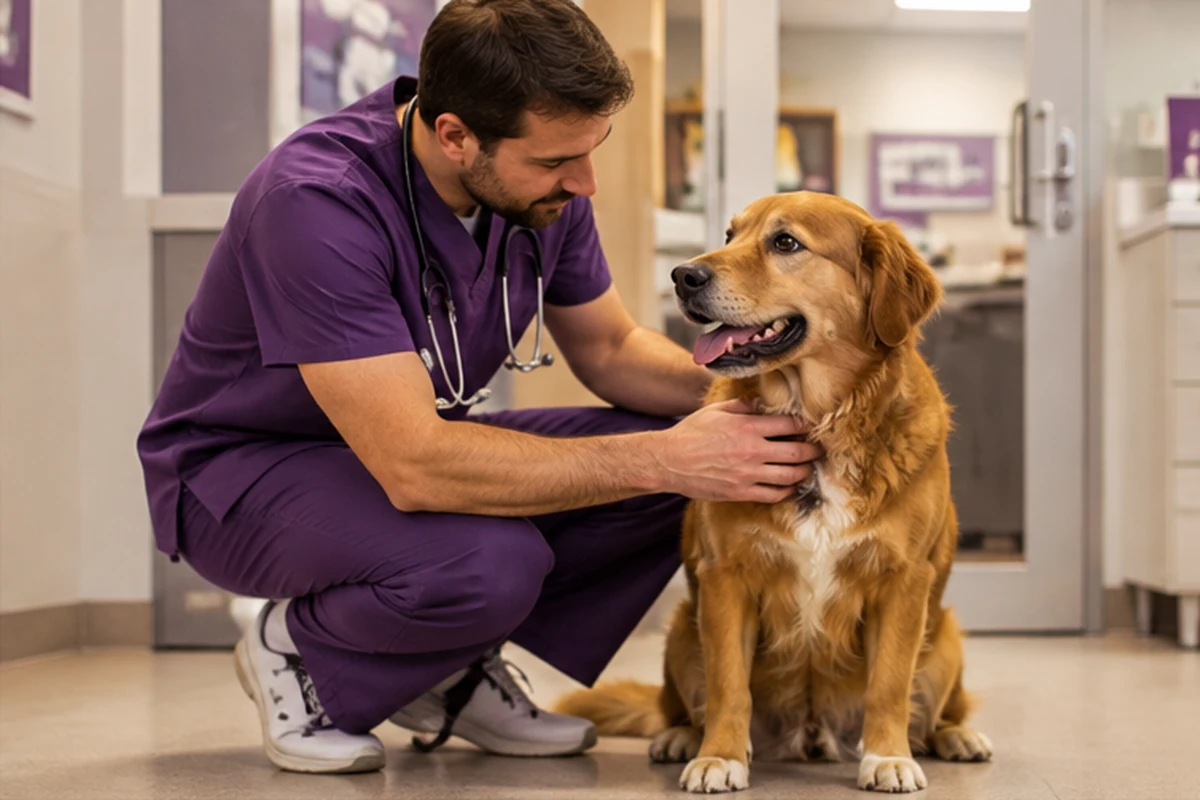
Difficulty breathing, collapse, major trauma, seizures, suspected poisoning, inability to urinate, severe bleeding and a distended painful abdomen are examples of situations that can require immediate veterinary emergency care. If your dog or cat shows these or other signs of severe distress, contact the nearest emergency veterinary hospital while arranging safe transport. Do not wait to find an online diagnosis or confirm insurance coverage. Not every symptom means catastrophe, but delay can matter when breathing, circulation, neurologic function or urinary flow is compromised.
First decide whether your pet is in immediate danger
An emergency begins with what the animal is experiencing, not with whether you know the medical name for it. Ohio State University’s Veterinary Medical Center lists collapse, difficulty breathing, bloated abdomen, seizures, major wounds, pale gums, toxin ingestion and other severe changes among reasons to seek emergency assessment. Cornell’s emergency service likewise identifies inability to urinate, serious trauma, unresponsiveness, breathing difficulty and non-weight-bearing injury as urgent conditions. These sources are not self-diagnosis tools; they provide examples of why certain signs should not wait for a routine appointment.
If the animal is unresponsive or struggling to breathe, move toward emergency care immediately and call ahead if possible. A phone conversation can help the hospital prepare, but a busy phone line should not become a reason to remain at home with an unstable pet. Use a secure carrier for a cat or safe restraint for a dog when appropriate. Do not force food or water, and do not administer human medicine. Keep your own safety in mind when handling a frightened or painful animal.
Breathing problems require special urgency
Respiratory distress can be more than ordinary panting after exercise. Cornell’s canine health guidance describes concerning signs such as increased breathing effort, unusual noises, extended head and neck posture, blue-tinged gums, weakness and collapse. Cats may show other patterns, but visibly labored breathing in either species deserves immediate attention. Do not insist on measuring a perfect respiratory rate before leaving for care, particularly when the pet appears to struggle. Breathing emergencies can worsen while an owner is researching possibilities.
Keep the journey as calm as feasible. Avoid excessive handling or forcing an animal to lie in a position that makes breathing harder. A veterinarian may provide oxygen, imaging, monitoring or other interventions according to the cause, but the cause cannot be established from a short online description. Tell the clinic when you first noticed the change, whether there was exertion, heat, exposure to a substance or known cardiac or respiratory disease. Accurate timing and history can help the emergency team prioritize assessment.
Seizures, collapse and sudden loss of function
A seizure or collapse can be frightening to witness. The AVMA’s pet first-aid guidance advises clearing nearby objects during a seizure, avoiding restraint and keeping hands away from the mouth. Time the event when possible and contact a veterinarian or emergency hospital. Do not put anything between the animal’s teeth. Even when a pet seems to recover, a seizure can still merit urgent evaluation depending on circumstances and history. Repeated or prolonged seizure activity is especially concerning and should be handled as an emergency.
Similarly, sudden weakness or inability to stand should not be dismissed as fatigue. The emergency team may need to determine whether the problem involves circulation, neurologic function, injury or another condition. You can note what happened just before the collapse and whether the pet regained awareness, but avoid rehearsing walking tests. If you have a short, safe video, it may be useful after the animal is stabilized. Do not risk your own safety or delay transport to document symptoms.
Urinary problems can be more urgent than they look
Repeated trips to the litter box or straining without producing urine can be an emergency, particularly in male cats. Owners may mistake urinary difficulty for constipation because the animal crouches repeatedly. Inability to urinate is included in Cornell’s list of emergency presentations. Contact emergency care promptly rather than giving laxatives or trying to press the abdomen. Urinary blockage requires veterinary evaluation and cannot be resolved by offering more water or waiting for a normal litter-box visit.
When you call, describe whether any urine has actually been observed, not simply that the animal visited the box several times. For dogs, straining or inability to urinate also deserves urgent veterinary attention. Different urinary issues have different causes and levels of urgency, and a clinician needs to evaluate the pet. If the animal is also vomiting, weak or crying, emphasize that information. The goal is to convey the actual function that seems impaired rather than presenting a diagnosis you found online.
Toxins and medication exposures
If you suspect your pet swallowed medication, a household chemical, a toxic plant or another dangerous substance, contact a veterinarian or animal poison-control resource right away. The product, concentration, quantity, timing and animal’s weight can all matter. Keep the packaging and a photograph of the ingredient label when safe. The AVMA’s first-aid material warns not to induce vomiting or give medication unless specifically instructed by a veterinarian or poison-control professional. Some exposures become more harmful when vomiting is induced, and improvised home remedies can create additional problems.
Do not wait for symptoms to appear before seeking advice after a potentially serious ingestion. Conversely, avoid guessing that every unknown crumb was harmless. Report what is known and what is only suspected. If another person gave the pet a drug, ask them for the exact name and dose rather than relying on a vague description. If the animal is already unconscious, convulsing or in breathing distress, emergency transport takes priority over a lengthy investigation of the substance.
Injury, bleeding and a swollen abdomen
A vehicle strike, significant fall, penetrating wound or major bite may cause injuries that are not visible. Do not assume that walking away proves a pet is unhurt. Severe external bleeding, fractures, a dramatically swollen abdomen and nonproductive retching warrant immediate veterinary guidance. Cornell and Ohio State both identify major trauma and distended painful abdomen as emergency presentations. If the animal is in severe pain, handling may provoke defensive biting or scratching. Move only as necessary for safety and transport, and ask the emergency team for advice on moving a large or injured dog.
Pressure on an actively bleeding superficial wound may be appropriate in some circumstances, but the best first aid depends on location and severity. Avoid probing deep wounds, removing embedded objects or attempting bone realignment. A bandage that is too tight can injure tissue, and a homemade splint may worsen a fracture. Stabilization belongs with a veterinary team. Provide the hospital with the mechanism of injury, approximate time, any known bleeding and the animal’s current responsiveness.
What if the symptom is serious but not clearly an emergency?
Not every health concern requires a full emergency department, yet uncertainty is common. Cornell’s urgent-care service describes non-life-threatening presentations such as some skin or ear infections and weight-bearing lameness as potentially suitable for urgent care. It explicitly excludes problems such as respiratory distress, collapse and inability to urinate. That distinction can help with the conversation, but local clinic capabilities differ. A telephone triage discussion is often more reliable than assuming a nationwide rule covers every pet and symptom.
When uncertain, describe the animal’s age, illness history, duration of signs, breathing, appetite, ability to stand and any unusual behavior. Ask whether they recommend emergency care, same-day urgent care or a regular appointment. If new severe signs develop, change the plan and seek immediate attention. Avoid taking a visibly unstable animal from clinic to clinic solely to compare prices. Medical safety is the priority, though asking for estimates remains appropriate once stabilization and treatment options are being discussed.
What to take and say at the hospital
Bring the pet’s current medications, relevant medical records, insurance information if available and any suspected toxin packaging. Do not delay departure to search for paperwork. At check-in, give a concise chronology: what was normal, when the first change appeared, what you observed and any treatment already administered. Mention prior disease, current medicines, recent surgery and possible exposure. An emergency team may triage pets according to severity rather than arrival order, so another animal arriving later may need immediate attention first.
If the pet is stable enough for a conversation about finances, request an initial written estimate and ask which services are essential now, which are conditional on findings and how costs could change with hospitalization. Decisions may evolve as new tests reveal information. Ask whom to contact for progress updates and when a treatment authorization is needed. Good questions improve understanding, but do not insist on a complete itemized financial discussion before lifesaving stabilization.
Preparing before anything happens
Save the address and phone number of an emergency hospital in your area, and confirm which hours it operates. Know how to transport your cat securely and how to move a large dog safely when necessary. Keep a medication list, vaccination history and a brief summary of diagnosed conditions accessible on your phone. If multiple family members care for the pet, agree on who makes decisions and how an emergency expense will be paid. A plan removes logistical friction when emotions are high.
Emergency savings and pet insurance are financial tools with different limitations. An insurance policy may reimburse eligible expenses later, but it may not pay every bill and may exclude previous conditions. A dedicated cash reserve can help cover deductibles and ineligible charges. Neither should determine whether a pet in immediate distress is taken for care. Review policies in advance and ask insurers about claims procedures outside normal business hours so you are not learning the process in the waiting room.
After the emergency: make the discharge plan understandable
When your pet is released, ask for written instructions covering diagnosis or working diagnosis, medications, food and water, activity restrictions, follow-up visits and warning signs. If the reason for illness is still uncertain, clarify what additional testing might be needed. Repeat unfamiliar medication directions back to the team and ask for demonstrations if there are techniques to perform at home. A stable animal at discharge may still require close monitoring, and treatment can change as a condition evolves.
Store the hospital invoice and clinical notes with your regular veterinarian’s records. If you have insurance, document the timeline accurately and submit the insurer’s requested information without editing or withholding prior history. Follow-up planning is part of emergency care, not an administrative afterthought. Most of all, do not feel compelled to turn a stressful episode into a story with a certain diagnosis before the clinicians have evaluated the evidence. Prompt action, useful observations and clear communication are the most valuable contributions an owner can make.
Research sources
- Ohio State University Veterinary Medical Center: What Constitutes a Pet Emergency?
- Cornell University Hospital for Animals: Emergency and Critical Care
- Cornell: Urgent Care
- Cornell: Recognizing Canine Respiratory Distress
Research reviewed October 9, 2026. This page is not an emergency service: seek veterinary care directly when urgent signs are present.