The price of a cat dental procedure depends on what the veterinarian actually needs to do. An uncomplicated cleaning, a procedure with full-mouth dental radiographs, and treatment involving extractions or other oral surgery are not equivalent services. For a useful estimate, ask whether the quote includes pre-anesthetic assessment, anesthesia, monitoring, examination, scaling and polishing, radiographs, pain management and any follow-up. There is no reliable single national price that tells you what your own cat will cost without considering medical findings and local clinic charges.
Why a ‘cat dental cleaning’ can mean several things
Owners sometimes compare one clinic’s advertised cleaning with another clinic’s much higher quote and conclude that the second practice is simply expensive. In reality the services may be different. The American Veterinary Dental College explains that a professional cleaning involves much more than removing visible tartar. A detailed oral evaluation and appropriate dental radiographs allow the team to assess tissue and tooth-root problems below the gumline, while scaling and polishing address deposits and tooth surfaces. Treatment may be expanded when disease is discovered. You need the service list before you can compare the numbers fairly.
Ask the clinic to describe its standard procedure and what is included without additional authorization. Is there a preoperative examination or bloodwork? Are dental radiographs part of the routine plan? Are anesthesia and monitoring bundled or charged separately? What happens if a diseased tooth is found after the cat is anesthetized? A transparent clinic should explain how new findings affect the plan and when it will contact you before proceeding. A lower initial number is not necessarily a lower final bill if necessary steps are omitted from the advertised package.
What happens before the procedure
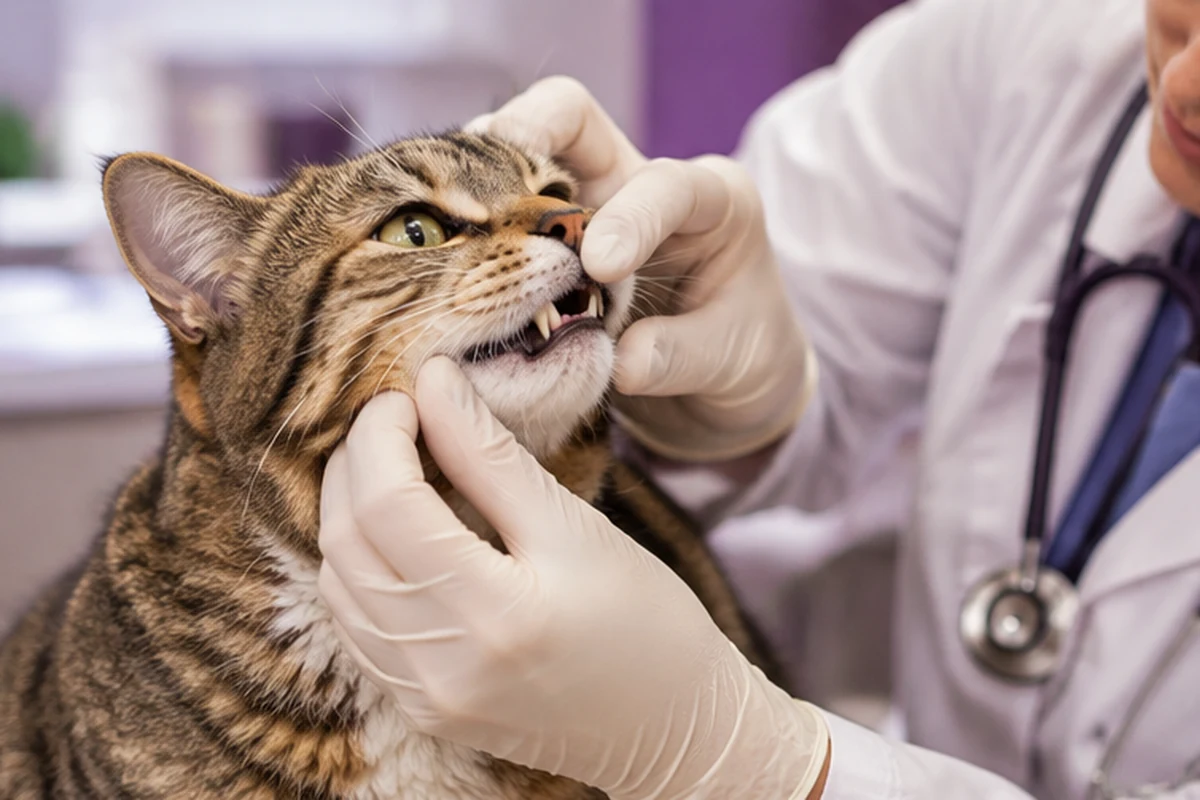
The dental process may begin with a consultation, review of the cat’s medical history and an oral examination while the animal is awake. That can identify obvious redness, tartar or damaged teeth, but it cannot reveal every issue beneath the gums. Cornell’s veterinary dental service describes definitive assessment and treatment planning under general anesthesia, including dental probing, charting and full-mouth X-rays. The team also considers any medical conditions that might affect anesthesia and may recommend tests or adjustments to the protocol. Which tests are appropriate depends on the individual animal.
A cat with chronic illness, recent appetite changes or prior anesthetic concerns may require a more individualized plan than a healthy cat with straightforward preventive needs. This does not mean an older or medically complicated cat should automatically go without dental care. The veterinary team weighs risks, expected benefits and options. Before accepting a quote, make sure you understand whether additional assessment is recommended and why. A pre-anesthetic test should have a clear clinical purpose, not just an unexplained line on an invoice.
Anesthesia, monitoring and professional skills
Anesthesia is often one of the major resources involved in professional feline dentistry. It allows the team to examine and clean areas that cannot be safely or effectively accessed in an awake animal, and to manage pain and movement. The American Veterinary Dental College cautions that anesthesia-free tooth scraping cannot replace a comprehensive veterinary dental examination and cleaning beneath the gumline. A cat that appears to have whiter teeth after a superficial procedure may still have untreated disease below the surface.
An estimate may include anesthesia drugs, equipment use, an intravenous catheter, fluids, monitoring and recovery care, although practices organize their fees differently. Ask which team members monitor the cat and how the plan is tailored to individual risk. Do not infer that the least expensive protocol is the safest or that the most expensive one guarantees a particular outcome. The question to ask is whether the recommended procedure meets professional standards for the cat’s needs and what resources are included in the stated price.
Dental radiographs are not decorative add-ons
Some of the most important feline dental problems are difficult or impossible to assess by looking at visible tooth crowns alone. Cornell describes conditions such as periodontal disease and tooth resorption that may require oral examination and dental X-rays for adequate assessment. Radiographs can identify changes involving tooth roots and surrounding bone, guiding whether a tooth can be retained or needs treatment. A comparison between two quotes becomes misleading if only one includes appropriate imaging and the other does not.
Ask how the clinic charges for dental radiographs: a complete series, individual views, or an all-inclusive dental procedure. This is a billing question, not a suggestion to request fewer medically necessary images. If a tooth is painful and its deeper structures are involved, the decision should rely on veterinary evidence. Skipping necessary diagnostic information may not produce a meaningful saving if the underlying disease remains untreated. Ask the team how imaging results influence treatment and whether additional charges require your consent.
Extractions can change the final bill substantially
A cat may appear to need ‘just a cleaning’ until the detailed examination reveals advanced disease or painful tooth resorption. Extracting a tooth is a medical and surgical procedure, and complexity varies with the tooth, root anatomy and surrounding damage. Several extractions generally involve more time and care than a routine cleaning. Some cats may need follow-up medication or reassessment. A clinic cannot responsibly promise a fixed uncomplicated-cleaning price when it has not yet seen the information available under anesthesia.
Ask the veterinarian how unexpected findings are handled. Will someone call you with an updated estimate? What happens if they cannot reach you? Are there reasonable alternatives if a finding has several treatment options? Understanding consent before the procedure avoids rushed decisions while the cat is anesthetized. If the clinic recommends delaying necessary treatment for financial reasons, ask about the potential consequences and a safe interim plan. Cost should be discussed openly, but the owner should not be left to judge painful dental disease without veterinary explanation.
How to build a comparable cost estimate
Instead of comparing headline prices, ask for an itemized estimate organized by stage. A useful list may include initial exam, pre-anesthetic testing, anesthesia, monitoring, dental evaluation, dental radiographs, scaling and polishing, possible extractions, medication and recheck. Some clinics include several services in one package while others show each line. Either approach can be transparent if the scope is clear. Request a written explanation of which charges are certain and which depend on findings during the procedure.
Imagine two entirely hypothetical estimates. Clinic A quotes $420 for basic preparation, anesthesia and surface cleaning but lists imaging and any extractions separately. Clinic B quotes $690 and includes a full-mouth radiographic series and the standard examination. These are invented calculation examples, not actual clinic offers or national price averages. A comparison of $420 versus $690 does not establish which clinic is cheaper for a cat that requires imaging. If additional services bring A’s total to $850, the final cost differs from the advertisement; if no additional charges occur, it may not. The scope of service decides what the figures mean.
A second hypothetical example: findings during treatment
Suppose a clinic provides a written base estimate of $650, and the owner approves a conditional upper amount of another $400 if clinically indicated extractions are discovered. The possible total would then be $650 + $400 = $1,050. This is a fictional billing illustration, not a prediction for any cat, and the precise procedure charges may not be additive in that way. The useful point is to understand whether the consent form establishes a ceiling, an estimate range or an instruction to call before extra procedures.
If the clinic expects the bill to change, ask for an explanation of the circumstances. Can imaging reveal disease missed by the awake exam? Could additional pain control or postoperative medication be required? Will the discharge appointment include clear medication instructions and follow-up? Do not approve a broad open-ended expenditure without knowing how urgent changes are communicated. Equally, do not interpret a clearly defined conditional estimate as evidence that the practice expects to perform unnecessary work.
What symptoms should prompt an examination sooner?
Bad breath, drooling, pawing at the face, changes in chewing, dropping food, bleeding from the mouth and appetite changes can be signs of oral disease, but they are not a diagnosis. Cornell’s feline dental resources note that dental conditions can be painful and that some cats alter eating behavior rather than clearly showing discomfort. If your cat stops eating, appears unwell or has significant oral pain, contact a veterinarian promptly. Do not wait for the next routine cleaning simply because the teeth look white from the front.
Avoid trying to scrape tartar, pry open a painful mouth or give human pain medicines. A cat with a suspected mouth problem needs professional assessment. If it has recently lost weight or changed food preference, mention that as part of the history. A dental issue may explain some changes, but other illnesses can produce similar behavior. Treatment should follow examination, not an owner’s assumption that an extraction is automatically necessary because a photograph resembles an example online.
Does insurance cover cat dental work?
The answer depends on the insurance product and why the care is needed. Routine preventive dental cleaning is commonly treated differently from eligible treatment of an accident or covered dental illness. Some policies have specific dental provisions, excluded conditions, waiting periods, annual limits or documentation requirements. Never assume an accident-and-illness policy pays for all oral care, and do not treat a wellness add-on as equivalent to unexpected-illness coverage. Review the current policy language and ask the insurer how the diagnosed condition would be evaluated.
If submitting a claim, retain the dental chart, radiographs when available, itemized invoice, clinical findings and the timeline of earlier signs. Conditions noted before enrollment or during waiting periods may affect eligibility under the policy’s pre-existing-condition provisions. Do not omit prior dental complaints from a claim. Insurance can help with some expenses, but the veterinarian determines the medical need while the insurer determines contractual eligibility. Those are separate processes and may reach different conclusions about what should be done versus what will be reimbursed.
Budgeting without postponing needed care
For predictable preventive needs, ask your clinic when it recommends the next oral assessment and what a typical dental estimate includes. Set aside money for the consultation, expected procedure and possible follow-up. Dental findings vary: a cat with a healthy mouth may need a different plan from one with advanced disease. If costs are difficult, ask which elements are medically necessary now, what can safely be staged and whether referral or financing options exist. A budget conversation should seek a safe plan rather than substitute for treatment.
The strongest cost comparison is not ‘which website lists the lowest national dental price?’ It is ‘what will my cat actually receive, which clinical findings could change the bill, and how will the veterinarian explain those decisions?’ Request a written scope, understand anesthesia and radiographs, and clarify authorization for extractions. Those steps make the estimate more meaningful and reduce surprises without presenting any single price as universally right.
Research sources
- American Veterinary Dental College: Professional Veterinary Dental Cleaning
- Cornell: Feline Dental Disease
- Cornell: Dentistry and Oral Surgery
- AVDC: Questions to Ask Your Veterinarian About Dental Cleanings
Research reviewed October 9, 2026. All dollar values above are hypothetical illustrations, not sourced market quotes. Ask your veterinarian for an individual estimate.