Your kitten’s first veterinary visit should happen soon after adoption or arrival, even if the kitten seems lively and healthy. The veterinarian will assess growth and general health, review vaccination and parasite history, and develop an individualized plan for follow-up visits. Bring adoption records, a list of food and any medications, and notes about appetite, stool and behavior. If your kitten is weak, struggling to breathe, repeatedly vomiting or refusing food, contact a veterinarian promptly rather than waiting for the scheduled wellness appointment.
What to arrange before you arrive
Book an appointment while you still have the paperwork from the shelter, rescue or previous household in front of you. Tell the clinic the kitten’s estimated age, whether its vaccine history is documented and whether other cats share the home. Mention diarrhea, sneezing, eye discharge or any other possible illness when scheduling; the practice may wish to limit contact with other patients. Ask about transport requirements and whether a stool sample would be useful. Do not assume a kitten that has received one vaccine has completed its series, and do not assume that an indoor-only future means preventive care is unnecessary.
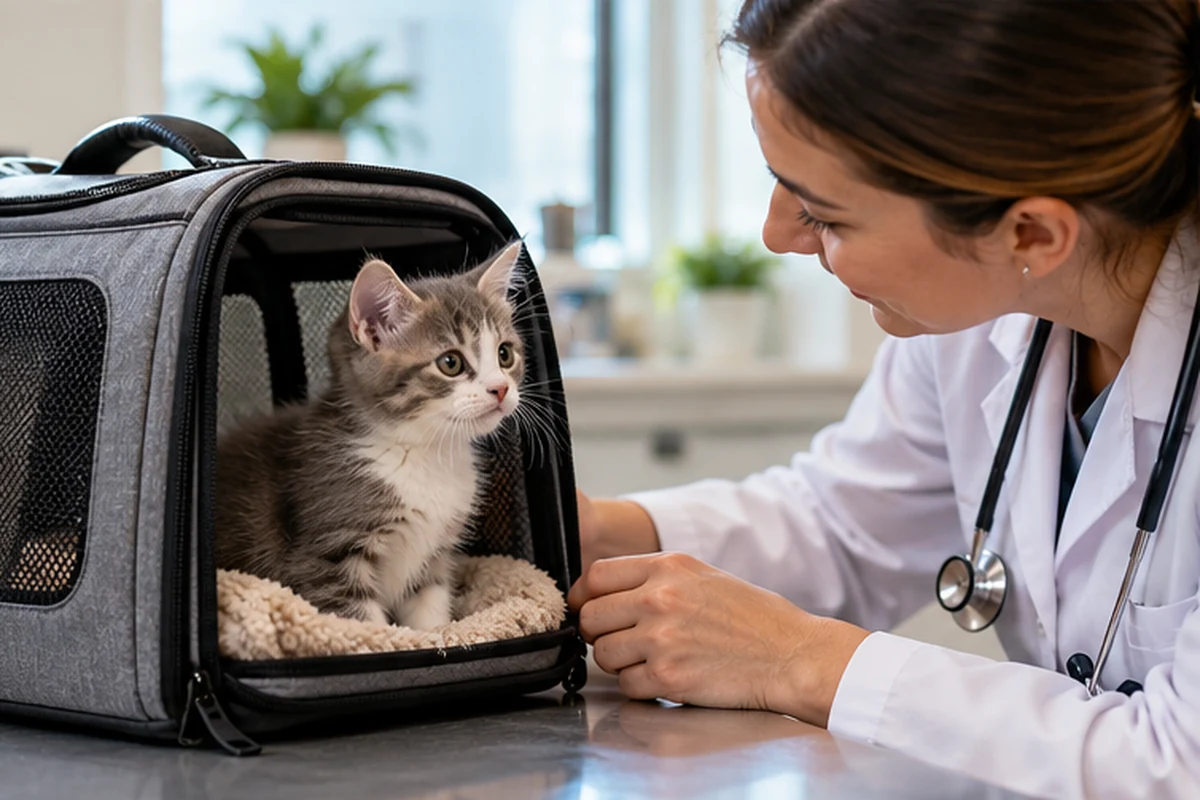
A secure carrier is part of the appointment, not an optional travel accessory. Introduce it before the appointment by leaving it open in a familiar room with comfortable bedding. Put treats or an appropriate toy inside and let the kitten explore voluntarily. A carrier that opens from the top or can be separated into sections may make clinical handling easier, though the most important feature is a secure, appropriately sized enclosure. Do not carry a frightened kitten through a parking lot in your arms. Keep identification information with the carrier and allow extra time for calm travel.
The records that actually help the veterinarian
Bring anything that establishes the kitten’s history: dates and names of vaccines, deworming treatment, flea prevention, previous examination findings and known exposures. Shelter documentation can include important information even if the kitten appeared healthy when adopted. If a breeder or former owner gave verbal claims without records, say so. Write down what was reported but distinguish it from what can be verified. You should never be embarrassed by gaps in the history; uncertainty is useful information for a clinician planning care.
List the current diet and approximate amounts, including treats, milk substitutes or supplements. Record whether the kitten is eating eagerly, whether litter box use seems normal, and whether you have seen vomiting, loose stool or scratching. Note other cats’ ages and health conditions if they share the household. These details affect discussions of infectious disease, introductions and testing. Bring questions in writing because managing a carrier, paperwork and a curious kitten can make it surprisingly difficult to remember the concerns you noticed at home.
The examination is more than a weigh-in
An initial kitten examination may cover weight, hydration, body condition, coat and skin, eyes, ears, mouth, abdomen, heart, lungs and musculoskeletal development. The veterinarian may look for external parasites or signs that warrant diagnostic testing. Some abnormalities are visible during routine observation; others require hands-on assessment. A kitten’s age may be estimated from development and teeth, but such estimates are not as precise as reliable birth records. Ask what the veterinarian found and whether any finding needs a planned recheck instead of trying to interpret it yourself.
Kittens can look energetic for part of the day and still be unwell. Their small size and developing systems make attention to hydration and appetite especially important. A clinician can explain when a change in feeding, urination, breathing or activity requires urgent evaluation. If the kitten seems normal at the visit but develops concerning symptoms later, contact the clinic with an updated description. The first exam is a starting point, not a permanent certificate of health. Keep a copy of the medical record to make subsequent care easier.
Understand the kitten vaccine series
The Cornell Feline Health Center and AAHA/AAFP feline guidance describe vaccination as a risk-based preventive program across life stages. The common FVRCP combination protects against feline panleukopenia, herpesvirus-related rhinotracheitis and calicivirus disease. Kittens generally need a series of doses because protection from maternal antibodies changes with age and can interfere with an early vaccine response. The exact timing is determined by the clinical schedule, the vaccine used and the kitten’s history. Rabies protection is also important, with legal requirements varying by jurisdiction.
Feline leukemia virus vaccination and other risk-based decisions should be discussed with the veterinarian, especially when a kitten may encounter other cats or its background is uncertain. Ask for a written schedule that clearly shows what has already been administered and what remains. Keep official documentation for future boarding, moving or veterinary visits. A frequent mistake is treating an old photograph of a vaccine receipt as proof of a completed program when the date, product or follow-up is unclear. Your veterinarian can decide how to handle missing or inconsistent records.
Parasite prevention and infectious-disease questions
A kitten may need parasite testing or treatment even when its coat looks clean and stool appears normal. The clinician will consider age, weight, background, observed symptoms and local exposure risks before recommending products. Do not borrow flea or tick treatment from a dog; some products appropriate for dogs are dangerous to cats. Similarly, do not assume an over-the-counter product is safe because a package says ‘pet.’ Follow the species, age and weight directions supplied by the veterinary team, and ask how to respond to an accidental dose or missed application.
If the kitten is joining other cats, ask about introductions and any recommended testing or precautions before close contact. Different infections have different transmission and testing considerations; a one-size-fits-all quarantine rule is not a substitute for individualized advice. Keep litter areas hygienic and monitor stool changes, appetite and energy during the transition. A kitten with persistent diarrhea or breathing symptoms should not be diagnosed at home based on a social-media video. Contact the veterinarian to determine the appropriate next step and urgency.
Nutrition is a growth decision
A kitten requires a diet suitable for growth, and feeding needs can change rapidly. Ask about a complete and balanced kitten food, daily amount, meal frequency and how to introduce a new food gradually. The label’s serving suggestion is a starting point, not an individualized prescription. Appetite, body condition, age and growth trend matter. A feeding log covering several ordinary days can help the veterinary team interpret a concern more effectively than a vague report that the kitten is ‘always hungry’ or ‘never finishes a bowl.’
Avoid replacing an appropriate kitten diet with improvised home meals without professional formulation. Human foods and supplements can be inappropriate or harmful. If the kitten has been fed a milk product or an unusual diet, bring its details rather than concealing it. Ask about water access, safe treats and when the nutrition plan should be reviewed. Sudden refusal of food is a more urgent concern in a young kitten than a routine preference for one texture, and your veterinary team should guide the response.
Litter boxes, hiding and household adjustment
A kitten’s first days can involve hiding, exploring, vocalizing or changes in routine. Discuss litter habits and any difficulty reaching or using the box. An accessible, clean box in a low-stress location is a practical starting point. The Ohio State University Indoor Pet Initiative emphasizes resources such as resting areas, safe refuges, scratching opportunities, play and litter-box access. Those environmental needs matter from the beginning; they are not optional luxuries to consider after behavior problems develop.
Give the kitten a predictable base room and widen its access as confidence grows. Avoid forcing introductions to people or other animals. Ask the veterinarian about household hazards such as plants, medicines, cords and unsecured windows. If repeated litter-box accidents occur, rule out medical explanations rather than assuming the kitten is being stubborn. The first veterinary visit is a good time to connect changes at home with health and behavior questions before patterns become harder to understand.
Costs and the follow-up plan
A first visit may include the consultation, vaccinations, parasite testing, preventive products and additional care when indicated. The invoice depends on age, previous care, clinic fees and medical needs. Request a clear estimate and ask which parts of the plan are due now versus at future appointments. An inexpensive first visit does not mean the first-year veterinary budget is complete. Several preventive visits, identification decisions, spay/neuter discussion and unexpected illness can affect the broader financial picture.
If considering insurance, check how illness and accident coverage begins, whether examination fees are eligible and how pre-existing-condition provisions work. A policy is not a replacement for a kitten’s core preventive care. Store receipts and clinical records in one folder regardless of whether you buy insurance. Confirm the next appointment, the clinic’s after-hours number and the symptoms that should prompt an earlier call. You should leave with a timeline rather than a collection of vaguely worded recommendations.
How to know the visit was useful
By the end of the appointment, you should be able to explain the kitten’s current health assessment, the dates of remaining vaccines, what parasite prevention has been recommended, what to feed and when to return. If you cannot, ask the veterinary team to write the key instructions down. A list of three next actions is often more effective than twelve reminders scattered through an email. Keep your own observations open to revision; a kitten’s needs will change with development, medical history and environment.
The strongest first-visit outcome is a practical partnership with the clinic. You know what has been checked, what remains uncertain and who to call when something changes. Your kitten has a safer path into a new home, and you have a care schedule that belongs to this particular animal rather than a generic kitten calendar copied from the internet.
Research sources
- Cornell Feline Health Center: Choosing and Caring for Your New Cat
- AAHA/AAFP: 2021 Feline Life Stage Guidelines
- Cornell: Feline Vaccines, Benefits and Risks
Research reviewed October 9, 2026. Clinical schedules must be tailored by a veterinarian to your kitten and jurisdiction.