Your puppy’s first veterinary appointment should establish a health baseline and a plan for the next few months, not simply deliver one shot. Schedule the visit soon after bringing your puppy home, take whatever medical records came with them, and expect the veterinarian to discuss examination findings, vaccines, parasite prevention, nutrition, behavior and follow-up visits. The correct schedule depends on your puppy’s age, earlier care, health and local exposure risks. If your puppy is already unwell, call the clinic rather than waiting for an ordinary new-puppy appointment.
Book the appointment before your calendar gets busy
A newly adopted puppy arrives with more unknowns than a food preference or a bedtime routine. You may know the date of birth, or you may have only an estimate. The shelter may have administered a first vaccine without supplying complete documentation. A breeder’s handover sheet may list a dewormer but not its product or date. Those details are exactly why a veterinary appointment near the beginning of ownership is useful. The American Veterinary Medical Association advises scheduling a new dog’s health examination as soon as practical and bringing any existing vaccination and deworming history. The appointment begins a relationship that will matter long after puppyhood.
When you call, say that this is a first puppy visit, give the age you were told, mention any known vaccinations and say whether there is coughing, vomiting, diarrhea, poor appetite or unusual tiredness. A clinic may direct a puppy with possible contagious symptoms to a different entrance or appointment process to protect other animals. Ask whether you should bring a stool sample and whether the puppy can eat normally beforehand. Do not assume every office follows the same intake routine. If previous records are missing, tell the practice in advance so it can plan for uncertainty rather than discovering it after you arrive.
Prepare a small health folder
Put together the records you actually have, even if they seem incomplete. Adoption paperwork, breeder records, vaccine labels, parasite treatments, the name of a former veterinarian and a note of any medication can help the new team decide which protections may already have been started. Photograph documents so they are not lost. Write down the brand of food, approximate portion size, feeding frequency, current treats and any supplements. Bring packaging photographs if ingredients or product names are uncertain. A description such as ‘something for worms’ is less useful than the actual label or date.
A short observation log is often more valuable than a long list of internet diagnoses. Record what the puppy eats and drinks, how often they pass stool, whether they are itching or scratching, and what you have noticed about sleep, activity and confidence. If a behavior happens intermittently, a short video may help describe it. Do not try to examine the puppy roughly or perform home testing to produce evidence. Your job is to describe ordinary life accurately. The veterinary team’s job is to decide what those observations mean and whether testing is warranted.
What the physical examination may cover
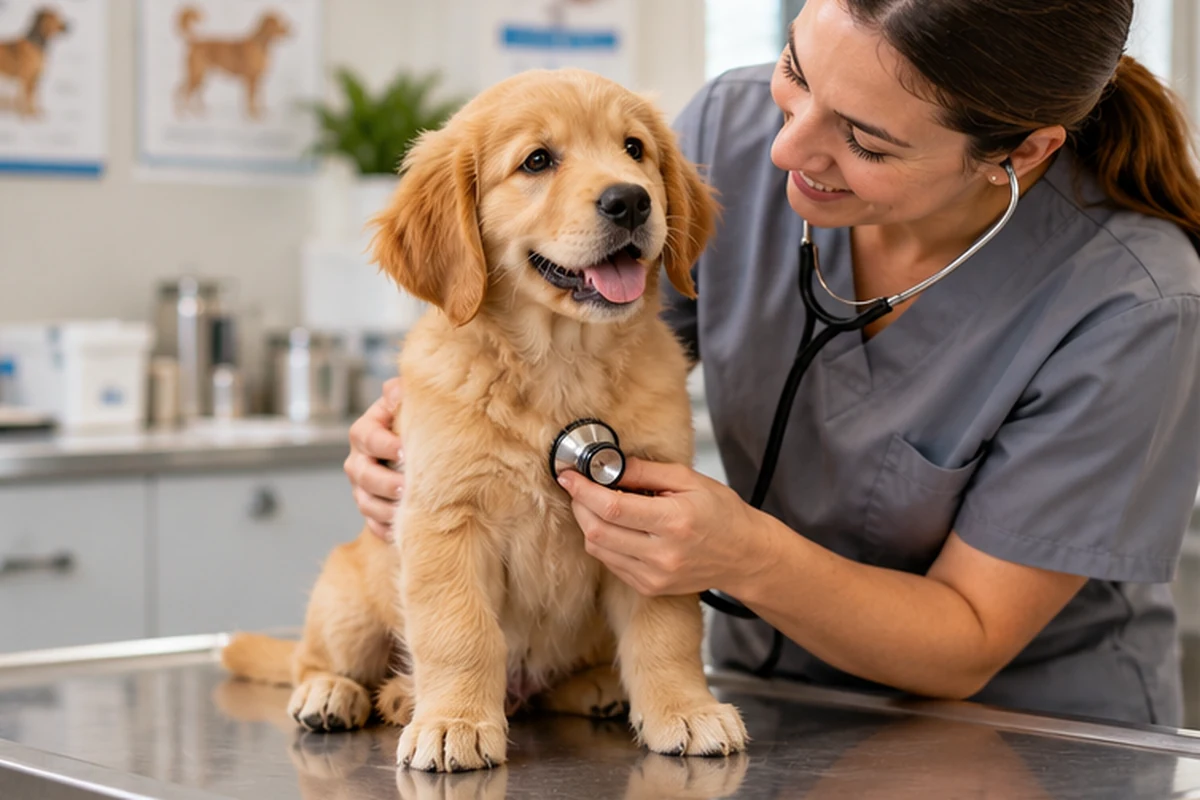
A first visit generally includes a nose-to-tail clinical examination. The veterinarian may assess weight, body condition, skin, eyes, ears, mouth, heart, lungs, abdomen, joints and overall development. The details depend on the individual puppy, but the point is to identify concerns before they are dismissed as ordinary adjustment. A healthy-looking puppy can still need follow-up on parasites, vaccination gaps, teeth, a hernia or a growth concern. Conversely, something that worries a new owner may be a normal feature of age or breed. A physical examination, not a web checklist, sorts those possibilities.
Ask the veterinarian to explain anything they want monitored at home in observable terms. ‘Watch the lump’ is not as actionable as learning what change in size, texture or discomfort should prompt a call. If a screening test is suggested, ask what question it is intended to answer and how the result could change care. You should come away knowing the next appointment date, what medications or preventive products were actually recommended, and how to contact the clinic if a problem develops before then.
Vaccines are a series, not a single first-visit purchase
Puppy vaccination is especially easy to misunderstand because the visit may include one dose of a multicomponent vaccine, yet the puppy may still need later doses. The American Animal Hospital Association’s canine vaccination guidance identifies core protections, including distemper, adenovirus, parvovirus, rabies and leptospirosis, with details that depend on age, vaccine type, local requirements and individual clinical factors. Its guidance describes an initial series for young puppies rather than treating one early injection as complete protection. The clinic should translate that framework into a dated schedule for your puppy.
Ask for the name of each vaccine, the date given and the expected next dose. Check local rabies requirements instead of relying on the advice of a friend in another state. Discuss lifestyle-related vaccines with context: boarding, daycare, travel, outdoor exposure and regional infectious-disease risks may affect recommendations. Avoid the opposite mistakes of declining recommended core protection because a puppy ‘never goes anywhere’ and assuming every available vaccine is appropriate for every dog. If documentation from a prior visit cannot be verified, the veterinarian can discuss how to proceed safely.
Parasites and preventive care have their own timetable
Vaccination is only one part of preventive medicine. The team may recommend parasite testing, deworming follow-up and age-appropriate flea, tick and heartworm prevention based on your dog’s history and local risk. These are not interchangeable products; they address different organisms and have different age or weight considerations. Ask what each product protects against, when to start, how to administer it, and what to do after a missed dose. Do not use a product intended for a different species or a medication from another pet’s prescription.
A stool sample can be useful when the clinic requests one, but a normal-looking stool does not establish that a puppy has no intestinal parasites. If diarrhea is present, tell the veterinarian how often it occurs, whether blood is visible and whether the puppy is still drinking and active. Puppies can become ill more quickly than healthy adult dogs, so repeated vomiting, severe diarrhea, lethargy or refusal to drink warrants timely veterinary guidance. The first visit is also a useful place to ask about household hygiene, safe handling of feces and managing parasite exposure around other animals.
Nutrition, growth and body condition
The most expensive-looking food is not automatically the right food. Your veterinary team can help you choose a complete diet appropriate for your puppy’s growth, body size and medical needs. Rapidly growing large-breed puppies may have different nutritional considerations from very small puppies; portion sizes should change as growth and body condition change. Ask how to transition foods without abrupt switches, how frequently to feed at your puppy’s present age, and how to account for training treats. Measuring meals for a few days gives the conversation an objective starting point.
Rather than judging weight by one number alone, ask the clinic to demonstrate body-condition assessment and explain when another weight check is needed. A puppy’s expected growth pattern is individualized, and a sudden change deserves a different conversation from gradual development. Avoid starting supplements ‘for stronger bones’ or adding human products without professional advice. Taking a photo of the food bag and maintaining a simple weight log makes later questions easier, particularly if several people in the household share feeding responsibilities.
Behavior belongs in the veterinary conversation
The first visit is not only about medical tests. Ask about house-training, safe social experiences, handling, chewing and the puppy’s adjustment to sleeping and being alone. The AVMA emphasizes early socialization while also recognizing disease-prevention concerns. A veterinarian can help balance appropriate exposure and incomplete vaccination status for your community. The aim is to create positive experiences without putting a vulnerable puppy into settings that present unnecessary infectious risk. Be cautious of advice that says either ‘never leave the house until every shot is finished’ or ‘expose the puppy to everything immediately.’
If the puppy is fearful at the clinic, that observation is useful, not embarrassing. Describe how your puppy behaves around strangers, noises, handling and other animals. Ask about positive, reward-based approaches and how to make future visits more comfortable. Some puppies need more time, quieter surroundings or gradual carrier and car familiarity. Raising a concern early can make repeated veterinary care less stressful for the pet and owner alike. No single visit determines a puppy’s personality or future behavior, so keep tracking changes and seeking appropriate help.
Understand the invoice and the next appointments
A first veterinary bill may contain an examination fee, one or more vaccines, parasite tests, preventive medication and additional tests or treatments. Not every puppy needs every item at the same visit, and the total varies by practice, location and medical history. Ask for a written estimate when planning is important. Clarify which recommendations are medically time-sensitive and which could reasonably be scheduled at a later appointment. That is a conversation about sequencing care, not a reason to delay necessary treatment.
Keep the itemized invoice and medical record, including vaccine names and dates. They matter for boarding, travel, future veterinary care and possibly insurance claims. If you are considering pet insurance, read eligibility terms and waiting periods rather than assuming a policy bought after a symptom appears will pay for that symptom. Insurance does not replace routine preventive budgeting, and a wellness add-on is not the same as accident-and-illness coverage. A practical first-year budget should include repeat puppy visits, routine prevention and a reserve for unexpected illness.
Questions worth taking into the exam room
You do not need a complicated questionnaire. Choose the questions that match your puppy: Which protection is due today and which doses remain? Is the current diet appropriate for this puppy’s expected size? Which parasite products are recommended here? What symptoms should trigger a same-day phone call? When is the next weight check? How should we balance socialization with disease exposure? Is there anything in the previous record that needs clarification? Having these written down helps keep the appointment focused when the puppy is wiggling or the clinic is busy.
Before leaving, repeat back the medication directions and follow-up date in your own words. Confirm whom to contact after hours and whether your regular clinic provides emergency coverage. Save those numbers now rather than trying to find them during an urgent event. Keep all puppy records in one place and update them after each visit. The best outcome of this appointment is not a perfect checklist; it is a care plan tailored to this puppy, a clinic you can call, and fewer unknowns about the next few months.
Research sources
- AVMA: Selecting a pet dog
- AAHA: 2022 Canine Vaccination Guidelines, updated in 2024
- AAHA: Prepping for Pet Ownership
Research reviewed October 9, 2026. This guide provides general education, not a diagnosis or a substitute for a veterinarian’s individualized advice.