Senior-dog care is not a fixed birthday rule or a prescription to slow everything down. It is a plan to notice changes earlier, protect mobility and comfort, and reassess nutrition, behavior, dental health and medical needs with your veterinarian. The American Animal Hospital Association recommends more frequent senior wellness examinations, often about every six months. Your dog’s size, breed, history and health determine when senior-focused care should begin and what it should include. A dog can be active and happy while still benefiting from closer monitoring.
Senior means a new care plan, not a diagnosis
Aging affects dogs differently. A large dog may enter a senior phase earlier than a much smaller one, and two dogs of the same age may have very different needs. Labels such as ‘seven years old equals senior’ can be a useful prompt to speak to a veterinarian, but they should not become a substitute for an individual assessment. The 2023 AAHA Senior Care Guidelines emphasize physiology, environment, preventive medicine, diagnostic evaluation and quality of life rather than a single universal threshold. If your dog still enjoys a familiar walk, that enjoyment matters; it does not prove that routine screening is unnecessary.
Consider the question from the dog’s point of view: Can I reach my food and resting places comfortably? Does my exercise leave me content or sore? Can I see and hear what is happening around me? Are my normal bathroom habits changing? Has eating become more difficult? These observations turn ‘my dog is getting old’ into specific information a veterinary team can investigate. The aim is to preserve participation in daily life, not to declare every change inevitable. Slower movement, for example, could reflect pain or another issue that deserves evaluation.
Make the health visit more useful
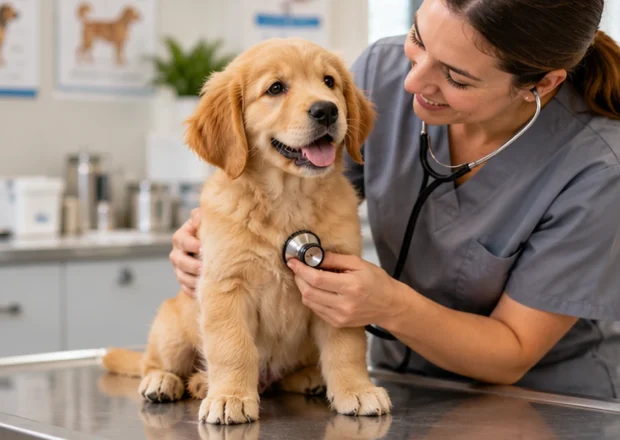
Senior visits often involve a longer discussion than a quick vaccine appointment. AAHA’s guidance emphasizes a full history, physical examination and an individualized discussion of diagnostics. Bring a list of existing conditions, prescribed medicines, over-the-counter products and supplements. Note appetite, thirst, urination, bowel habits, activity, sleep and behavior changes. If your dog becomes stiff after resting, record when that happens. If coughing occurs only at night or after activity, describe the pattern rather than assuming the cause. Details can help a veterinarian decide which systems need attention.
You can ask what a typical senior assessment will cover at your practice and how often the veterinarian recommends it for this particular dog. A physical exam may evaluate mouth, eyes, ears, heart, lungs, abdomen, body condition, muscles, joints and neurologic function. Recommended laboratory work or blood pressure checks depend on the clinical picture. Do not interpret an offer of bloodwork as evidence that something terrible has already been found. Screening can establish a baseline and uncover changes that are not obvious in everyday behavior, but tests still have limits and need professional interpretation.
Mobility is about the places your dog wants to go
Look at ordinary movement: getting out of bed, rising from the floor, turning on slippery tiles, climbing stairs and jumping into a car. A dog that avoids one of these activities may be adapting to discomfort rather than simply becoming less interested. AAHA’s senior guidance discusses musculoskeletal assessment, arthritis, pain management and environmental changes. Record a short video of your dog walking on a normal surface or rising after rest if your veterinarian suggests it. Movement observed in a familiar home can differ from movement during a clinic appointment.
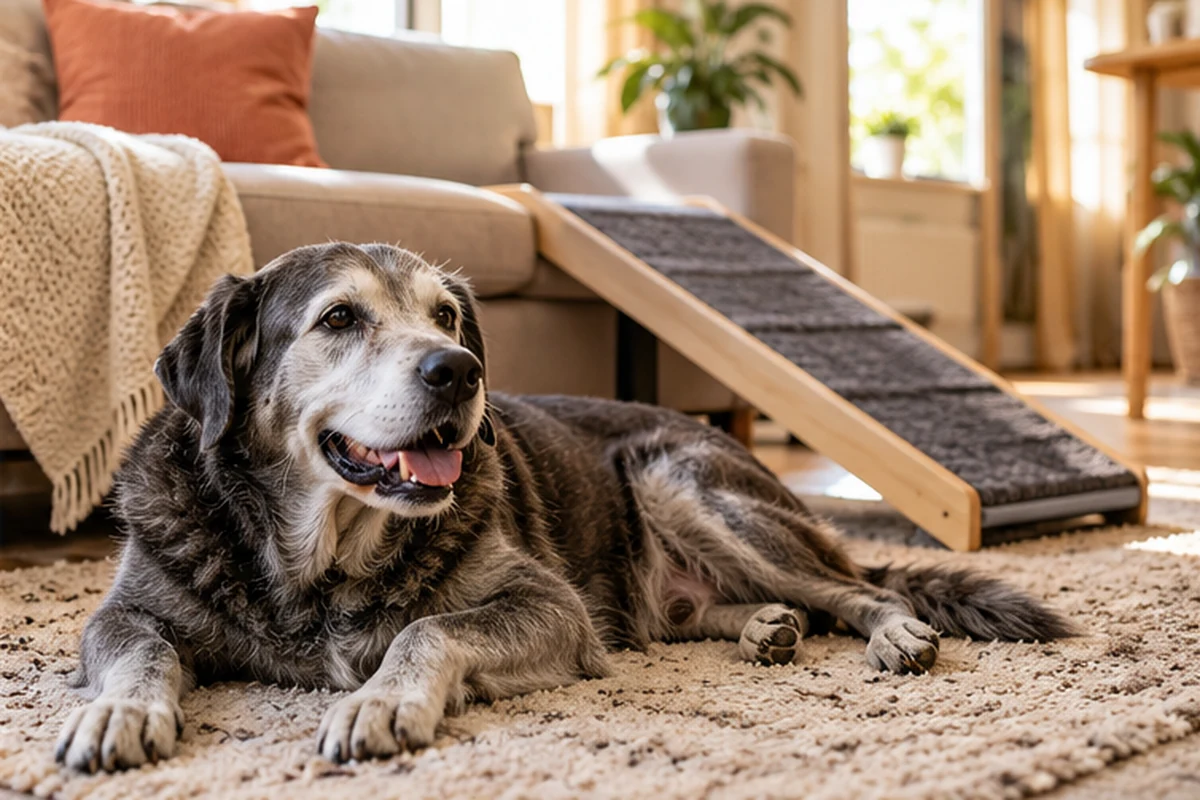
Making the environment easier to navigate is often a thoughtful response even while a medical evaluation is pending. Use stable nonslip runners over slick floors, consider a low step or ramp where appropriate, and offer bedding that is comfortable and accessible. Avoid forcing a reluctant dog up stairs for the sake of exercise. A harness may help with controlled assistance, but ask a clinician about safe handling for a dog with known spinal, orthopedic or neurologic problems. These adjustments are supportive, not substitutes for diagnosing the cause of reduced mobility.
Exercise should be adjusted, not automatically abandoned
A senior dog may still need and enjoy movement, sniffing, play and exploration. The useful question is what kind of activity the dog can comfortably recover from. Five familiar short walks may suit one dog better than a single long outing; another may maintain its routine with minimal adjustment. Ask the veterinarian whether pain, heart or lung disease, heat sensitivity or recovery from illness should change the plan. Increase or reduce activity with observation rather than rigid assumptions based only on age.
Watch after the activity as well as during it. A dog that happily walks but struggles to rise later may need reassessment. Signs such as sudden inability to use a limb, collapse or obvious severe pain are not normal exercise soreness and require prompt veterinary attention. Keep mental activity in the schedule: familiar training cues, food-search games and predictable social interaction can provide engagement without intense physical effort. Choose activities the dog genuinely enjoys, and make rest a normal part of the day rather than a sign that something has gone wrong.
Nutrition deserves a review, not an automatic senior-food switch
Food labeled ‘senior’ is not one uniform medical formula. Nutritional needs vary with body condition, muscle mass, medical history, activity, dental comfort and any diagnosed conditions. Ask your veterinarian to assess weight and muscle condition together; a stable scale reading can sometimes hide changes in the ratio of muscle to fat. A dog that loses weight, becomes unusually hungry, drinks much more, or starts refusing meals needs clinical assessment rather than simply a new brand. The same applies when chewing appears painful or eating takes much longer.
Bring food packaging or photographs and explain how treats, table scraps and supplements fit into the diet. If a therapeutic diet is recommended for a diagnosed condition, ask what objective it serves, how it should be introduced and how progress will be assessed. Avoid adding vitamins, joint products or herbal preparations without discussing interactions and evidence with the veterinary team. Certain common human foods and medicines are harmful to dogs; ‘natural’ does not guarantee safety. The practical goal is a nutritional plan that can be monitored and adjusted as your dog’s needs change.
Dental discomfort can be easy to miss
Dogs can continue to eat despite oral discomfort, so apparent appetite is not a reliable dental examination. Mention bad breath, drooling, dropping food, chewing on one side or reluctance to have the muzzle touched. A veterinary oral examination can identify visible concerns and determine whether more detailed assessment or treatment is needed. The decision about anesthesia, radiographs and professional cleaning must account for the dog’s individual health, and age alone should not be used as a universal reason to avoid necessary dental care.
At home, ask which brushing and oral-care techniques are safe and realistic for your dog. Begin gradually if the mouth is not painful, and never force brushing over visibly inflamed gums or a suspected injured tooth. Products should be intended for dogs; human toothpaste is not suitable. Keep written records of previous dental work and recommendations because a change in chewing can involve an old problem or an entirely new one. The care plan should consider comfort as well as appearance: white-looking teeth do not prove that the mouth is healthy.
Behavior and thinking are health signals too
An older dog may become restless at night, appear confused in familiar surroundings, hesitate around visitors or react differently to being touched. These changes can have multiple possible causes, including pain, sensory changes, environmental stress and medical conditions. They should not be assumed to represent dementia without assessment. AAHA’s guidance includes cognitive and behavioral changes as part of senior care and encourages discussion of household routines. Record when the behavior began, how frequently it happens and whether it follows a trigger such as darkness or loud noise.
Stable routines may help a dog navigate changing abilities. Keep food and water in predictable places and use gentle cues if hearing is reduced. Make nighttime routes easier and ensure stairs or steps are safe. Do not punish a dog for accidents or confusion; the cause may require medical investigation or practical changes in the home. A veterinarian may recommend clinical evaluation, environmental changes or treatment according to findings. The aim is to reduce distress while preserving autonomy and familiar pleasures rather than trying to make an older dog behave like a puppy.
Plan for ongoing and unexpected costs
Senior care can involve recurring medicine, monitoring, diagnostic work, dental treatment, mobility support or visits to a specialist. A useful budget separates predictable monthly needs from less predictable episodes. Write down the actual cost of current prescriptions and the expected review interval, then ask which tests or examinations are likely over the next year. If costs may influence a decision, raise that early. A veterinarian can explain which procedures are urgent, what alternatives exist and how different choices affect medical care. Cost discussions are legitimate parts of responsible planning.
If your dog has pet insurance, do not assume the policy will cover every new senior-related expense. Review annual limits, deductibles, reimbursement terms, relevant exclusions and the policy’s treatment of existing conditions. Keep records of prior symptoms and care rather than thinking that switching carriers erases a medical history. Insurance and a cash reserve can serve different purposes because claims may be reimbursed after the bill is paid and some costs may be ineligible. No plan eliminates the need for informed decisions about comfort, prognosis and quality of life.
Measure quality of life in daily terms
Quality of life is broader than a list of diagnoses. Observe whether your dog can rest comfortably, eat, interact, enjoy familiar activities and move without significant distress. Ask your veterinarian which signs indicate adequate symptom control and which changes require reassessment. When an illness becomes progressive, early conversations about goals of care, palliative support and humane options can protect the dog’s welfare. The 2023 AAHA guidelines recognize these discussions as part of comprehensive senior medicine, not as a sign that a family has given up.
A simple journal can help when good and difficult days blur together. Note appetite, mobility, sleep, interest in interaction and any episodes of pain or confusion. Do not turn the journal into a home diagnosis or delay urgent help while collecting data. Its purpose is to support the veterinary conversation and reveal meaningful trends. The most constructive senior-care plan gives your dog an easier environment, asks better questions and changes course when new evidence appears. Older age deserves attention and adaptability, not resignation.
Research sources
- AAHA: 2023 Senior Care Guidelines for Dogs and Cats
- AAHA: Evaluating the Healthy Senior Pet
- AAHA: Supporting Your Senior Pet
Research reviewed October 9, 2026. Decisions about symptoms, medicine and treatment belong with your veterinarian.