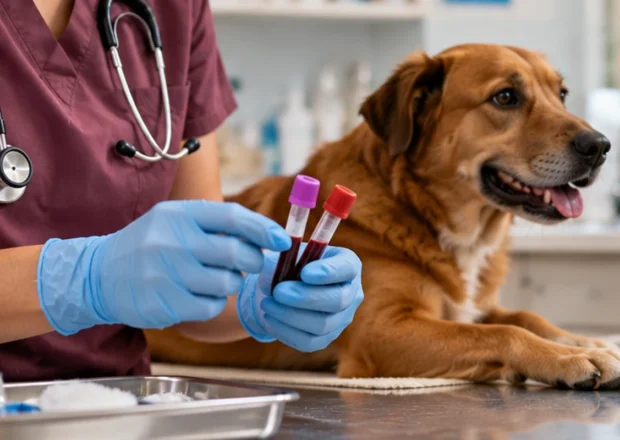
An emergency veterinary bill usually reflects several possible stages of care rather than one universal emergency-visit fee. The first examination may be followed by stabilization, diagnostic tests, medication, procedures, monitoring or hospitalization depending on the animal’s condition. To understand the total, ask for an itemized written estimate that distinguishes what is needed immediately from what may be recommended after initial findings. Life-threatening symptoms must be evaluated promptly; the cost conversation should follow stabilization when delay would put the pet at risk.
The first charge is not the entire visit
Owners understandably search for an ’emergency vet visit price’ before leaving home or while waiting for a triage assessment. Yet an initial consultation fee tells you very little about the cost of a vomiting cat, an injured dog or an animal in respiratory distress. The urgency of the problem, tests needed to establish a diagnosis, treatment resources and time under observation can differ substantially. Cornell’s emergency service describes intensive monitoring and advanced treatment capacities that ordinary wellness appointments do not require. Different hospitals may have different capabilities and billing structures.
Think of the bill as a sequence of medical decisions. First, the team determines the urgency and evaluates the animal. Second, clinicians may stabilize breathing, pain, circulation or other immediate concerns. Third, they may recommend tests to narrow possible causes. Treatment may follow, and the pet could be discharged or admitted for observation and continued care. These are possible stages, not an automatic package of services charged to every case. A pet released after an assessment and one treatment may have a very different total from an animal needing a night of critical care.
Triage and examination
Emergency departments prioritize animals by clinical severity rather than simply using the order of arrival. A pet with breathing difficulty or collapse may require immediate attention ahead of a stable animal whose problem began earlier. The emergency examination helps the veterinarian determine which clinical systems are involved and what should happen next. Ask whether the estimate covers triage, initial consultation, repeat examination or other professional services. Clinics sometimes group these fees differently, so a one-line comparison between two hospitals can be misleading.
If the animal is stable, ask what the team has learned so far and which uncertainty remains. A veterinarian may be able to explain why an examination alone is enough for one problem while another needs bloodwork or imaging. Do not interpret an estimate for additional testing as proof that the animal definitely has a particular disease. The estimate is often a plan to investigate possibilities. Clear communication matters because some treatments cannot be responsibly selected until more information is available.
Stabilization, medication and equipment
Breathing support, fluids, pain relief and other immediate interventions may be necessary before a full diagnostic answer is possible. Depending on the case, this can involve equipment, injectable drugs, intravenous access and professional monitoring. Cornell’s emergency service describes capabilities such as oxygen support and intensive care interventions for critically ill animals, although most emergency patients will not need every resource listed by a specialty hospital. The key cost question is which components your animal actually requires and what each is expected to accomplish.
Ask the team to separate necessary stabilization from contingent treatment where clinically possible. If a drug or procedure is recommended, it is reasonable to ask why and what the expected benefit is. However, a serious breathing or circulation emergency is not the time to negotiate the least expensive sequence of lifesaving steps. If finances are a barrier, tell the veterinary team early; a clinician can explain options within the constraints of safe care. Never administer leftover or human medications to avoid an emergency bill.
Diagnostics can be the largest uncertainty
Blood tests, urinalysis, radiographs, ultrasound and other diagnostics answer different medical questions. A radiograph may help evaluate certain injuries or organs, while laboratory work may help assess internal function, but no one test is universally appropriate or definitive. The veterinarian chooses based on the symptoms, exam findings and differential diagnoses. Emergency departments may charge separately for obtaining a sample, conducting a test, interpretation or repeat monitoring. Ask what is included and whether an outside laboratory or specialist review could affect timing or price.
If two different diagnostic approaches are being considered, ask how each could change treatment. This is not a request to skip medically important testing arbitrarily. It is a request to understand the decision tree. Sometimes an initial test helps determine whether a more expensive procedure is worthwhile; sometimes several tests are necessary together. You cannot assess value solely from an itemized line saying ‘imaging.’ The value lies in whether the information can guide medically appropriate care for the animal in front of the team.
Hospitalization changes both care and billing
An animal that cannot safely go home may need oxygen, fluids, continuous medication, feeding support, repeated examinations, or intensive monitoring. The cost of a hospital stay can therefore involve more than a daily bed fee. Ask what the expected level of care is, how progress will be assessed and what might allow discharge. Time estimates can change if the pet responds differently than expected. A written range is often more honest than a fixed promise for an evolving illness or injury.
Some hospitals provide updates at specified intervals or when major decisions arise. Confirm the communication process and whom to contact after hours. If the pet is transferred from a general emergency clinic to a specialty center, request copies of the medical record and details of charges already incurred. Transport and repeat diagnostics may affect the total. Ask whether referral is clinically required and what the receiving team can provide. The owner’s financial planning should follow the real care pathway, not assume that one hospital’s initial estimate includes every later step.
A hypothetical line-item calculation
Consider a fictional case involving an otherwise stable dog examined after a non-life-threatening problem. Suppose the bill lists an emergency consultation of $180, diagnostics of $320, medication and treatment of $140, and a recheck fee of $60. The illustrative total is $180 + $320 + $140 + $60 = $700. These numbers are invented for arithmetic, not actual clinic rates, quotations or an average emergency bill. They show why a headline examination charge can be much smaller than the amount on the final invoice.
Now suppose different findings require $500 of additional monitoring. In this fictional example, the total becomes $1,200. The extra amount is not necessarily ‘hidden’: it may represent a change in care after new information was obtained. Before authorizing additional services when the pet is stable, ask whether the original estimate covers the revised plan, what has changed and whether there are further conditional costs. A hospital should explain authorization processes, but new medically urgent findings may still require prompt decisions.
What you can ask without challenging medical judgment
Useful questions include: What is the immediate concern? Which treatment is essential before more testing? What does the current estimate include? What findings would change the plan? What is the expected next update? What financial authorization is required if the animal stays overnight? Could there be additional specialist or laboratory charges? Can I receive the written discharge instructions and itemized bill? These questions are practical and respectful of the clinical team.
A common mistake is asking for a guarantee that the estimate will never change. Medical information evolves. A more useful request is for a clear expected range and a process for communicating changes. Likewise, demanding ‘only the cheapest test’ may produce less useful information or delay an important diagnosis. A veterinarian can discuss safe alternatives and sequencing, but the medical implications should be made explicit. A good cost conversation is a shared effort to understand care, not a contest over a price list.
Routine planning and emergency reserves
The American Animal Hospital Association recommends asking clinics about predictable wellness costs while also preparing for unexpected illness or injury. Put those categories in separate parts of a household budget. Routine exams, vaccines and parasite prevention are more predictable than trauma or hospitalization. A dedicated emergency reserve can help cover initial charges, especially when a policy requires the owner to pay the clinic first. The appropriate amount depends on household finances, pet health, local care costs and tolerance for financial risk; there is no universal emergency-fund figure for every pet.
Review the practical details before an emergency. Which 24-hour hospital is nearby? What payment methods does it accept? Does your pet insurance offer direct payment, reimbursement after you pay, or both in specific circumstances? Are there annual or per-condition limits? Does the hospital offer a written estimate and how does it update one? Do not rely on a statement made by a different clinic or a general insurance website. Procedures and contractual terms can vary by provider, policy and location.
How insurance reimbursement interacts with the bill
Pet insurance and veterinary billing answer different questions. The clinic charges for medical services. The insurer later decides whether some or all of those expenses are eligible under the contract. A deductible, reimbursement percentage, coverage limit, waiting period and exclusions can all change what an owner ultimately receives. An insurer may not cover a consultation fee, a routine service or a pre-existing problem even if the veterinarian properly recommends it. Do not assume an emergency automatically qualifies for every policy benefit.
As a separate fictional insurance example, consider $1,200 in vet charges of which $1,000 are deemed eligible. If the applicable deductible remaining is $200 and the policy pays 80% of the amount after that deductible, the illustrative reimbursement is ($1,000 − $200) × 80% = $640. The owner would be responsible for the remainder under that simplified model. Actual insurer calculations, per-condition deductibles, copays and limits may differ. Keep original invoices and medical records so that claim eligibility can be assessed using real evidence.
After discharge, check the next-cost question
The final bill may not be the end of the care episode. Medication, follow-up imaging, rechecks, rehabilitation or additional testing might still be recommended. Ask which instructions are medically time-sensitive and which warning signs call for a return. Get discharge instructions in writing and keep a record of the medicines given at the hospital so that you do not accidentally double-dose them at home. If symptoms worsen, contact the veterinary team rather than altering the prescribed treatment on your own.
When you have time, review the itemized invoice calmly and ask the hospital about unfamiliar entries. Save the record for your regular veterinarian and any insurance claim. A clear bill is not simply a receipt; it helps reconstruct what care was provided and what comes next. The most meaningful comparison across emergency hospitals is the suitability and transparency of care, not an isolated number beside ‘visit fee.’ In a true emergency, immediate clinical assessment remains the first priority.
Research sources
- Cornell University: Emergency and Critical Care
- AAHA: Pet Health Costs—Budgeting for Your Pet’s Care
- AAHA: Prepping for Pet Ownership
- AAHA: Preparing Financially for a Pet With Chronic Illness
Research reviewed October 9, 2026. All example dollar amounts are fictional calculations and should not be presented as market rates or actual quotes.