The main cost question is what the procedure actually includes
There is no responsible single U.S. price for extracting a dog's tooth. An extraction may occur during a routine anesthetized dental visit, or it may involve extensive periodontal disease, multiple diseased teeth, complicated roots or an oral-surgery referral. The invoice often includes examination, pre-anesthetic assessment, anesthesia, monitoring, dental radiographs, scaling, surgical time, pain control and recovery care. Some facilities bundle parts of these services and others itemize them. A quote for "one extraction" may therefore be misleading if it excludes the rest of the medically necessary procedure.
The American Animal Hospital Association advises that the full dental treatment plan and cost frequently cannot be known until an anesthetized oral examination and intraoral radiographs are complete. Ask for an initial estimate with a clearly defined range and a consent process for unexpected findings. If the dog is refusing food, has facial swelling, seems markedly painful or is otherwise unwell, contact your veterinary clinic promptly instead of shopping indefinitely for the lowest price. Dental disease is a medical problem, not simply a cosmetic cleaning issue.
Why an extraction cannot be priced like pulling a loose baby tooth
The difficulty of removing a tooth depends partly on its anatomy, condition and surrounding bone. Some damaged teeth may be accessible with a relatively straightforward technique; others have multiple roots, fracture risk or disease that requires a surgical approach. The clinician may need to divide a multi-rooted tooth, create a gum flap, remove a small amount of bone and close the area carefully. A single difficult tooth may take more professional time than several uncomplicated extractions. That is why counting teeth alone is a poor way to predict the invoice.
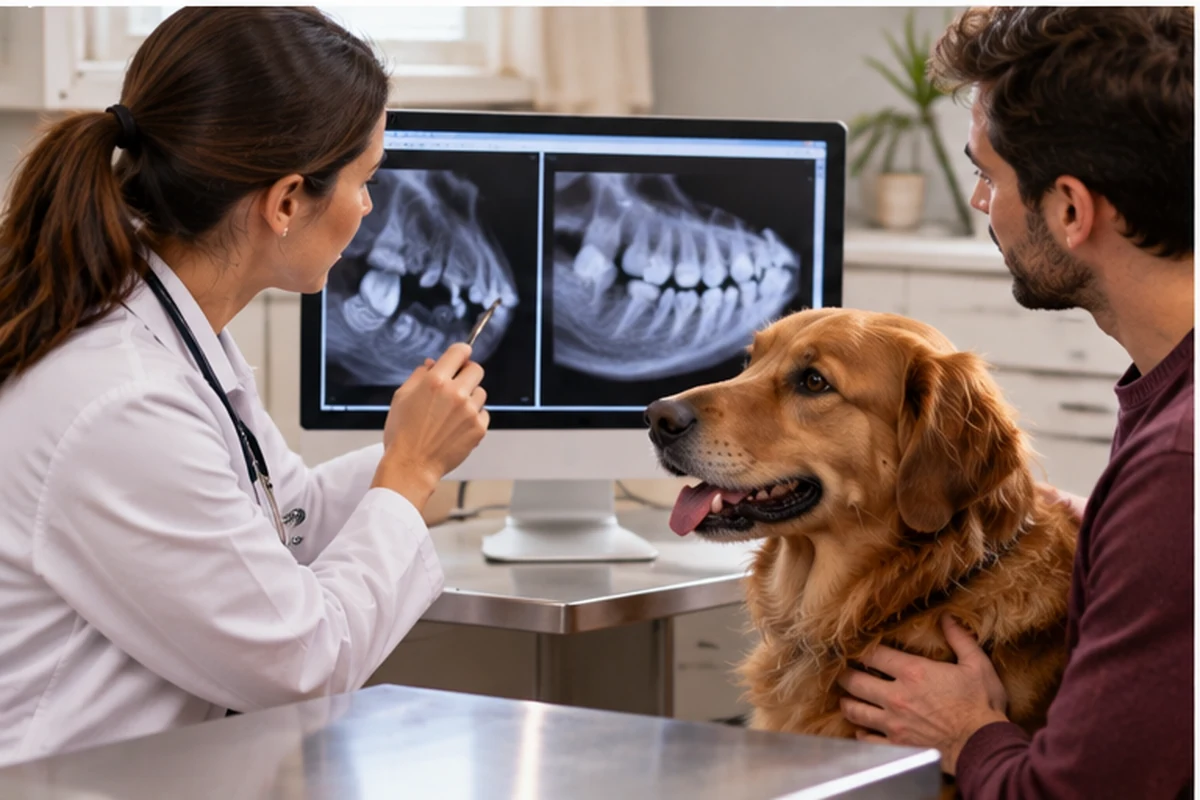
Radiographs are important because important disease can be hidden beneath an apparently acceptable crown. A veterinary team may discover root abnormalities, bone loss or damage affecting adjacent teeth only after the dog is anesthetized and properly examined. Conversely, a tooth that looked suspicious during an awake inspection may not require removal after a full assessment. A high-quality estimate should allow the plan to change according to actual findings, with your informed consent. Ask which conditions would make referral or staging of the dental treatment advisable.
Anesthesia is a central part of the dental bill
Proper veterinary dentistry generally requires general anesthesia with airway protection, monitoring and pain control. AAHA's dental guidelines reject anesthesia-free dentistry as an equivalent alternative: cleaning visible tooth surfaces cannot provide the necessary below-gum examination and treatment. Anesthesia charges may be influenced by patient size, health, procedure length and how much monitoring or support is required. They are not merely an optional convenience line that can safely be deleted to lower the estimate for extraction surgery.
A responsible plan considers the dog's age and individual health rather than assuming all older animals are too risky or all young animals need identical protocols. Some dogs require additional pre-anesthetic testing or adjustment because of concurrent heart, kidney or respiratory issues. Ask what the estimate includes for the pre-anesthetic examination, laboratory testing, intravenous access, airway protection, continuous monitoring, warming, recovery observation and management of an unexpected complication. You should also know who monitors the dog while the dental clinician works and what happens if anesthesia lasts longer than anticipated.
Dental X-rays and the under-the-gum question
Full-mouth or targeted intraoral radiographs can show the tooth roots and surrounding bone. The purpose is not simply to produce attractive images: they help identify disease, select treatment and verify that important root material has not been inadvertently left behind. AAHA emphasizes radiography as part of comprehensive dental assessment. Ask whether the original estimate includes full-mouth images, post-extraction views where appropriate and interpretation by the treating veterinarian. If only a limited series is planned, understand why that scope is sufficient.
Some clinics may need to repeat images or extend the examination when they encounter unexpectedly severe pathology. Before consenting, ask what the team will do if radiographs reveal additional problem teeth. Can it call you during the procedure? May it proceed up to a pre-agreed dollar limit? Does an inability to contact you mean a second appointment? AAHA specifically recommends a written communication plan for new dental findings so that owners are not forced to guess why a final invoice differs from the initial quote.
Breaking down a typical estimate
An itemized estimate may contain separate sections for examination, blood tests, anesthesia and monitoring, oral examination and scaling, radiographs, tooth extraction, surgical supplies, pain medication and discharge follow-up. You do not need to become a dental technician to ask what these headings mean. The essential comparison is whether two proposed estimates include comparable clinical services. A cheap extraction-only line cannot fairly be compared with a comprehensive package containing diagnostics and safe anesthesia. One clinic may also quote a wide range based on expected extractions while another requires a formal dental examination before giving a detailed number.
For illustration only, imagine a quote built from hypothetical line items: $140 for pre-operative consultation and testing, $420 for anesthesia and monitoring, $210 for dental radiographs and evaluation, $360 for surgery and supplies, and $95 for medication and recheck. Adding those amounts gives $1,225. This is arithmetic demonstrating how bills are assembled, not a market survey or recommended price. Your real invoice could be very different and may combine or omit certain categories. A quote is useful only if each number corresponds to services your veterinarian believes your dog needs.
The price changes when multiple teeth are affected
If the veterinarian discovers several diseased teeth, the cost may increase through surgical time, complexity and additional medications or monitoring. But costs do not necessarily rise by the same fixed amount for every tooth: some services, such as the initial examination and anesthesia setup, may already be included in the visit. Ask whether the estimate uses a per-tooth charge, a surgical-time charge or a tiered oral-surgery bundle. Knowing the billing method can prevent confusion when the dentist removes more teeth than initially expected.
Also ask whether the dog may need staged treatment. An unusually long procedure can prompt a recommendation to treat the most urgent issues now and schedule remaining care later. Two visits may create additional anesthesia and facility charges, but the medical team may consider staging safer or more manageable. It is not possible to choose between one session and two simply by adding prices: the right approach involves the animal's condition, the amount of disease and the planned monitoring. Request a written explanation when the proposed scope changes significantly.
What recovery expenses may follow
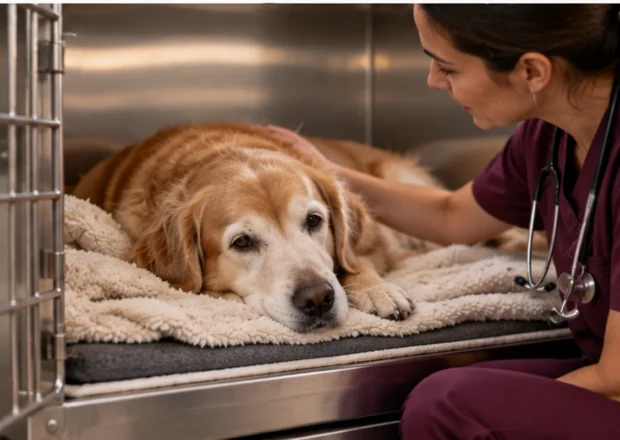
The dental bill may not finish the moment your dog leaves the hospital. The veterinarian may prescribe short-term pain management, changes in food texture or activity, and a recheck to assess healing. Some animals need further visits if swelling, persistent discomfort or poor healing occurs. Ask which follow-up is included and which would carry a separate examination charge. Verify how to administer medications safely, especially if the dog resists food or has another chronic medical condition. Do not give over-the-counter human pain relievers unless explicitly instructed by a veterinarian.
Pay attention to instructions about bleeding, difficulty eating, worsening swelling, abnormal behavior or persistent signs of pain. A small reduction in appetite just after anesthesia and serious refusal to eat are not interchangeable observations; the clinic should specify when to call. If stitches were used, ask whether they dissolve or require reassessment. Some dogs return to normal behavior quickly, but apparent enthusiasm does not mean the surgical site is fully healed. Following individualized instructions reduces avoidable problems more effectively than a general timeline borrowed from another dog's experience.
Is tooth extraction the only option?
Depending on the tooth and disease, the veterinarian may discuss periodontal therapy, extraction, restorative work or specialist options. Certain teeth may be candidates for root canal therapy, though the cost, access and suitability differ. Advanced treatment may require a veterinary dental specialist. Ask whether preserving the tooth would offer a real functional benefit, what maintenance would follow and what happens if the alternative fails. The cheapest immediate treatment and the lowest lifetime cost are not always the same, nor is saving every tooth always medically appropriate.
A dog can usually adapt to missing teeth, but that does not mean every questionable tooth should automatically be removed. The recommendation should follow examination and radiography. Request an explanation of the disease severity and why the chosen procedure is expected to relieve pain or infection. If multiple expensive options are offered and the situation is not urgent, it can be reasonable to request copies of records and imaging for a second opinion. Do not delay treatment of serious pain or infection solely because two options have different prices.
Insurance and the difference between disease and injury
Pet insurance may treat a fractured tooth from a covered accident differently from periodontal disease, preventive cleaning or pre-existing dental pathology. Some accident-and-illness policies offer dental-illness benefits subject to limits or preventive-care requirements; others exclude or restrict categories of dental work. A policy mentioning "dental" does not establish that all extractions, anesthetic charges or prescribed treatments will be reimbursed. Read the exclusion language alongside the benefit and identify whether the diagnosis is injury, illness, routine care or a mixed procedure.
Preserve the oral examination findings, radiographs or written interpretation, invoice, anesthesia summary and medical record. If the dental problem was described in earlier notes, the insurer may investigate the timing of symptoms even if no tooth had previously been extracted. In a simplified illustration, a $1,225 total invoice with $225 in noncovered services means the potentially eligible base is $1,000 before deductible, reimbursement percentage and policy limits are considered. Actual claim calculations depend on contract wording, not on the dental clinic's headline price.
How to compare clinics fairly
Ask every prospective provider for the same level of detail: assessment, diagnostic X-rays, anesthesia and monitoring, cleaning, potential extraction range, postoperative medication and follow-up. If one proposal is much lower, do not automatically infer poor care, but find out which services are included. Verify whether a surgeon or dentistry specialist is involved for complicated roots, jaw concerns or other unusual findings. If you are considering a referral, ask whether the specialty clinic charges a separate examination fee and whether it can use earlier tests or needs its own images.
For a dog with a planned nonurgent procedure, there may be time to compare medically equivalent estimates. For severe facial swelling, uncontrolled pain, trauma or substantial appetite change, urgency should be determined by a veterinarian first. Being transparent about financial limits may help a clinic outline necessary treatment, acceptable stages and possible financing without pretending that an incomplete procedure is equivalent. Dental care is expensive partly because it combines diagnosis, anesthesia, skilled treatment and recovery support into one episode.
What to ask before signing consent
Before the procedure, clarify the intended treatment, written price range and authorization process for additional teeth. Ask when the clinic will call, what upper limit you have approved, who monitors anesthesia, whether dental radiographs are included, and what you should do if you cannot be reached during the appointment. Get discharge and recheck expectations in advance so the aftercare cost is not an afterthought. If a deposit is required, confirm whether it is refundable and what services it covers under the clinic's policies.
The best dental estimate is not necessarily the one with the shortest list of line items. It is the one that helps you understand the clinical work, potential changes and total financial responsibility. The treating veterinarian must decide whether extraction is necessary and which approach is appropriate. EvePaw's cost breakdown equips you to ask clearer questions, not to determine dental surgery or substitute a bargain technique for medically indicated care.
Research sources
- AAHA: Discussing the Anesthetized Oral Exam
- AAHA: Essential Steps of Dental Cleaning and Therapy
- AAHA: Anesthesia, Sedation and Analgesia Considerations
- AAHA: Dental Procedures — Considerations
- VCA: Dental Pain in Dogs
Research checked October 9, 2026. EvePaw provides educational information, not veterinary diagnosis, professional treatment advice or confirmation of insurance coverage. Insurance terms and availability are governed by the applicable issued policy; cost examples, where given, are hypothetical, not observed market averages.