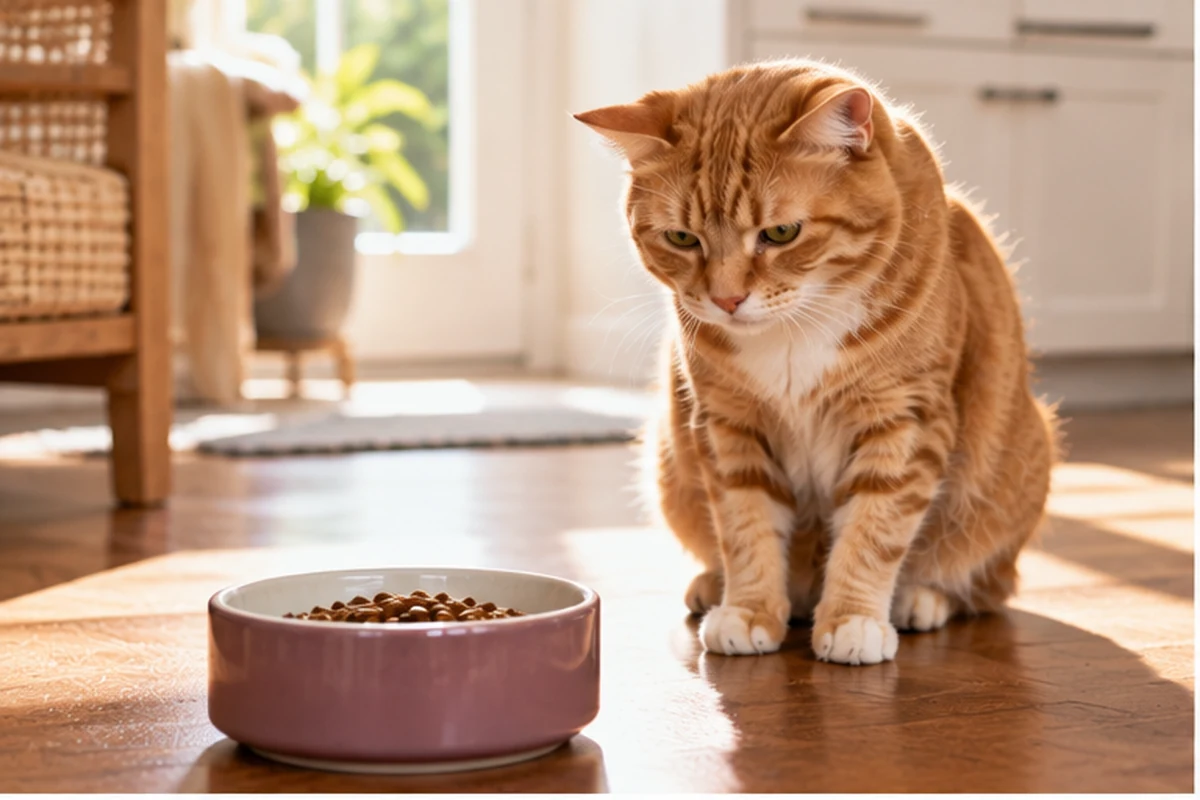
The answer: a cat refusing food deserves prompt attention
A cat that has stopped eating is not simply being difficult. Contact your veterinarian promptly about a meaningful decrease in appetite, especially if the cat has eaten nothing for roughly a day, appears unwell, is a kitten or has an underlying condition. Cornell's Feline Health Center notes that sustained food refusal can have serious consequences for adult cats in as little as 24 hours, while very young kittens have even less reserve. Do not wait for a second day if your cat is weak, repeatedly vomiting, breathing abnormally or showing other concerning signs. Your veterinary team can help determine whether an immediate appointment or emergency visit is needed.
Eating less and eating nothing are different observations, so describe them accurately. A cat who has eaten half its usual meals for several days can still have a significant problem. Another cat may sniff food, appear interested and turn away because chewing, swallowing, nausea or pain makes the meal unpleasant. Record when you last observed a normal meal and whether the cat can drink. A veterinarian needs these details more than a label such as "fussy." This guide explains how to notice the problem, avoid unsafe home experiments and prepare for an evaluation; it does not diagnose its cause.
What to do in the first few minutes
Check the food bowl, but also make sure another pet has not eaten your cat's portion. If you live with several animals, observe a supervised meal separately rather than assuming the empty bowl proves your cat ate. Look for wet food drying out, changes to kibble storage or an automatic feeder that has stopped dispensing. Compare the amount offered with the amount actually swallowed. Write down recent changes to brand, texture, bowl placement and mealtime routine.
Next, observe the cat without repeated handling. Is it walking normally, alert and responsive? Does it seem to want food but walk away? Has it hidden unusually, vomited, had diarrhea or been visiting the litter box differently? An obvious environmental explanation, such as construction noise, does not rule out illness. If your cat will not eat at all, call the practice rather than spending the whole day rotating treats. Mention the cat's age, existing diagnoses and medications when you call; these factors can change the urgency advice.
Signs that make this more urgent
A refusal to eat alongside difficulty breathing, collapse, severe weakness, repeated vomiting, marked abdominal discomfort or suspected toxin exposure needs immediate veterinary direction. Yellow coloring of the gums or eyes can signal serious illness, including possible liver involvement. A male cat straining in the litter box without producing urine needs emergency assessment even if the initial complaint sounded like poor appetite. Very young kittens can deteriorate much faster than healthy adults and should not be placed on an adult wait-and-see timetable.
Watch for subtler warning signs, too: an animal that stays crouched, moves reluctantly, drools, drops food, flinches at the face or withdraws from people may be communicating distress. Avoid interpreting purring as proof of comfort. If the cat is receiving insulin or another medication linked to meals, ask the prescribing veterinarian immediately what to do when food is refused; changing a dose based on an internet article is unsafe. When calling, report exactly what you see rather than choosing a probable diagnosis. That helps the team triage without anchoring on the wrong explanation.
Appetite loss is a sign, not an illness by itself
Cornell describes feline anorexia as a broad clinical sign with many possible causes. Dental disease can make chewing painful. Nausea and gastrointestinal disease can discourage eating even if a cat walks toward the bowl. Kidney, liver, endocrine and inflammatory conditions may also alter appetite. Fever, discomfort or respiratory problems can affect how the cat feels and how food smells. Stress from a household change can contribute, but attributing a total loss of appetite to stress without assessment can delay necessary treatment.
The pattern sometimes helps a veterinarian decide where to look first. For example, a cat that licks gravy but leaves chunks may prompt questions about oral comfort; this is not a diagnostic test. A cat that vomits soon after attempting to eat needs a different history from one that never approaches the dish. If the cat has lost weight over weeks, tell the practice even when the current refusal began yesterday. The duration and associated changes matter because the immediate goal is both to restore nutrition safely and to find the underlying problem.
Why prolonged fasting can become dangerous
Cats have particular metabolic vulnerabilities when they stop eating. Cornell explains that hepatic lipidosis, sometimes called fatty liver syndrome, can develop when fat mobilized from body stores accumulates in the liver, interfering with its function. It is often secondary to another illness rather than an isolated condition. Overweight cats can be especially vulnerable, but the risk is not limited to them. This is one reason a cat should not be put through a crash diet or allowed to fast for days in the hope that hunger will force it to accept a new food.
Do not use the possibility of hepatic lipidosis to predict that your individual cat already has liver damage. A veterinarian may evaluate risk using history, examination and tests if indicated. What matters at home is taking an extended fast seriously. Gradually reduced intake can be easy to miss when food is always left available, particularly in multi-cat households. Measuring food and noting weight changes supplies better evidence than estimating by eye. Ask your veterinarian how to monitor body condition and adjust feeding without abrupt deprivation.
What the veterinarian may examine
The appointment generally begins with a history and examination, not an automatic battery of every test. The veterinarian may ask about the time since the last normal meal, thirst, vomiting, stool, urination, medication, possible foreign material, toxin access, weight changes and recent household events. Oral examination can help identify painful teeth or gums. Temperature, hydration, abdominal findings and overall behavior also help guide the next decisions. Your cat's medical history can make one finding more important than another.
Depending on the examination, the clinician may recommend bloodwork, a urinalysis, imaging, additional oral evaluation or another targeted test. A normal-looking mouth on a quick awake inspection does not always exclude dental disease below the gumline. Likewise, a cat with a suspected gastrointestinal problem may require imaging and follow-up rather than a simple food change. Ask what each test is intended to confirm or rule out, how its result would change treatment and which decisions are urgent. Financial constraints can be discussed respectfully without asking the veterinarian to skip essential stabilization.
Practical feeding observations to collect
Before the appointment, write down the usual food, portion, frequency and whether the animal eats wet, dry or both. Record the last full meal, last partial meal, vomiting episodes and any change in drinking. If the cat has received a new medication, flea product or supplement, take the packaging or a photograph of the label. If something unusual may have been swallowed, tell the team even if you are uncertain. A short video of the cat approaching and rejecting food may reveal a behavior you would struggle to describe, although it cannot replace an examination.
For a multi-cat home, a separate feeding trial in a calm room can establish who is eating. Keep the observation brief and do not turn it into a lengthy home experiment when a cat is refusing all meals. Food diaries are useful for follow-up as well as triage: appetite may improve unevenly, and "ate a little" can mean very different amounts to different people. If your veterinarian recommends measuring calories or weighing portions during recovery, use the prescribed plan rather than arbitrary targets found online.
Why force-feeding is not a default home solution
Owners naturally want to get calories into a cat quickly. Yet forcing food or liquid into the mouth of a nauseated, struggling or weak animal can cause distress and may create aspiration risks. Never attempt syringe feeding, human appetite drugs, leftover anti-nausea medication or a feeding tube without direct veterinary instruction. A clinician must decide whether nausea relief, pain management, fluid support, assisted feeding or treatment of an underlying disease is appropriate. The right order can matter, especially for a dehydrated or medically fragile patient.
Even a very appealing treat is not a complete medical solution if the cat only nibbles it while otherwise refusing meals. Warming food slightly or offering a familiar texture may sometimes improve acceptance in a stable cat, but ask your veterinary team before relying on this when illness is suspected. If food changes were prescribed for kidney disease, urinary health or a suspected allergy, do not discard that plan without discussing a safe alternative. The immediate priority is an informed veterinary response, not winning a battle of wills with the bowl.
Understanding possible treatment and follow-up
Treatment depends on what the examination uncovers. A veterinarian might manage pain or nausea, correct dehydration, treat a dental problem, investigate an internal illness or develop a structured nutritional-support plan. Some cats can return home after an outpatient visit; others need closer monitoring or hospitalization. Cornell's material on feline pancreatitis illustrates why early nutritional support may be important in some disease processes, but that article does not mean every anorexic cat has pancreatitis. Therapy must be individualized.
Ask for clear discharge instructions: which medicines are being used, what amount of food counts as progress, when to return if intake remains poor and which worsening signs require urgent contact. Know whether the clinic wants a follow-up weight, repeat laboratory work or a check-in by phone. If there are multiple caregivers, put the instructions in one shared place and record what the cat actually eats. In a recovery period, a household can otherwise overestimate intake because several people assume somebody else fed the pet.
The bill and possible insurance implications
An appetite complaint is a starting symptom rather than a reimbursable diagnosis. The veterinary bill could include an examination, diagnostics, medication, fluids and sometimes inpatient support. Ask for an itemized estimate once the clinician knows which steps are being recommended. If a pet insurance policy is in place, reimbursement depends on covered cause, waiting periods, pre-existing-condition language, deductible, reimbursement calculation and other limits. A symptom documented before policy inception can matter even if no formal diagnosis existed at the time.
Save the complete medical note, invoice, test results and instructions. Do not assume that a missing microchip or an unfamiliar veterinary practice eliminates earlier medical history. If treatment is urgent, do not postpone it solely to ask the insurer whether a bill might qualify. Instead, obtain the care and request the records needed for a later claim. For planned follow-up costs, ask both the veterinarian and insurer which evidence is necessary without suggesting that either party can guarantee reimbursement in advance.
How to reduce uncertainty at the next meal
Once a veterinarian has assessed the immediate concern, establish a simple baseline: food offered, food actually eaten, weight trend if instructed, and any recurring discomfort. Consistent feeding places, access to water and a quiet area may help support the care plan. Monitor appetite after household changes, boarding or introduction of another animal rather than attributing every refusal to nerves. If a food transition is planned, ask about a gradual approach appropriate to your cat, particularly when a therapeutic diet is involved.
Above all, distinguish a cat choosing between two foods from a cat who is medically unwell and not eating. The safest next step for a meaningful refusal is a conversation with a veterinary professional who knows the animal's age and health. In urgent circumstances, make that conversation immediately. EvePaw cannot tell from a description whether an animal has nausea, dental pain, hepatic lipidosis or another condition; what you can do is notice the change, preserve the facts and make it easier for the care team to act.
Research sources
- Cornell Feline Health Center: Anorexia
- Cornell Feline Health Center: Hepatic Lipidosis
- Cornell Feline Health Center: Feeding Your Cat
- Cornell Feline Health Center: Feline Pancreatitis
Research checked October 9, 2026. EvePaw provides educational information, not veterinary diagnosis, professional treatment advice or confirmation of insurance coverage. Insurance terms and availability are governed by the applicable issued policy; cost examples, where given, are hypothetical, not observed market averages.