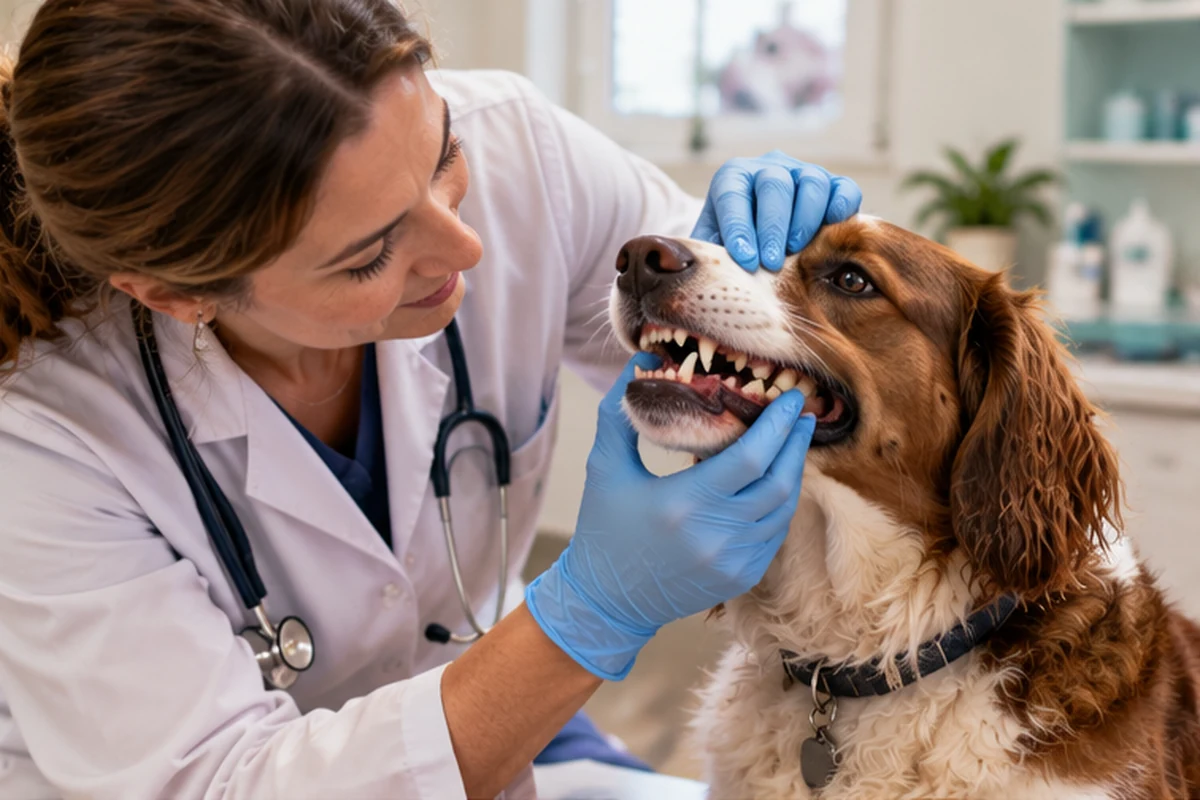
The short answer: Brushing your dog’s teeth and arranging veterinary dental examinations address two different parts of oral health. Home care can reduce new plaque, but it cannot reliably identify hidden disease under the gumline or remove established tartar. If you notice persistent bad breath, gum redness, food dropping, bleeding, facial swelling, or reluctance to chew, arrange a veterinary assessment rather than trying to solve the problem with treats. AAHA’s dental guidance explains why an anesthetized oral examination, dental radiographs, and professional treatment may be needed even when teeth look reasonably clean from the outside.
An owner doesn’t need to become a dental technician. The useful goal is a routine that a dog tolerates, an accurate understanding of what home products can and cannot do, and a plan with a veterinarian for when cleaning or additional treatment is warranted. The care plan will differ for a young dog with a healthy mouth, a small older dog with crowded teeth, and a dog already showing painful chewing. This article separates preventive habits from diagnosis and treatment.
What actually changes inside a dog’s mouth?
Plaque is a film that develops on teeth. When it remains, minerals can harden it into tartar, making ordinary brushing less effective at removing the deposit. Bacteria and inflammation at the gum margin may progress into deeper periodontal tissues. A surface photo does not reveal the full condition of roots, bone, or the spaces beneath gum margins. A dog may continue eating despite oral pain, which is one reason the visible amount of tartar should not be the only trigger for arranging an examination.
A veterinary team will consider more than whether teeth are white. It may assess gum inflammation, broken teeth, oral masses, the amount of buildup, and signs suggesting periodontal disease. A chipped tooth from chewing a hard object presents a different problem from progressive gum disease. Those distinctions affect what tests or procedures are appropriate. When you observe changes, note whether they are sudden or gradual, whether one side of the mouth seems uncomfortable, and whether the dog has stopped playing with familiar toys.
AAHA’s dental guidelines describe professional examination and treatment as part of continuing preventive health care, not merely cosmetic cleaning. A dog whose breath improves after a chew might still have disease that needs treatment. Conversely, an apparently discolored tooth does not permit an owner to diagnose the severity of disease. The correct next step is an oral examination and discussion of whether full dental work is indicated.
How to notice trouble without forcing the mouth open
Look during calm, ordinary interactions rather than restraining a frightened dog. Changes worth reporting include persistent bad breath, reddened gum edges, drooling, blood on a toy, difficulty picking up kibble, chewing on one side, pawing at the mouth, and unusual resistance when the face is touched. Swelling of the cheek or near the eye deserves prompt veterinary attention because some dental conditions involve tissues beyond the visible crown. An animal that cannot eat or appears severely painful should not wait for a routine preventive appointment.
Dogs can be cooperative about meals while hiding considerable dental discomfort. Watch behavior over several days: Is a favorite crunchy item suddenly ignored? Does the dog approach the bowl and leave it? Are there small yelps when tug toys are picked up? None proves a dental diagnosis; ear disorders, injuries and other conditions can also change eating or head handling. The value of these observations is in helping the veterinarian focus an examination and decide what testing is needed.
Avoid probing sore gums, scraping tartar, or pulling at a loose tooth at home. Attempts to remove visible buildup with metal tools can damage enamel or soft tissue and still fail to treat disease beneath the gumline. Do not give human pain medicine without a veterinarian’s direction. If the dog seems distressed or unable to eat normally, contact the clinic and describe the signs rather than improvising a treatment.
Why veterinary dental treatment usually involves anesthesia
A complete dental procedure is more than a tooth polish. Professional dentistry may involve examining every tooth, assessing pockets around the gums, taking dental radiographs, removing plaque and calculus above and below the gumline, polishing surfaces, and treating diseased or fractured teeth. General anesthesia with airway protection and monitoring allows that work to be done without a dog moving unpredictably or experiencing the procedure while awake. AAHA specifically rejects anesthesia-free scaling as a substitute for comprehensive dental treatment.
The anxiety about anesthesia is understandable, particularly for an older animal. Yet the clinical question is not ‘Is anesthesia always risk-free?’ It is whether the expected benefit of necessary treatment outweighs the individual risks after assessment. A veterinary team may recommend laboratory testing, review medical conditions, tailor the anesthetic plan and monitor the patient throughout recovery. Ask about who monitors anesthesia, whether dental radiographs are included and how the team will contact you if an extraction becomes necessary.
An awake scraping service can remove visible tartar from a cooperative dog and leave a superficially cleaner appearance, but it cannot reliably evaluate hidden pockets, dental roots or painful lesions. A price comparison between that service and an anesthetized procedure compares different things. If a clinic offers a ‘dental cleaning,’ ask what is actually included before deciding it is equivalent to another estimate.
Brushing: make the habit small and sustainable
Daily toothbrushing with a pet-appropriate toothbrush and toothpaste is a useful preventive habit when the dog accepts it. Use toothpaste formulated for animals; human toothpaste can contain ingredients unsuitable for pets. Start with simply touching the muzzle and lifting the lip for a second, reward calm cooperation, and gradually introduce the brush. For a dog that dislikes face handling, a veterinarian or qualified behavior professional can help create a gentle desensitization approach rather than escalating restraint.
Work on the outer surfaces of teeth with short, calm sessions, according to veterinary advice. One perfect session each month is usually less helpful than a small routine the family can keep up. Choose a consistent time, perhaps after an evening walk. If the dog backs away, return to a less difficult step. It is better to establish comfort than to create a daily conflict that makes future examinations harder.
Brushing is not an appropriate substitute for care when gums are bleeding or the dog reacts painfully. Call the vet before brushing an obviously sore area. Nor should success be judged purely by how white the teeth appear. Your prevention plan should include periodic professional oral assessments and changes based on what the veterinarian actually finds.
Chews, dental diets and water additives: what is their role?
Some products have evidence for reducing plaque or tartar, while others have marketing claims that are difficult to compare. The Veterinary Oral Health Council maintains a list of accepted products evaluated against specified standards. An accepted product may support prevention but cannot diagnose oral disease or replace needed treatment. Size, chewing style and a dog’s history matter: a chew that is safe for one dog may create a choking or tooth-fracture concern for another.
Ask the veterinarian to recommend a product appropriate for your dog’s dental status, age and chewing habits. Count edible dental treats within the dog’s daily calorie allowance. A product that adds substantial calories may create a new weight-management problem while addressing another concern. If the dog has a known food allergy, digestive issue or prescribed diet, check ingredients and the product’s suitability before trying it.
Do not assume harder is better. Extremely hard objects can injure teeth, and a dog that gulps large pieces may need a completely different approach. Water additives may be convenient for some households, but willingness to drink sufficient water remains a priority. Observe consumption after any change; avoiding dehydration matters more than maintaining a particular additive routine.
How often should a dog have a professional cleaning?
There is no credible single interval for all dogs. Breed, tooth crowding, age, previous periodontal findings, home care and other health conditions influence the recommendation. Some dogs need more frequent assessment or procedures than others. Ask the veterinarian to document the oral findings and recommend both the next examination and an individualized cleaning schedule. A calendar reminder is helpful only when it reflects the actual plan.
A veterinary exam may reveal something that cannot wait for an annual date: a fractured tooth, painful inflammation or localized swelling. Equally, a dog whose mouth appears healthy today may not need the same intervention as a companion with advanced disease. This is one reason ‘all dogs need a cleaning every six months’ and ‘no dog needs cleaning if it eats dry food’ are both poor universal rules.
When you move or change clinics, request the most recent dental chart, procedure notes and imaging if available. Knowing which teeth were removed, how deep periodontal pockets were, and what the post-care instructions were can make later decisions more precise than a receipt reading only ‘dental.’ Records also matter if you are comparing what an insurance policy might or might not cover.
Understanding the veterinary dental estimate
A written estimate might include consultation or examination, pre-anesthetic laboratory testing, anesthesia and monitoring, dental radiographs, scaling and polishing, medication and a recovery appointment. Extractions or specialized treatments may be estimated separately because their need sometimes becomes clear only after anesthetized examination and radiographs. Ask the clinic how additional work is approved, whether there is a spending threshold, and what happens if the team finds an urgent problem while the dog is anesthetized.
Consider a purely fictional quote: a base dental procedure of $700 plus $180 for radiographs and $260 for extractions would total $1,140. This is a math illustration, not a U.S. average, market survey or prediction for your dog. Another clinic might package those services differently, and a dog needing no extraction would not have that component. Compare itemized clinical services, monitoring arrangements and follow-up care instead of comparing only a headline number.
If you carry accident-and-illness insurance, distinguish dental illness, accidental tooth injury, routine prophylaxis and pre-existing dental findings. They may be treated differently and subject to exclusions or conditions. Ask the insurer to identify the relevant wording in your active state-specific contract. Do not delay medically needed care while waiting for an uncertain reimbursement decision.
What to ask before and after a procedure
Before scheduling, ask what disease the veterinarian suspects, whether a complete oral assessment with radiographs is recommended, and which services are part of the quoted price. Discuss the dog’s other conditions and medications, the expected monitoring process, how the practice handles unexpected extractions and how pain control will be managed. Request instructions about eating, drinking and prescribed medications after the visit; these should come directly from the treating clinic rather than a generalized internet calendar.
After treatment, note the discharge findings and schedule the recommended recheck. If the dog is reluctant to eat, seems unusually distressed, bleeds more than the clinic said to expect, or develops breathing trouble, seek prompt veterinary guidance. The treating team knows which procedures were performed and can distinguish anticipated recovery from complications. Keep the discharge record in case the dog sees a different veterinarian later.
The next practical step
If your dog’s mouth seems comfortable, start with a gentle home-care conversation at the next veterinary visit and ask for a plan that fits the dog. If there are signs of pain or infection, schedule an examination now. Dental health is not a choice between brushing and professional treatment; the two address different needs. An individualized plan is usually less expensive and less stressful than waiting until severe disease forces a complicated decision.
Research sources
- AAHA: Your Pet’s Dental Care
- AAHA: 2019 Dental Care Guidelines
- AAHA: Role of Anesthesia in Dental Care
Research reviewed October 9, 2026. Veterinary guidance is educational and not a diagnosis. Hypothetical calculations are not observed U.S. prices. Insurance terms, when discussed, depend on the current state-specific contract and the individual claim.