The short answer: Most puppies receive a series of core combination vaccines during early puppyhood because a single early injection may not produce reliable protection while maternal antibodies are still present. The American Animal Hospital Association (AAHA) recommends core canine vaccines against distemper, adenovirus, parvovirus, leptospirosis and rabies, with the schedule tailored by age, product and local requirements. Some vaccines that used to be discussed as optional, notably leptospirosis, have been moved into AAHA’s core recommendations. Ask your veterinarian for a written schedule based on your puppy’s records, health and exposure risks rather than copying a calendar from the internet.
This guide draws from the AAHA canine vaccination guidelines, including the core and noncore recommendation table. The 2022 guidance was updated in 2024 regarding leptospirosis. It is for understanding the questions to discuss with a licensed veterinarian, not for deciding which injections to give or delaying a required vaccination. Local rabies laws and a particular vaccine’s approved label can affect the plan.
Why puppies need a series, not a single appointment
Young puppies can carry antibodies received from their mothers. Those antibodies help early in life but can also interfere with response to certain vaccines. They decline at different rates, so the exact age at which a puppy can respond reliably is not the same for every individual. Repeated doses during a defined early-life window help cover that uncertainty. This is why an appointment at eight weeks may be only the beginning of a sequence, not the day the puppy is ‘fully vaccinated’.
AAHA’s core combination recommendation for dogs starting at or before 16 weeks describes multiple doses separated by approximately two to four weeks, with the later puppy dose administered at an appropriate age. The veterinarian will apply the product label and your puppy’s vaccination history. Some schedules require adjustment for high-risk settings or a puppy brought home later than expected. The schedule is a medical plan rather than a checklist that every pet should follow on identical dates.
At every visit, ask exactly which antigen was administered, the date, manufacturer or product, recommended next dose and why it is scheduled then. Keep records electronically and on paper. A note reading only ‘puppy shots’ can be frustrating when a new clinic, boarding facility or trainer asks for proof of a specific vaccine later.
What the core vaccines are intended to address
The combination sometimes referred to as DAPP, DHPP or a similar abbreviation includes antigens directed against canine distemper, adenovirus and parvovirus, often with parainfluenza depending on formulation. Your veterinarian can explain which components the purchased product actually contains. The label matters more than a shorthand name. Distemper and parvovirus are serious infectious diseases; preventing them is a central reason to follow the recommended early-life sequence.
Rabies is separately important because it is a zoonotic public-health concern and is regulated by state and local law. The earliest permitted age, the interval until the next legally recognized dose and acceptable proof of vaccination are not all national constants. Ask your veterinarian to identify the rule where you live and where you may travel with the dog. Do not assume that another county’s flyer settles your own legal requirement.
AAHA’s 2024 update treats leptospirosis vaccination as core for all dogs rather than reserving it only for an obvious rural or outdoor lifestyle. Leptospira organisms can be associated with environmental exposure, including water and areas contaminated by infected animals. The vaccine schedule differs from the early combination series: the veterinarian may prescribe a two-dose initial sequence and subsequent boosters consistent with the guidance and product. Ask specifically about this component because older advice may still describe it as strictly ‘noncore’.
What additional vaccines depend on lifestyle?
AAHA separates a smaller group of vaccines according to a dog’s circumstances and exposure. Examples include Bordetella bronchiseptica, canine influenza and Lyme disease vaccination. A puppy going to daycare or boarding may face different respiratory exposure than one that rarely encounters groups of dogs. A dog living or hiking in a region with meaningful tick exposure may prompt a different discussion than one without those risks.
These decisions should not be reduced to ‘indoor dog’ versus ‘outdoor dog’. Dogs can encounter other animals during training, grooming, veterinary visits, neighborhood walks and travel. Ask about the actual setting: how many dogs, how much close contact, regional infectious-disease activity and any facility-specific vaccination rules. Some facilities require certain records even when a veterinarian would otherwise regard the exposure as low; understanding the distinction avoids last-minute surprises.
A noncore vaccine is not an unimportant vaccine. It means the risk assessment is individualized. Conversely, vaccinating for every possible exposure without reviewing the dog’s health, history and lifestyle is not a substitute for a thoughtful plan. Your veterinarian should help explain expected benefit and relevant precautions for this particular puppy.
A working timeline for the first months
For a puppy arriving home around eight weeks, the practical calendar often involves an initial examination and review of vaccines already given by a breeder, rescue or shelter. Follow-up appointments in the next several weeks can complete the recommended core combination series. A rabies vaccination is scheduled according to the applicable law and product; leptospirosis requires its own plan. This description is intentionally not a fixed dose-by-date prescription because the animal’s starting age, prior records and clinical circumstances alter the correct dates.
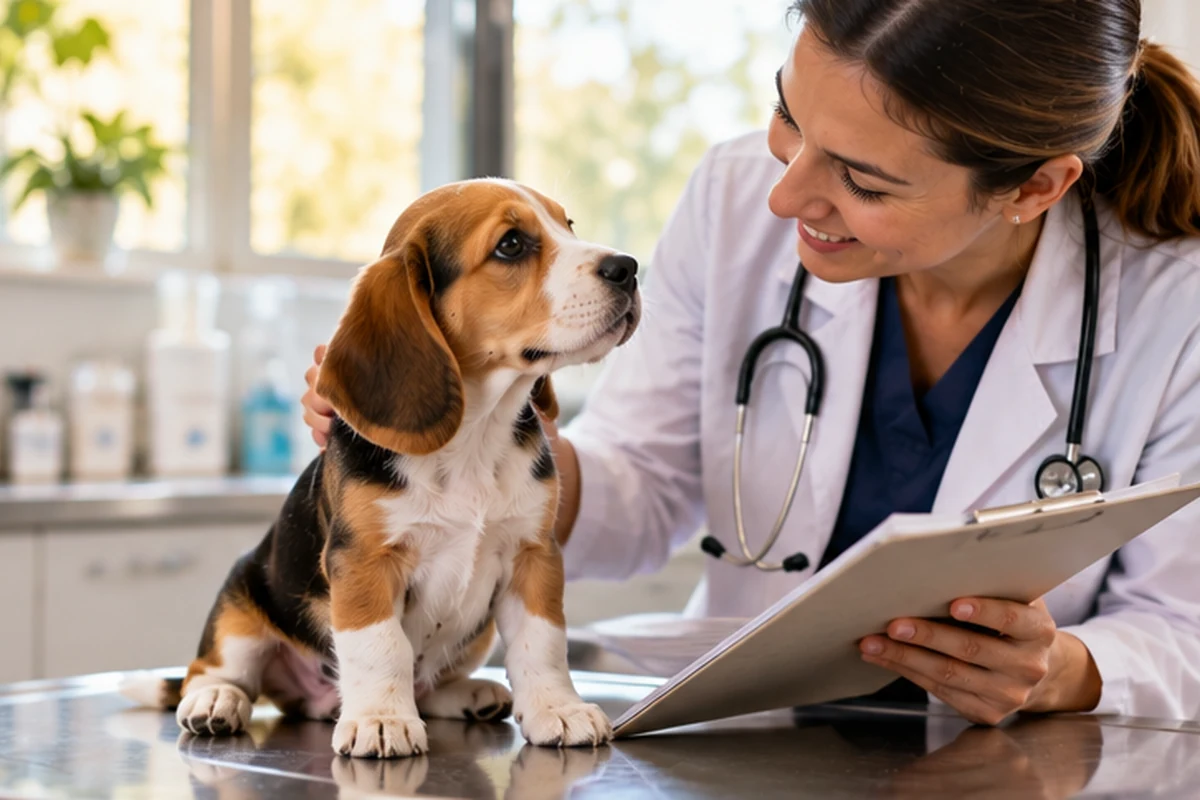
At the first appointment, bring any vaccine certificate, deworming record and details of where the puppy lived. Ask the clinic to turn those inputs into a printed future-visit plan. If a record says a vaccine was given but lacks a date or product, the veterinarian may recommend treating the history as uncertain. A vague breeder statement that the puppy is ‘up to date’ does not replace documentation.
For a puppy adopted at four or five months, the sequence may differ from that of a younger puppy beginning vaccines from scratch. AAHA distinguishes initial schedules for dogs older than 16 weeks for some vaccine categories. Do not automatically restart every series or assume the entire puppy sequence is finished. Your veterinarian can choose the appropriate catch-up schedule after reviewing reliable records and the dog’s age.
Can puppies go outside before the series is complete?
The question is not a simple universal yes or no. Young dogs benefit from safe early experiences and social development, yet incomplete vaccine protection can matter when exposure to infectious disease is substantial. The safer conversation is about where, when and under what conditions exposure occurs. Your veterinary team knows local disease concerns better than a generic article and can suggest lower-risk socialization opportunities that match the puppy’s current vaccine status.
Ask before visiting crowded dog parks, communal pet-relief areas or settings involving unknown vaccination histories. A controlled introduction to a known healthy, appropriately vaccinated dog may involve a different risk level, but this should still be considered with professional guidance. Avoid interpreting a single vaccine dose as protection from every infectious threat. Handwashing, cleaning high-contact surfaces and avoiding visibly sick animals remain sensible considerations independent of vaccination.
If a puppy develops significant vomiting, diarrhea, weakness or other concerning signs, contact a veterinarian promptly rather than trying to determine immunity from the shot record. A vaccination schedule is preventive planning; it is not a symptom diagnosis. Tell the clinic what vaccines and exposure the dog has had, and follow its arrival instructions to avoid exposing other animals if an infectious illness is suspected.
What about vaccine side effects?
Mild short-lived changes after vaccination can occur, but any concerning reaction deserves veterinary advice. Ask the clinic what reactions may be expected for the products administered, when to call and what signs require emergency attention. Trouble breathing, collapse or marked facial swelling can be urgent and should not be watched at home to see whether they improve. The dog should be evaluated immediately according to the veterinarian or emergency facility’s instructions.
If a puppy has reacted to a previous vaccine, bring the exact record and describe the timing and signs. Your veterinarian may adjust administration, monitoring or product choice. Do not leave out a relevant reaction because you fear the clinic will refuse vaccination, and do not independently omit legally required vaccines. Clinical history is important to an individualized safety plan.
An owner’s job is not to memorize every antigen. It is to understand why the clinic recommends a dose, when the next one is due and what to do if something unusual happens afterward. Keep the clinic’s emergency contact information in the same place as the vaccine record.
What should a puppy vaccination visit cost?
Vaccine pricing varies by clinic, region, bundled preventive package, examination requirements and which injections are administered. A advertised vaccine price might exclude the office visit, parasite testing or other services recommended at the same appointment. Do not treat one online figure as a universal cost. Ask the clinic for a written estimate separating the examination, each vaccine, tests and any discount package; also ask whether a return visit carries a new examination fee.
For example, a clinic might quote a fictional $85 office examination plus several separately priced vaccines. That is a hypothetical arithmetic illustration, not a reported U.S. average or a quote from a real clinic. The actual budget should add all visits needed to finish the schedule. Saving receipts and dates also helps with adoption agreements, future boarding requirements and any preventive-care reimbursement your household has chosen.
Typical accident-and-illness pet insurance is not designed to reimburse routine vaccination merely because a policy is active. Some carriers sell optional wellness plans with scheduled amounts for vaccines or exams. Compare that extra premium with benefits you will actually use rather than buying an add-on solely because vaccinations feel expensive during puppyhood.
What happens if a dose is late or a record is missing?
Contact the veterinarian with the date and product of the most recent documented injection. The answer depends on which vaccine it was, the dog’s age, the manufacturer recommendations and how long the interval has been. A receptionist may help retrieve the record, but a veterinarian should direct clinical catch-up decisions. AAHA’s guidance explicitly covers dogs with overdue or uncertain histories; the existence of that guidance is a reason to ask rather than improvising.
For shelter puppies, paperwork may involve multiple clinics, different dates or a changing identity such as a shelter name and new household name. Keep the original document even after the dog is renamed. If there are apparent contradictions, ask the current clinic to reconcile them in the chart. Do not invent dates to satisfy a boarding facility or present an unsigned screenshot as definitive proof of rabies compliance.
When planning travel or a future boarding stay, verify its documentation requirements well before the deadline. Some vaccines require more than one initial dose or time after administration before a facility accepts the record. Waiting until the day before travel can leave too little time to meet the requirement responsibly.
Questions to bring to your veterinarian
Ask which vaccines are core for your puppy under current AAHA guidance and which additional ones are appropriate for the places the dog will spend time. Request a dated schedule and ask when the puppy can safely join training or daycare. Confirm rabies timing under local law, how leptospirosis will be addressed and which products have already been documented. Ask about expected reactions and the clinic’s emergency contact process. Finally, request an itemized estimate for the complete initial series, not just today’s injection.
If the plan changes because of illness, missed appointments, exposure risk or a move, ask the clinic to update the printed record. Your puppy’s vaccine history should be easy for the next veterinarian to interpret. The goal is not a perfect calendar on the refrigerator; it is documented, appropriate protection as the dog grows.
The useful takeaway
A puppy vaccination schedule is a series of medical decisions based on age, prior doses, exposure and current veterinary guidelines. Distemper, adenovirus, parvovirus, leptospirosis and rabies deserve a specific discussion, while other vaccines depend on lifestyle and geography. Keep accurate records, obtain the next dates in writing and ask a professional about safe socialization before the series is complete. This is a Pet Life Stages Growing Up topic: the record you build now supports years of responsible care.
Research sources
- AAHA: 2022 Canine Vaccination Guidelines, updated in 2024
- AAHA: Core and Noncore Vaccine Recommendations
- AAHA: Vaccination FAQ
Research reviewed October 9, 2026. Coverage and cost details may differ by state, policy version, pet and clinic; fictional examples are labeled in the text. This article is educational and does not replace veterinary care or the insurance contract.