The short answer: A cat suddenly urinating or defecating outside the litter box is not necessarily misbehaving. Painful urination, urinary disease, constipation, changes in mobility, stress, box design and household disruption can all play a role. First, look for emergency signs: repeated attempts to urinate with little or no output, straining, distress, vomiting, weakness or collapse require immediate veterinary attention because a urinary obstruction can be life-threatening. A cat that is passing urine but suddenly avoiding the box still needs a timely veterinary assessment before the problem is treated as purely behavioral.
Cornell’s Feline Health Center describes house soiling as a problem with multiple possible medical and environmental contributors. It also emphasizes that a suspected urethral blockage is a medical emergency, particularly relevant when a cat repeatedly visits the box without producing urine. EvePaw cannot determine the cause from a description or a photograph. What an owner can do is observe safely, arrange the right level of veterinary care and make the home more usable while the cause is investigated.
First decide whether it may be an emergency
Repeated squatting or straining with only drops or no urine, obvious pain, vocalizing, increasing lethargy or vomiting can signal serious urinary trouble. A blocked cat needs emergency veterinary treatment rather than waiting to see whether a new litter brand helps. Owners sometimes mistake unsuccessful attempts to urinate for constipation; the overlap is another reason not to make the diagnosis yourself. If you cannot determine whether urine is passing, contact an emergency veterinary hospital immediately for guidance.
Male cats have anatomical features that increase their risk of urethral blockage, but no owner should use sex or age to rule it out. Cats with urinary inflammation can look similarly uncomfortable for different reasons, which a veterinarian must distinguish. Tell the clinic whether you have seen a normal-sized urine clump today, when the last confirmed output occurred, whether your cat is eating, and what other changes appeared. Do not press on the abdomen or attempt to express the bladder.
Blood in urine, painful urination and a dramatic change in frequency also deserve prompt professional evaluation even when some urine passes. Urgent does not always mean the same diagnosis or treatment, but delaying can worsen pain and complicate care. If the cat seems stable and urine output is clearly normal, contact your regular veterinarian about the new behavior and obtain an appropriate appointment rather than simply replacing the tray.
Distinguish location, posture and pattern
The owner can collect useful context without conducting a home examination. Is the cat producing a full puddle on a horizontal surface or small amounts in several locations? Does it appear to stand and spray near a vertical surface, or squat? Is feces also outside the box? Did a new cat arrive, a family member move out, furniture change, or access to the preferred box become difficult? These observations do not establish a cause, but they help a veterinary team separate medical concerns from marking, substrate preference and access issues.
Notice when the problem began and whether it has occurred in one or several places. A senior cat that avoids a high-sided box may face different physical barriers from a young cat that stopped using a box after a loud appliance was placed nearby. A cat in a multi-pet household may be unwilling to cross a hallway where another pet blocks access. Treat the pattern like evidence to share, not proof that the animal is ‘angry’ with its owner.
Keep a simple record: date, location, approximate quantity, any observed strain, number of boxes available and changes in the household. Photos of the setup can be helpful for a behavior consultation, but a veterinarian should decide whether medical tests are necessary. Avoid punishing the cat; punishment can increase fear while doing nothing to address painful urination or a poorly designed environment.
Why medical evaluation comes first
Cornell lists urinary tract inflammation and other health issues among potential contributors to litter-box problems. Conditions affecting drinking, urine production, defecation, joint comfort or mobility can all change how a cat uses a box. A veterinarian may ask about thirst, weight change, appetite, bowel movements and medications, then decide whether urinalysis, urine culture, bloodwork or imaging is warranted. The specific tests depend on the examination and history, not on a standard list every owner should purchase.
An owner might understandably assume ‘it’s stress’ if the problem began after a move. Stress may be relevant, but it can coexist with physical disease. Similarly, a cat with kidney disease may urinate larger volumes and struggle with a box that is too far away. A cat with sore joints may avoid climbing stairs or entering a high-sided container. These are examples of how different mechanisms can lead to the same visible symptom; they are not a way to diagnose a particular cat.
If your cat has already been treated, ask what signs should improve first, when recheck testing is appropriate and what would require an urgent return. Complete the veterinarian’s prescribed plan rather than changing doses or using over-the-counter products designed for people. Medication selection, fluid management and urinary diets must be individualized.
Check whether the box is comfortable and accessible
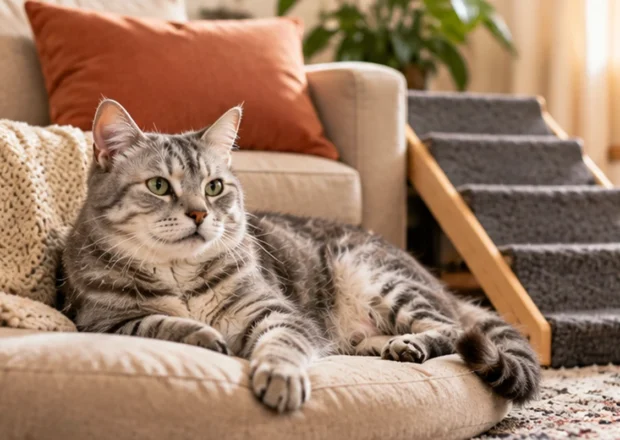
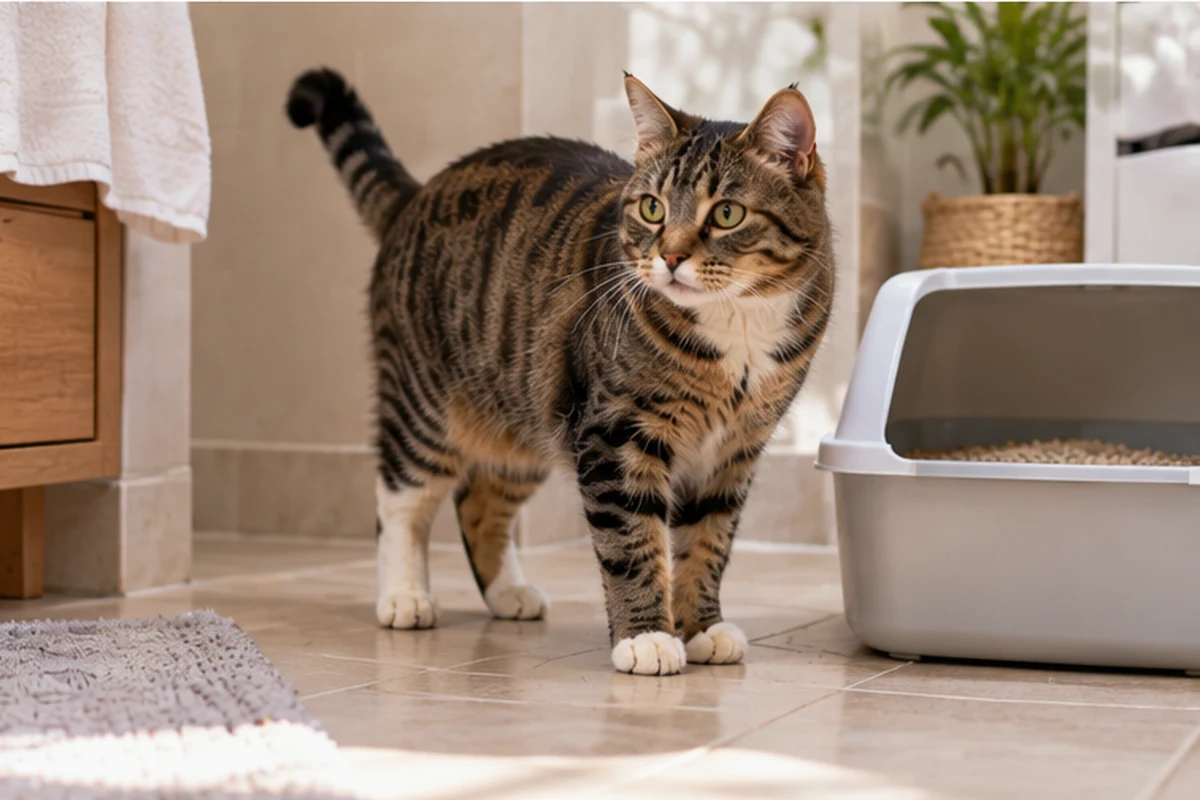
A litter box is a small built environment. Location, size, entry height, substrate, cleanliness and escape options matter. A cramped covered container with a narrow entrance may feel very different from an open tray with enough space to turn. Think about where the cat can enter and leave without another animal trapping it. In a house with stairs, offer access on more than one floor if practical, especially for a cat with reduced mobility.
The common starting guideline of one box per cat plus one extra can help households reduce competition, but number alone is not the whole issue. Three trays lined up in one narrow laundry room may function like one defended resource if a more dominant cat controls the doorway. Distribute boxes into separate, quiet locations with clear access. Observe whether another pet crowds, follows or startles the cat around the tray.
For an older cat, a lower entry and non-slip floor may matter more than a designer box. For a young cat, a large open tray that is easy to find may improve access. Make any changes without suddenly removing a box the cat still uses. The aim is to create a predictable choice and gather information about what the cat prefers.
Litter texture, scent and cleaning routines
A sudden change from unscented fine litter to a strongly scented or coarser product can alter a cat’s willingness to enter the tray. When testing a different substrate, provide it in an additional box while retaining the familiar option. If the cat consistently chooses one, that preference gives useful information. Avoid treating one observation as conclusive because the location and cleanliness of the box also influence behavior.
Scoop regularly and clean boxes with products appropriate for household pets, following label instructions and rinsing thoroughly. Strong odors from cleaners can become an aversive cue. When accidents occur elsewhere, use an appropriate pet-safe cleaner so residual odor does not repeatedly attract the cat to the same location. Be cautious with products containing ingredients hazardous to cats and never mix cleaning agents.
A child, dog or automatic appliance that surprises the cat during elimination can make an otherwise clean box feel unsafe. Privacy matters, but isolating the box behind a difficult door or in a dead-end location can be counterproductive. A calm and accessible position is generally preferable to hiding it as far from living spaces as possible.
Marking is different from other house soiling
Urine marking may appear on vertical surfaces and can be associated with territorial or social contexts, but posture alone is not a complete diagnosis. Cats can mark in more than one way, and animals with urinary disease may urinate in unusual locations. Have the cat assessed medically before assuming marking is the explanation. Consider changes in outdoor cats visible through windows, introductions of new pets or conflicts over resting places as possible environmental factors to discuss with a behavior professional.
If several cats share the home, assess whether there are enough separate resources besides litter boxes: food, water, resting spots, scratchers and elevated space. A cat may avoid a hallway long before owners see a direct fight. Video from a common area, without invading private spaces or staging conflict, may help reveal blocking or chasing patterns. A behavior specialist can offer an individualized plan after medical problems are addressed.
How to make changes without increasing stress
Preserve the cat’s existing routine where possible. Add one accessible tray in a quiet area, maintain preferred litter, and avoid forcing the cat into the box. If a box is in a noisy, busy place, try an additional location rather than abruptly moving the only known option. Encourage safe, predictable daily activity and separate resources among pets. Any broader behavior intervention should be chosen based on the cat’s clinical and household assessment.
Owners sometimes confine a cat to a small room as a shortcut to retraining. That may help in carefully designed professional plans, but unsupervised confinement can increase stress and does not treat urinary pain. The same is true of repellents and strong scents. Use low-pressure environmental changes and follow veterinary guidance; the correct path depends on whether the underlying driver is medical, social, physical or a combination.
Do not remove drinking water to reduce accidents. Adequate hydration is fundamental, and changes in thirst are clinically useful information. Record whether the cat is drinking more or less rather than attempting to modify intake yourself. If a veterinarian recommends dietary or water-intake strategies for a diagnosed condition, ask for a concrete plan that fits your household.
What might the veterinary visit cost?
There is no single national bill for ‘litter-box trouble’ because the evaluation may range from an examination and urinalysis to additional laboratory work, imaging, emergency hospitalization or treatment. Ask for an itemized estimate and whether there are separate charges for sample collection, urine culture, blood testing, radiographs or ultrasound. Ask which tests would change immediate treatment and which might be deferred safely. The answer should come from the veterinarian after assessing urgency.
A hypothetical stable-cat workup might contain a $90 consultation, $75 urinalysis and $160 in additional testing, totaling $325. These are invented amounts solely to demonstrate how separate line items accumulate; they are not reported prices or advice to choose a particular test. An emergency obstruction can require much more complex care. Do not use a low fictional example as a reason to delay when urine output appears blocked.
Pet insurance may treat an eligible diagnosed illness differently from routine care or a pre-existing condition, depending on the contract and medical history. An owner should document signs, earlier episodes and veterinary recommendations accurately. Neither the absence of a microchip nor a missing old medical record means symptoms before enrollment disappear for coverage purposes.
Questions to take to the appointment
Describe the exact behavior, the most recent normal urine clump and any straining or discomfort. Bring a list of foods, supplements and medications; note new pets, renovations, moves or changes to litter. Ask what conditions the veterinarian is considering, whether imaging or urine testing is appropriate, and what signs should lead to an emergency visit. If a medical problem is ruled out, ask whether the clinic can recommend a qualified feline behavior professional or a structured environment plan.
If you share the home with more than one cat, explain where each tray is and whether the cats can approach without passing one another. Household details can affect a treatment plan as much as the box’s cleanliness. Keep the instructions in writing so everyone in the home responds consistently.
What to do next
When a cat starts eliminating outside the box, medical safety comes first: a possible urinary blockage needs immediate care, and other sudden changes warrant a timely veterinary assessment. After that, make the environment easier rather than punishing the animal. The right outcome is not simply a cleaner floor; it is a cat that can urinate and defecate comfortably with reliable access to a place it willingly uses.
Research sources
Research reviewed October 9, 2026. Veterinary guidance is educational and not a diagnosis. Hypothetical calculations are not observed U.S. prices. Insurance terms, when discussed, depend on the current state-specific contract and the individual claim.