The short answer: Choose a complete-and-balanced food formulated for growth, follow the package’s feeding instructions as a starting point, and adjust portions with your veterinarian as your kitten gains weight and changes condition. Growing kittens have different nutritional needs from adult cats and usually benefit from more frequent meals during the early months. Cornell’s feline nutrition guidance emphasizes life-stage suitability and consistent access to fresh water; the FDA explains how to identify a pet food’s nutritional adequacy statement. A diet labeled for adult maintenance alone should not be treated as automatically suitable for a growing kitten.
The feeding plan for an eight-week-old kitten is not the same as for a ten-month-old cat approaching adulthood. Nor is it identical for a kitten recovering from illness, a very small rescue, or a rapidly growing large-framed cat. The important parts are choosing a suitable food, measuring what is actually eaten, monitoring body condition and avoiding abrupt changes that create digestive upset. This guide provides a framework for talking with a veterinary team, not a universal prescription for calories or meal grams.
Read the nutritional adequacy statement, not just the front label
Food packages are designed to catch attention. Words such as natural, premium, protein-rich or indoor do not independently establish whether a food supplies all nutrients needed for growth. In the U.S., look for a nutritional adequacy statement indicating that the product is complete and balanced for growth or for an applicable all-life-stages category. The statement may describe formulation using AAFCO nutrient profiles or feeding trials under recognized procedures. Ask your veterinarian if you cannot locate or interpret it.
An adult-maintenance food and a growth food are intended for different physiological needs. A kitten is developing bone, muscle and organs while also using energy for play, temperature regulation and normal activity. Cornell notes that life stage is central to selecting an appropriate diet. The FDA explains that AAFCO nutrient profiles differ for growth and reproduction versus adult maintenance. The right decision is based on nutritional adequacy, not on a photograph of a kitten on the bag.
A food should also be practical for the individual cat. The texture needs to be manageable, the kitten must actually eat enough of it, and the household must be able to obtain it consistently. If you have questions about a prescription diet, severe digestive issues or growth concerns, use a veterinarian’s tailored guidance rather than replacing regular food with a home recipe found online.
Meal frequency changes as kittens grow
Very young kittens are different from weaned, growing kittens. Neonatal or orphaned kittens that require milk replacer need age-specific care from a veterinarian or experienced rescue professional; ordinary canned kitten food is not the right substitute for an unweaned neonate. If you have a found kitten whose age is uncertain, obtain prompt guidance before assuming it can eat a normal bowl meal. Incorrect feeding techniques can carry serious risks.
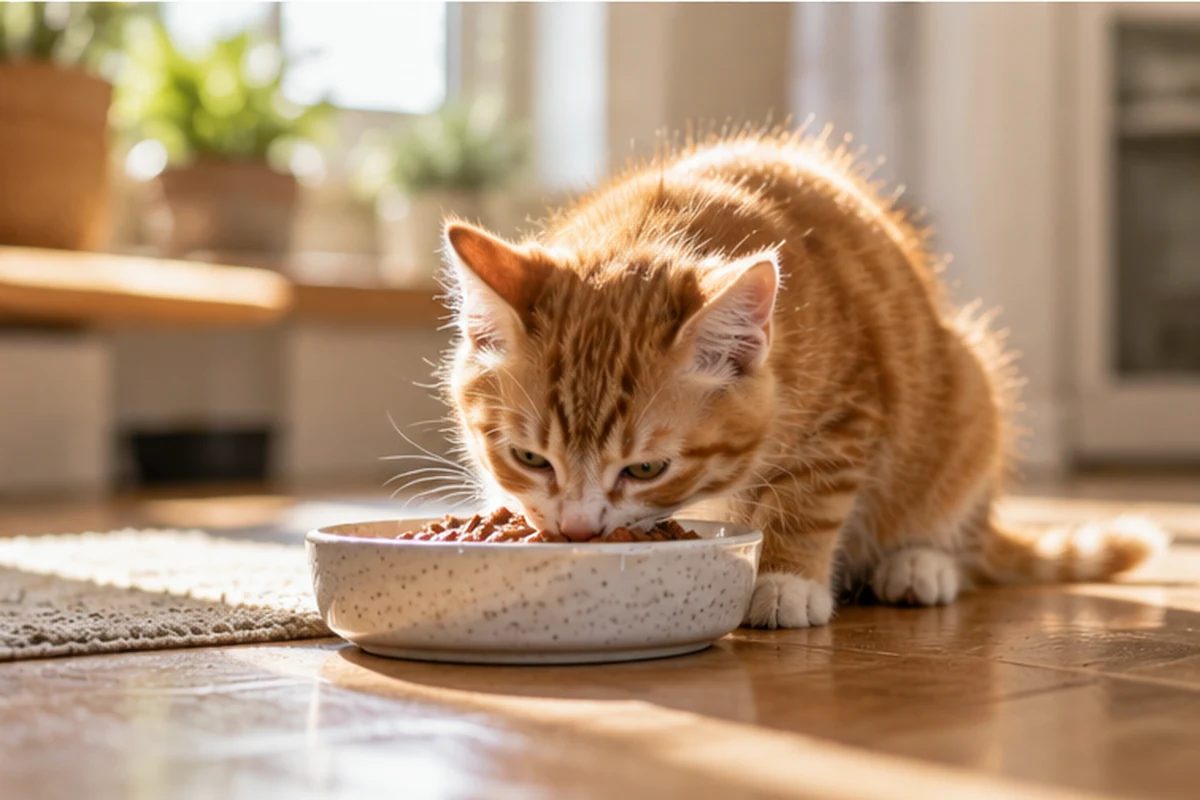
For weaned kittens, smaller meals spread through the day may make intake easier. Cornell’s feeding guidance suggests roughly three daily meals through about six months of age and often two meals during the following months, while emphasizing that health and individual preference affect plans. Treat those as useful discussion points, not rigid requirements. A kitten with a veterinary medical condition may need a different strategy entirely.
If several household members feed the kitten, agree on a single measured daily allowance and divide it among scheduled meals. Otherwise breakfast treats, afternoon ‘extras’ and an evening bowl can quietly double the intended amount. Write down feeding times if caregivers rotate. Consistency also helps you notice a meaningful drop in appetite that might otherwise be hidden when several people each assume someone else fed the pet.
How much food is enough?
There is no meaningful universal answer in cups, cans or grams. Food energy density varies considerably, and kittens’ needs vary with age, weight, activity, health and growth rate. Start with the feeding guidance for the exact formula and your kitten’s current weight, then have the veterinarian evaluate weight gain and body condition over time. A very active growing kitten may need a different adjustment from one recovering after illness. Guessing by how eagerly the kitten begs is less reliable than monitoring growth.
Measure rather than estimating a heap of kibble. If a label is in cups, use a consistent measure or kitchen scale and document how many grams correspond to the manufacturer’s quantity. If you feed both wet and dry products, account for both when calculating a day’s intake; each package’s ‘daily amount’ usually assumes that product is the entire diet. Ask your veterinarian how to combine them appropriately.
A useful log records the food brand and formula, daily amount offered, amount left, treats, body weight at clinic visits and stool changes. The log need not become an obsession. Its purpose is to identify trends: consistently leaving meals, sudden hunger associated with weight changes or falling off an expected growth curve deserve a professional conversation.
Wet food, dry food or a combination?
Both canned and dry diets can supply complete nutrition when correctly formulated and fed in suitable quantities. Wet food introduces more water with the meal and may appeal to some kittens; dry food can be convenient for portioning or puzzle feeding. Neither format is automatically best for every kitten. Cornell discusses variety in commercial diets while focusing first on balanced nutrient content. Your veterinarian may have preferences based on hydration, dental problems, urinary history or other health considerations.
If feeding both, calculate the combined energy intake and ensure at least the main dietary portion remains complete and balanced for the kitten’s stage. If a kitten refuses one texture, do not assume stubbornness. Dental discomfort, nausea, sudden change in smell or unfamiliarity can affect interest in food. A kitten that is not eating should receive timely veterinary advice; young or medically fragile kittens may deteriorate quickly.
Store opened wet food according to label directions and avoid leaving perishable food out longer than recommended. Wash bowls and utensils routinely. Keep the feeding area calm and separate from litter boxes. In multi-cat homes, a kitten may be displaced by a faster adult eater; feed separately when needed so you know what each animal receives.
Changing food without upsetting the routine
If the kitten arrived from a shelter or breeder, ask what specific formula was being served and whether there is enough for a transition. A gradual change over several days or longer, adjusted according to veterinary advice and the kitten’s tolerance, may be easier than an abrupt switch. Mix according to an agreed plan while monitoring stool, vomiting and appetite. If significant gastrointestinal signs occur, seek veterinary guidance rather than repeatedly trying new flavors.
A change in food coinciding with a move, vaccination appointment or parasite treatment can make it harder to know why a kitten has soft stool. Keep notes on timing. Some kittens need medical assessment for parasites or illness rather than another brand. Do not keep withholding food to ‘teach’ the kitten to accept a new diet. A persistently poor appetite is more important than winning a preference battle.
When a food is no longer available, ask the veterinarian about suitable alternatives for growth. The color and marketing theme of the bag do not have to match; the nutritional adequacy statement and the animal’s response matter more. For a kitten with a diagnosed health problem, do not change a prescribed diet without the treating clinician’s input.
Treats, supplements and human food
Treats can support gentle training and handling practice, but they should not displace balanced growth nutrition. Cornell cautions against allowing treats to become a large part of total calories. Small pieces are often sufficient; a kitten may value attention, play or a short search game as much as food. Record extras if weight gain becomes concerning or if a diet trial is prescribed.
A complete diet ordinarily should not need an owner-selected collection of vitamins, calcium products or nutritional powders. Excess supplementation can be harmful. Raw meat diets pose potential infection hazards to animals and people, and homemade diets can be deficient if not professionally formulated. If your household prefers home-prepared feeding, ask for a formulation created by a qualified veterinary nutrition professional rather than approximating a recipe from social media.
Avoid routinely sharing foods prepared for people. Some ingredients are toxic to cats, and rich or strongly seasoned leftovers can trigger digestive upset. Make sure everyone in the home understands the same rules, especially children excited to offer scraps. Keeping food predictable also makes any later investigation of allergy, vomiting or diarrhea more reliable.
Water and feeding stations
Provide clean fresh water at all times. Some kittens prefer a wide bowl, another location or a fountain; observe what the animal uses rather than assuming a single design is best. Keep water available even if the kitten is eating wet food. If your pet has unusually increased drinking, very little drinking, or changes in urination, tell a veterinarian rather than trying to manipulate water access.
Place bowls where the kitten can eat without being cornered by dogs or adult cats. Separate stations may reduce competition in multi-pet households. If the kitten eats too rapidly, discuss safe ways to divide portions or use an age-appropriate feeding puzzle. The puzzle should never be so difficult that the kitten cannot obtain enough food. Feeding should be a positive, manageable routine, not a test of persistence.
Clean bowls frequently and check for damaged or cracked surfaces that are difficult to sanitize. Keep food packaging closed and follow storage instructions. If you buy large quantities, consider whether the bag can remain fresh through the period when your kitten will be eating that formula. Nutritional quality on paper does not help if the food spoils or is stored poorly.
Growth checks and the transition to adult food
Many cats approach physical maturity around the first year, but timing varies and medical circumstances matter. Discuss the transition point at routine visits rather than changing food automatically on a birthday. A veterinarian can assess body condition, development, sterilization status and any special health needs. When the time comes, plan a gradual transition to a complete adult diet, monitor intake and make portion changes based on the new food’s energy content.
After spay or neuter surgery, some kittens need feeding adjustments, but there is no justification for abruptly restricting a growing animal without individual advice. Ask the clinic what to monitor and how often to weigh the cat. The goal is steady appropriate growth, not chasing a particular online growth chart or assuming every kitten of the same age should have the same body size.
If you are worried your kitten is thin, growing very slowly, vomiting repeatedly or not passing normal stool, arrange veterinary assessment. Diet change alone may fail to address medical problems. A food plan is only one part of health care alongside parasite prevention, vaccinations, examinations and a safe environment.
What food will cost over the first year
Food spending varies with formula, format, portion needs, local prices and waste. A precise annual figure without a specific product and quantity would be misleading. You can build a working budget by recording the package price, the amount actually fed per day and how long one package lasts. Repeat the calculation after a major portion or formula change. Include treat costs and any prescribed nutrition separately.
For an invented budgeting example, suppose a $32 bag lasts 20 days. That is $1.60 per day, or approximately $48 over a 30-day month, before treats or canned meals. Those numbers are hypothetical, not representative prices or advice on how much a kitten should eat. If you combine foods, calculate the daily cost of each portion and add them. This keeps the planning grounded in the products you actually buy.
Premium packaging does not prove a better outcome, and cheaper food is not automatically deficient. Compare nutritional adequacy, tolerance, accessibility and the veterinarian’s advice. If the household budget becomes tight, ask the clinic about acceptable alternatives before stretching a bag by feeding less than the kitten requires.
Questions to bring to your veterinarian
Ask whether the current food is complete and balanced for growth, whether the measured daily amount suits the kitten’s current weight and body condition, and when to return for a weight check. Confirm the preferred feeding frequency and how to handle mixed wet-and-dry meals. Ask about a transition to adult food based on the kitten’s health rather than an arbitrary calendar date. If appetite or digestion has changed, mention exactly when that started and what else changed at home.
The foundation is simple: suitable growth nutrition, enough food and water, consistent routines and monitoring by someone who can examine the animal. The details should change as the kitten changes. That makes feeding part of the EvePaw Growing Up stage, not a one-time choice made when the first bag comes home.
Research sources
- Cornell: Feeding Your Cat
- Cornell: How Often Should You Feed Your Cat?
- FDA: Complete and Balanced Pet Food
Research reviewed October 9, 2026. Veterinary guidance is educational and not a diagnosis. Hypothetical calculations are not observed U.S. prices. Insurance terms, when discussed, depend on the current state-specific contract and the individual claim.