The short answer: An older cat needs more deliberate monitoring, not a lower standard of care or an automatic assumption that changes are ‘just age.’ The AAHA senior-care guidelines emphasize individualized examinations, diagnostic testing where appropriate, attention to pain and mobility, and modifications at home that preserve daily comfort. A cat that is drinking more, losing weight, eating differently, changing litter-box habits or struggling to jump should be evaluated rather than having the change attributed to getting older. Some situations require more urgent care, particularly if the cat cannot urinate, has difficulty breathing or suddenly becomes very weak.
This article draws on the 2023 AAHA Senior Care Guidelines, the senior-patient definition and AAHA’s monitoring recommendations. It is educational guidance, not a way to diagnose your own cat. A veterinarian must decide the urgency, examination and treatment suited to the animal’s condition.
When does a cat become a senior?
AAHA references feline life-stage guidance that commonly places cats older than ten years in the senior category. That is a useful framework for planning, not a biological switch that flips on a birthday. Two cats of the same age can differ widely in weight, dental status, mobility, behavior and existing disease. A cat with several controlled medical conditions may require closer monitoring than a peer with no known problems, regardless of whether both are labeled ‘senior’ in a shelter record.
The practical value of a life-stage label is that it prompts a different conversation at the clinic. The veterinarian may want a more detailed history of food intake, drinking, eliminations, play, grooming, sleeping and movement. The owner may need to notice smaller changes and keep better records than in the cat’s earlier years. The aim is to detect treatable problems and adapt the environment, not to assume inevitable decline.
When scheduling a visit, mention specific changes rather than simply requesting an ‘old cat checkup.’ A clinic can plan more effectively if it knows the cat has begun missing the litter box, stopped climbing a favorite perch or lost weight despite appearing hungry. These details may influence how much appointment time or diagnostic testing is appropriate.
Make a simple baseline before anything seems wrong
Pick a few observations you can record consistently at home: approximate weight when measured accurately, appetite, water intake, litter-box use, activity, grooming and ease of movement. You do not need to create a daily medical chart for a comfortable, stable animal. A brief monthly note or a short phone video showing normal stairs and jumping can make later changes easier to describe. AAHA encourages patient-specific history and documentation because the pattern matters, not just one isolated impression.
Avoid relying entirely on memory. Owners see their pets every day and may acclimate to gradual changes. Weighing a cat on the same reliable scale periodically can reveal trends that are less obvious under thick fur. If the cat is losing weight unexpectedly, contact the veterinarian even if appetite remains good. Weight loss is not a diagnosis of a particular disease; it is a useful finding that deserves professional evaluation.
Drinking and urination patterns can be tricky to estimate in multi-cat homes. If you have several cats, consider how to observe which animal uses the box and whether the water level is changing for one pet or all of them. Never restrict drinking water to ‘test’ whether a cat is thirsty. Report your observation to the veterinary team and let the clinician select appropriate investigations.
Veterinary visits and screening tests
AAHA’s senior-care recommendations describe more frequent individualized assessment than simply waiting for the next annual vaccine visit. The right interval depends on health, prior findings and the vet’s judgment. A routine senior visit may include a hands-on exam, body and muscle condition assessment, oral evaluation, pain and mobility discussion, and consideration of blood work, urine testing or blood-pressure measurement. Not every test is required at every appointment for every pet.
Blood counts and chemistry can help a veterinarian investigate anemia, organ-related abnormalities and broader patterns. Urinalysis adds information that a blood panel alone may not provide. Thyroid testing can matter for some older cats, and blood pressure can be important in assessing several possible health concerns. An abnormal result is not a definitive diagnosis by itself; the clinician interprets it with physical findings, symptoms and other tests.
Request a copy of the results and ask what has changed since the last set. A small shift within a reference interval may be meaningful in context, while a flagged number can sometimes require repeat testing or a different interpretation. Resist the temptation to self-prescribe supplements or stop medication after reading laboratory values on a portal. Ask the veterinarian for a plain-English summary and the plan for follow-up.
Mobility changes are not simply ‘slowing down’
Cats can be subtle about discomfort. A cat may stop jumping onto a bed, approach stairs differently, pause before entering a litter box or groom less thoroughly. These are observations a veterinarian can use when evaluating pain, arthritis or other causes. They do not prove a specific diagnosis. Avoid giving human pain medication; some human medicines can be dangerous for cats and dosing is not safely determined from body weight alone.
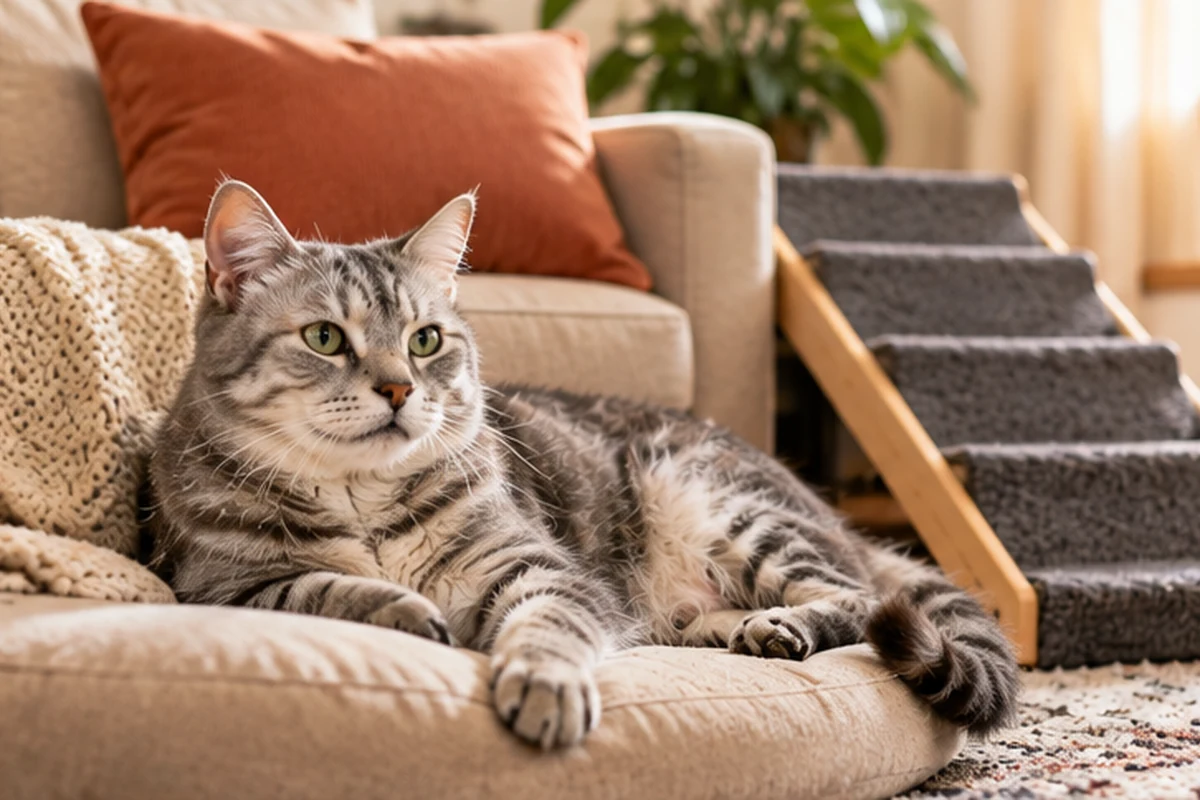
Home modifications can be practical while evaluation is arranged. Place a sturdy step near a favorite resting place, provide non-slip surfaces and consider lower-sided litter boxes that are easier to enter. Keep food, water and sleeping areas accessible without requiring repeated jumps or trips up stairs. Changes should respect the cat’s habits; suddenly moving every familiar resource can produce unnecessary stress.
If the cat has difficulty standing, significant pain, a sudden inability to move normally or other alarming signs, seek prompt veterinary assessment. The right response depends on onset and severity. Do not force stretching or rehabilitation exercises without professional instruction simply because a social-media video describes a ‘senior mobility routine.’
Litter-box changes deserve a real investigation
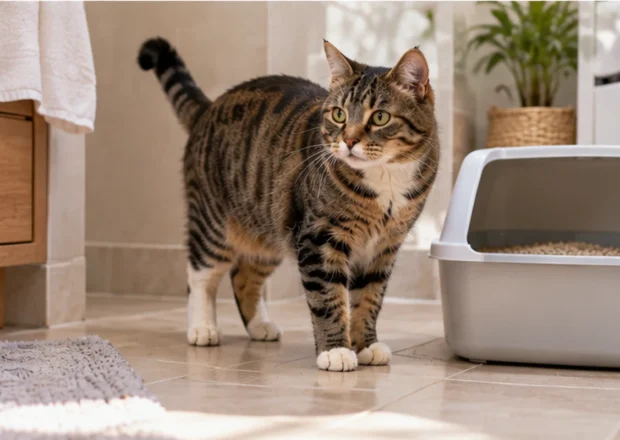
Accidents outside the box are often described as a behavior problem, but discomfort, changes in urinary habits, box accessibility, stress and medical disease can all matter. Begin by describing the pattern: how often, where, whether the cat strains, whether urine is produced and whether stool is normal. A cat repeatedly attempting to urinate without producing urine, particularly with distress or lethargy, can have a life-threatening obstruction and needs emergency veterinary attention.
For non-emergency changes, make the box easier to reach and keep it clean without punishing the cat. A high-sided box that worked at age three may be awkward for an animal with joint discomfort. Placing additional boxes on the floors where the cat already spends time can help. Your veterinarian may recommend an examination or testing before attributing the problem to stress. The household setup and medical findings belong in the same conversation.
In multi-cat households, competition around a box or access to a quiet room can complicate the pattern. Think about whether another cat blocks the path, whether the senior cat must climb stairs or whether a noisy laundry area makes the box less appealing. These practical adjustments do not replace clinical evaluation, but they can improve the cat’s ability to use available resources.
Appetite, dental care and nutrition
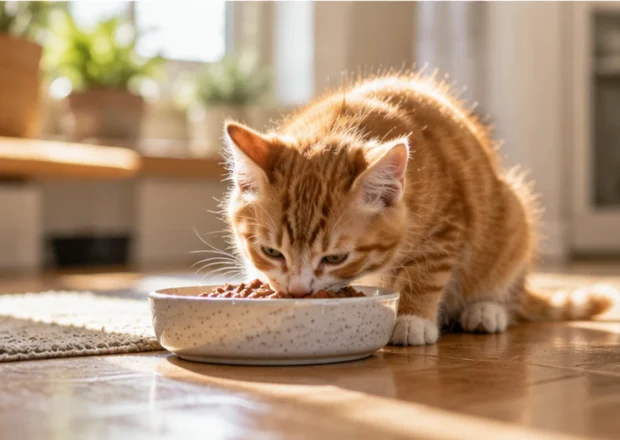
A senior cat that changes eating habits deserves attention. Eating less may reflect mouth discomfort, nausea, altered smell, stress or many other problems. Eating more while losing weight can also indicate a medical issue. The correct response is a veterinary assessment, not a blind switch to whichever food is marketed as ‘senior’. Nutritional requirements depend on weight, body condition, diseases and the veterinarian’s recommendation; an older cat may not benefit from the same food as every other animal of a similar age.
Dental disease can influence comfort and appetite. Watch for food dropping, reluctance to chew, pawing at the mouth, visible oral changes or breath that has noticeably worsened, while recognizing that cats can hide dental pain. An examination may reveal whether further dental evaluation is needed. Home tooth brushing, where appropriate and tolerated, is preventive care, not treatment for established painful disease. Do not use human toothpaste or force an anxious cat’s mouth open.
If the cat has a diagnosed kidney problem or another chronic condition, diet may be an important part of its treatment, but a therapeutic diet should be chosen with the treating veterinarian. Over-the-counter supplements, special proteins and severe food restrictions can interfere with nutritional intake or prescribed care. The highest-value question is whether the plan supports the cat’s medical needs and whether the cat actually eats enough.
Behavior changes and cognitive concerns
Older cats can become more vocal, sleep at different times, seek less interaction or appear disoriented. Some of these changes may involve pain, sensory loss, medical disease or cognitive changes; they should not be diagnosed from a home checklist. Describe when the behavior began, whether it is worsening, what triggers it and what else changed in the household. A video may provide the veterinarian with useful context.
Keep predictable routines where possible. Cats often use familiar paths to reach food, beds and litter boxes. A night light, accessible resources or a calmer sleeping area may help a cat with changed sensory abilities, but environmental changes should be tested gently rather than imposed all at once. If changes are severe or sudden, especially accompanied by weakness, collapse or abnormal breathing, seek medical care urgently.
For a cat living with younger pets, consider whether the senior animal has safe places to rest without constant interruption. Separate food stations, quiet areas and accessible perches may reduce stress. A practical quality-of-life plan accounts for the animal’s preferences, not only its clinical test results.
Medication, long-term conditions and follow-up
A senior cat may need chronic medication, but safe management involves more than remembering the dose. Keep an accurate list of medicine names, strengths, times, prescribing clinic and refill dates. Tell every veterinarian about prescribed drugs, supplements and recent medication changes. Never modify a dose or substitute a human preparation without the clinician’s instructions. If administering a pill becomes difficult, ask the practice about safer handling strategies or alternative formulations rather than repeatedly struggling with the cat.
Plan follow-up tests and prescription reviews on a shared household calendar. A clinic may request blood work or another check to monitor treatment effectiveness and side effects. The cost of the medicine alone can understate the ongoing expense of a condition; follow-up visits, laboratory monitoring and treatment adjustments may also matter. A written care plan reduces the risk that a required recheck gets lost between refills.
Insurance is a separate conversation. A new policy generally will not cover conditions that predate its eligible start, and waiting periods can affect new symptoms. Do not assume a diagnosis disappears from insurance consideration if it was recorded at a different clinic or before microchipping. Keep medical documents accurately and examine state-specific contract language before relying on future reimbursement.
Plan the home for comfort, not frailty
Comfort often improves through small changes: a warm bed away from drafts, easy access to water, a litter box with a low entrance, and a stable route to familiar resting areas. A ramp may be more helpful than moving the cat’s favorite bed to an unfamiliar room. If a cat enjoys a window view, consider a secure lower perch instead of requiring a large jump. Choose sturdy products that cannot tip or slide underfoot.
Consider the cat’s grooming. Some senior cats need assistance with brushing, especially around areas they no longer reach easily. Handle mats gently and ask a groomer or veterinary team for help with tightly matted fur or skin irritation; pulling can injure the animal. Trimming claws may also require more attentive monitoring as activity patterns change. Do not assume an older cat is no longer interested in play. Gentle, accessible play can remain valuable if the animal is comfortable and the veterinarian has not advised restrictions.
Build a realistic senior-care budget
Plan for the cost of examinations, recommended tests, medication, supplies and occasional urgent evaluations rather than relying only on a generic ‘annual vet’ number. Ask your clinic for itemized estimates whenever non-urgent diagnostics are recommended. Request that it separate essential testing now from reasonable follow-up testing later, if medically appropriate. Clinics and regions charge differently, and without location-specific estimates a fixed national senior-cat cost figure would be misleading.
For a cat with a chronic diagnosis, consider a rolling three- or six-month cost record. Record prescription refills, monitoring visits, supplies, travel to specialist appointments and any prescribed diet. This helps identify recurring obligations and prevents a one-time urgent bill from obscuring ordinary monthly spending. If cost limits affect decisions, discuss them openly with the veterinarian. The team may be able to explain priorities and alternative treatment pathways without suggesting that the cheapest path is always clinically equal.
Questions to ask at the next visit
Ask what changes in eating, drinking, weight, movement and behavior should trigger an appointment. Ask which screening tests are warranted, what previous results indicate, how often follow-up should occur and whether pain or dental disease needs separate assessment. Bring a list of medications and a few specific home observations. If the cat is difficult to transport, ask the clinic how to make the carrier and visit less stressful without administering anything not prescribed.
An older cat’s care should be individualized and revisited as circumstances change. The goal is continued comfort and function, not merely collecting normal lab reports. Under EvePaw’s Growing Older stage, that means pairing veterinary guidance with a home that remains easy to navigate and a budget that recognizes care may evolve.
Research sources
- AAHA: 2023 Senior Care Guidelines for Dogs and Cats
- AAHA: Defining the Senior Patient
- AAHA: Evaluating the Healthy Senior Pet
- AAHA: Diagnostic Tests and Frequencies for Seniors
Research reviewed October 9, 2026. Coverage and cost details may differ by state, policy version, pet and clinic; fictional examples are labeled in the text. This article is educational and does not replace veterinary care or the insurance contract.