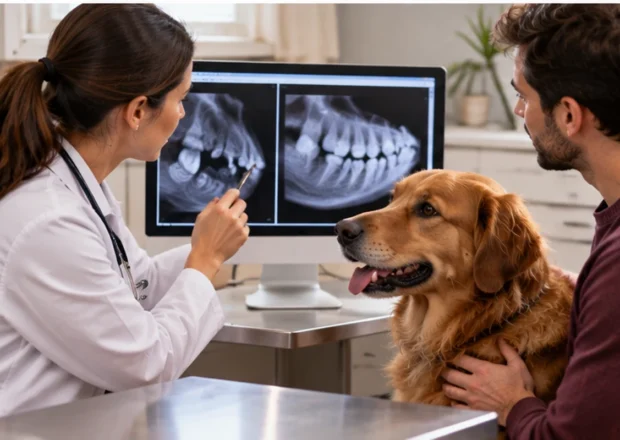
The short answer: A veterinary ultrasound bill depends on what is being scanned, whether the exam is focused or comprehensive, who performs and interprets it, whether a consultation is included, and whether additional sampling, sedation or other tests are needed. A brief emergency scan and a detailed specialist abdominal examination do not necessarily answer the same questions. Rather than relying on a single nationwide ‘ultrasound price,’ request a written estimate that separates imaging, professional interpretation, consultation and any possible follow-up procedures.
Ultrasound is a diagnostic tool, not a treatment and not a definitive diagnosis by itself. It creates images from sound waves and can help veterinarians assess soft-tissue structures or guide certain procedures. VCA’s patient education describes common veterinary uses, including abdominal imaging and heart assessment, and notes that routine scans often do not require general anesthesia. The correct examination depends on the animal’s clinical problem. This guide explains the cost logic without fabricating a national price survey.
What does the veterinarian want the ultrasound to answer?
A dog with repeated vomiting may need evaluation of abdominal organs and gastrointestinal structures. A cat with urinary signs may require assessment of the bladder or kidneys. An animal with a suspected heart problem might need echocardiography, which is a specialized examination rather than the same appointment as a general abdominal ultrasound. Each question influences the scan, equipment and expertise required. Ask the veterinarian to explain the clinical question before comparing fees between facilities.
A focused examination can be designed to look for a limited finding in an urgent context. A full abdominal ultrasound systematically surveys several organs. The fact that both use a probe and a screen does not make them interchangeable. If a low-cost estimate refers to a quick focused scan but another price includes an extended study and specialist report, the second number may purchase a different diagnostic service.
An ultrasound does not replace every other test. Gas-filled structures and bone can limit what can be visualized, and a normal or inconclusive image may not rule out all important diseases. The veterinarian may combine the scan with examination findings, bloodwork, urinalysis or radiographs. A useful financial decision therefore asks how the results will guide the next treatment step, not just whether the scan appears affordable.
Why there is no single predictable national fee
Veterinary pricing varies with regional operating costs, specialty referral services, emergency staffing, equipment, provider training and the scope of the examination. A scan performed during a scheduled daytime outpatient appointment may have a different facility and staffing cost from imaging a critically ill pet overnight. The same practice may offer different charges for a focused recheck versus a comprehensive initial study.
Ask whether the quote is a stand-alone imaging charge or a total appointment estimate. Some facilities bundle interpretation into the scan fee; others separate a radiologist or specialist’s report, an examination or a referral consultation. Neither billing design automatically indicates better quality. What matters is knowing which work is being performed, who will explain the result and when the report will be ready.
If a website advertises a price without listing scope and date, treat it cautiously. There may be a minimum examination fee, required prior tests, or additional fees for sampling. Call the facility with the exact referral request and ask whether the quoted service matches the veterinarian’s question. It is reasonable to request clarity without demanding a guarantee when findings could change the plan.
Focused emergency scan versus comprehensive imaging
An emergency clinician may use point-of-care ultrasound to rapidly assess a particular clinical concern while stabilizing an animal. That can be valuable but usually serves a different purpose from a complete abdominal study. In some cases a focused scan provides enough immediate information for triage; in others it indicates the need for comprehensive imaging after stabilization. Do not assume a brief normal scan rules out all abdominal disease.
A comprehensive study may involve an extended review of organ shape, internal structure and surrounding tissues. Specialist interpretation can be useful when findings are subtle or when results may affect surgery, medication or referral. Ask whether the scan includes written findings and whether your primary veterinarian receives the images or report. Request copies for your records if the pet will continue care elsewhere.
For a pet with a serious emergency, treatment urgency outranks shopping for imaging fees. Contact the emergency team and discuss stabilization, diagnostic priorities and payment expectations. An internet budget example must never be used as a reason to delay a scan when the attending veterinarian believes it is important to immediate care.
Does a pet need sedation or anesthesia?
Many standard ultrasound exams can be performed while an animal is awake, sometimes with gentle restraint and clipped fur. However, anxiety, pain, inability to remain still or the need for a particular intervention may change the plan. If sampling is required, the veterinarian may discuss sedation or anesthesia based on the procedure and the patient’s health. VCA’s ultrasound explanation emphasizes that anesthesia is not ordinarily needed for a typical scan, but some biopsies or related procedures are different.
An owner should ask what the clinic expects for this particular animal. A calm dog receiving a routine abdominal survey may not need the same preparation as a painful patient whose imaging guides sampling. Sedation can create added staffing, medication and monitoring charges. It may also require specific fasting instructions or pre-anesthetic assessment. Follow instructions from the treating clinic; do not withhold water or meals based on a generic website schedule.
If your pet has had a previous anesthetic reaction, heart condition or medication issue, tell the clinic before the appointment. The team can account for these details when planning care. The scan itself is not an indication that every pet will require an IV catheter or hospital stay, and a facility should explain the role of each proposed service.
Can ultrasound show cancer, obstruction or kidney disease?
Ultrasound can identify patterns or structural changes that prompt concern, but an image alone may not establish the exact disease. Some masses require sampling and laboratory evaluation. Some gastrointestinal problems need additional imaging, observation or surgery to understand their extent. Kidney or bladder abnormalities may need to be interpreted alongside blood and urine tests. A veterinarian should explain whether the finding is diagnostic, suggestive or uncertain.
Be cautious of descriptions such as ‘ultrasound diagnoses everything.’ Images depend on tissue, equipment, operator skill and the particular condition. Asking what was not visualized can be as important as asking what was seen. When a report recommends another test, request an explanation of how that test could change management and what risks or costs it adds.
If biopsy or needle sampling is discussed, clarify whether it is image-guided, where the sample is sent and who will interpret the pathology. The ultrasound and pathology may appear as separate invoice items and can take different amounts of time to produce results. You are entitled to understand that sequence before consenting.
How to read the estimate line by line
An estimate may list the consultation, ultrasound examination, interpretation, sedation if indicated, needle sampling if indicated, laboratory analysis and follow-up visit. Additional imaging or emergency hospitalization may be separate. Ask which charges are expected, which are contingent on findings and whether the team will call before exceeding an approved amount. A written high-low estimate can be more useful than a single vague round number.
For illustrative arithmetic only, imagine a $115 veterinary consultation, a $410 diagnostic ultrasound and a $135 specialist report. That totals $660. If additional sampling were recommended for a fictional $240, the arithmetic total would become $900. These numbers are invented teaching figures, not researched prices, current offers or a forecast for any U.S. city. They show why the lowest advertised imaging fee cannot always be equated with the full episode of care.
When comparing two real estimates, line up the components in columns. Is the scan whole abdomen or focused? Is interpretation by a specialist included? Is a physical exam required first? Is the animal likely to need sedation? Can the veterinarian act on the report immediately? Comparing equivalent services protects you from selecting a superficially cheaper quote that omits something clinically necessary.
What if imaging is recommended but finances are tight?
Tell the veterinary team what you can afford and ask which information is essential to making a safe decision today. A clinician may be able to explain alternatives, sequencing or which tests have already answered parts of the question. The medically appropriate course may still be imaging now, particularly in an emergency. Avoid asking the clinician to ‘skip the expensive part’ without understanding the consequences.
Ask the clinic about written payment policies or known assistance resources. Financing carries its own costs and terms, so evaluate it carefully. If seeking a second opinion, ask whether another provider can use existing bloodwork, radiographs or prior imaging to avoid unnecessary repetition. Transporting a medically unstable pet solely to save money may be unsafe; discuss that decision with the care team.
For households planning an emergency fund, a range of possible diagnostics can help demonstrate why a reserve needs to cover more than a basic exam. A single unexpected illness might involve a consultation, labs, imaging, medication and follow-up appointments. The actual costs should be based on local clinic information rather than a one-size-fits-all budgeting rule.
Does pet insurance cover ultrasound?
An accident-and-illness policy may reimburse an eligible diagnostic ultrasound when it investigates a covered condition, but the result depends on the policy, deductible, reimbursement, annual limit, exclusions, effective date and medical history. Some policies handle exam fees separately from diagnostics. An ultrasound performed as part of an excluded or pre-existing problem may not qualify. Routine screening and elective services can have different treatment from diagnostic testing.
Save the itemized invoice and any diagnosis or reason-for-visit documentation. Ask the insurer whether preauthorization or a particular claim format is required under your contract. Do not assume an insurer will reimburse the same percentage of the full bill shown on the invoice; only eligible charges enter the calculation, and policy structures differ. Keep veterinary care decisions with the veterinarian and administrative coverage questions with the insurer.
Questions to ask before scheduling
Ask exactly what organs or structures will be examined, how the scan differs from any earlier test, who will interpret it and when results should be available. Request an estimate showing expected and possible additional items, including sedation, imaging-guided sampling and lab analysis. Ask how the plan changes if the image is inconclusive or reveals an unexpected finding. If the animal is unwell, confirm which signs should prompt emergency care before the appointment.
The most useful ultrasound estimate is one you can understand. Knowing the clinical question, scan scope, interpretation and likely next step lets you compare services fairly while keeping the animal’s health at the center of the decision.
Research sources
- VCA: Ultrasound Examination in Dogs
- Cornell: Feline Lower Urinary Tract Disease, diagnostic imaging context
Research reviewed October 9, 2026. Veterinary guidance is educational and not a diagnosis. Hypothetical calculations are not observed U.S. prices. Insurance terms, when discussed, depend on the current state-specific contract and the individual claim.