If your dog or cat disappears, begin with a focused search close to the last confirmed location, then notify local shelters, animal control and nearby veterinary practices as quickly as possible. Do not wait 24 hours to file a lost-pet report. Secure other pets in the household, keep one reachable phone number active and use a clear recent photograph. A microchip can help reunite a found animal with its family, but only when its registration details are usable and someone scans it.
A missing pet can make owners feel they must search everywhere at once. A simple division of jobs is often more effective: one person searches the immediate area, another files reports and checks shelter listings, and another coordinates community posts and incoming messages. Do not publish sensitive personal documents, announce an unverified cash reward or drive recklessly while searching. What matters in the first hours is acting promptly and keeping information accurate.
The first fifteen minutes: establish the last reliable sighting
Check the home thoroughly, even if you believe the pet escaped outdoors. Cats can hide in closets, inside furniture, behind appliances or in a quiet room after a stressful noise. A dog may have entered a garage or neighboring yard. Ask everyone who was present precisely when the pet was last seen, which door or gate was open and whether it wore its collar or harness. Avoid turning several uncertain memories into a supposedly confirmed route.
Look in places a frightened animal may choose: beneath vehicles, under decks, behind shrubs, inside open sheds or near familiar entrances. Use a flashlight in low light, both for visibility and to identify eyeshine safely. Search calmly rather than creating a loud crowd that could push a shy animal farther away. Bring treats, a leash or carrier and something familiar, but do not assume a scared pet will come when called as usual. Never enter a stranger's property without permission or approach unsafe structures.
Search differently for a frightened cat and a running dog
A missing indoor cat may be hiding silently very near the escape point. Search low, dark, enclosed spaces repeatedly and ask immediate neighbors to inspect garages and sheds before opening them. A dog frightened by fireworks may travel farther, especially along roads, trails or openings in fences. The last reliable sighting and the animal's usual temperament matter more than a generic radius drawn on a map.
For cats, a quiet search at times when the area is less busy may be useful. For dogs, contact routes that lead away from the last sighting, and ask witnesses for the exact time and direction rather than 'I saw a similar dog.' If you spot the animal but it is panicked, resist chasing or surrounding it. Contact a local lost-pet organization or animal control for advice on a safe recovery approach when an animal will not allow handling.
Contact shelters and animal control on day one
File a report directly with the municipal shelter or animal control service responsible for the area, not only with a national website. Include a recent clear photo, size, coat markings, the exact place and time last seen, collar details, microchip number if available, and a reliable callback number. Ask how often new intake photographs appear online, how to check for animals brought in overnight and whether a shelter wants repeat contact or an in-person visit.
Shelter procedures differ by jurisdiction, including holding periods and identification requirements. A dog or cat may be brought to a facility outside the nearest ZIP code, especially near municipal boundaries. Check neighboring shelters as well. Keep a log of the organizations contacted, phone numbers, intake reports and next check-in dates. This avoids relying on memory when several family members are helping and ensures that one unanswered voicemail does not get mistaken for a completed report.
Check the microchip registration—not just the number
A microchip is not GPS tracking. It holds an identification number that a scanner can read. The American Veterinary Medical Association explains that the United States does not have one central microchip registry holding everyone's owner details. Use a registry lookup service to identify the appropriate registry, then verify that the registered phone number and email actually reach you. The number must also be linked to the correct animal.
If the chip was implanted years ago, ownership and contact information may have changed. Keep documentation of the current registration available, but do not upload account credentials, personal IDs or a full veterinary record to public lost-pet groups. Ask your veterinarian or adoption agency for the chip number if you cannot locate it. A registered chip improves the chances of identification when a found animal is scanned; it cannot replace physical searches and shelter reports.
Make a lost-pet notice people can act on
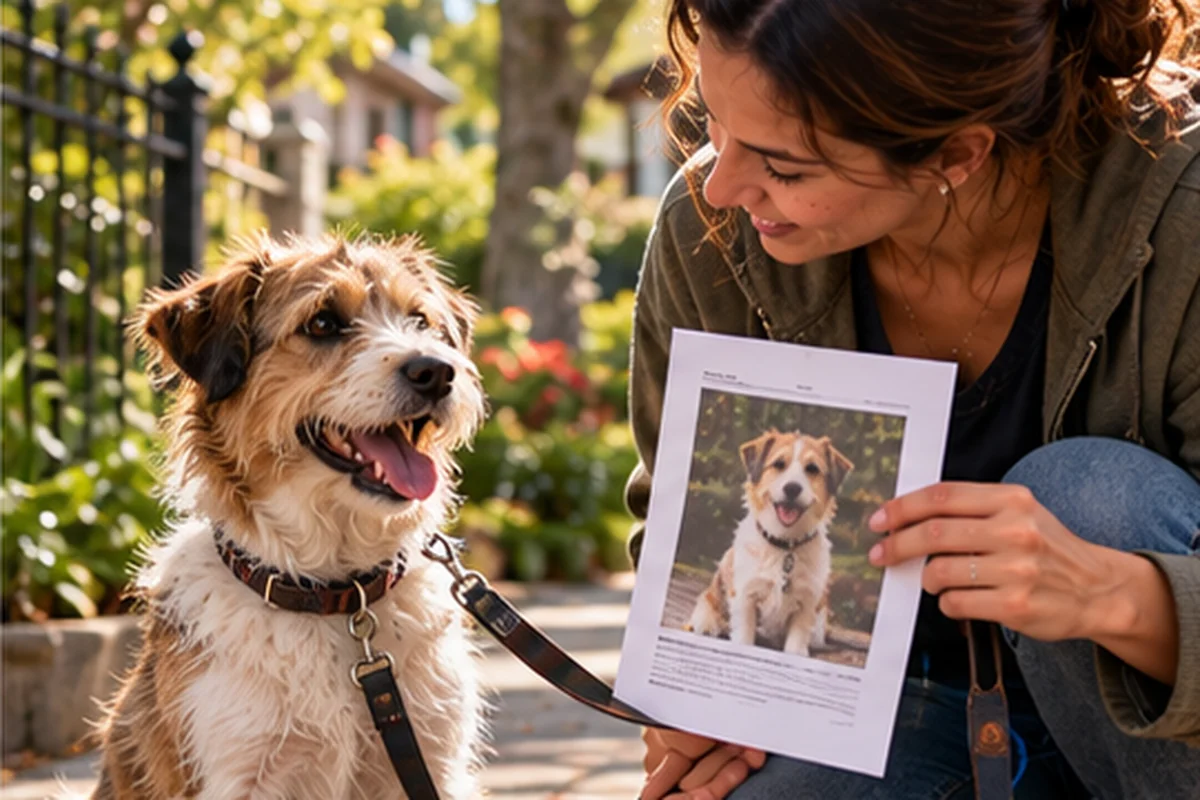
Use one clear photograph where coat markings and face are visible. Include 'LOST DOG' or 'LOST CAT,' the date and approximate location last seen, notable identifying features and a direct way to contact the family. State whether the animal is shy, injured, needs medication or should not be chased. Avoid making up a confident travel direction based on rumor. Share a single canonical post you can update instead of multiplying contradictory versions across groups.
When a new sighting is reported, ask for the time, street or landmark, travel direction and a photo if one can be taken safely. Do not ask people to pursue a scared animal through traffic. Mark reports as confirmed or unconfirmed in your notes. A credible sighting map can be helpful, but it should not distract the family from checking shelters and maintaining the search near the original location. If someone offers to help make flyers, supply one approved design and accurate contact information.
Online tools supplement—not replace—local action
Petco Love Lost allows users to create a lost-pet listing and search possible matches; some shelters and community organizations also use local databases. Neighborhood social media groups can spread awareness quickly. Those tools work best when information is kept consistent and checked regularly. A search result that looks similar is a lead, not proof. Compare identifying marks, ask where and when the animal was seen and contact the relevant facility directly.
Do not assume every shelter posts all newly received animals on the same day, or participates in a particular national tool. Public listings may be delayed and photographs may be difficult to interpret. Call, visit when advised and repeat searches according to the shelter's guidance. If the pet is returned, update each listing as reunited; leaving outdated alerts active can waste volunteer effort and confuse families searching for another animal.
Be cautious about scams and false 'found pet' messages
Lost-pet notices can attract people who claim to have the animal without providing evidence. Ask for an identifying photo or a detail not fully shown on the flyer, and arrange reunification through a shelter, veterinary clinic or other safe public process when appropriate. Be especially cautious when someone demands a deposit, gift cards or a verification code before allowing you to see the pet. Never share a one-time login or banking code as a condition of getting a dog or cat back.
Treat emotionally charged messages with care. A genuine finder may be anxious or uncertain about ownership; a legitimate shelter may have its own identification procedures. Maintain a calm record of conversations and keep proof such as adoption papers, dated photographs and veterinary records ready to show the proper organization. Do not publicly accuse someone of theft solely because a social-media photograph resembles your pet.
A practical first-day division of responsibilities
One person can search the last-seen area and speak to nearby residents. Another can file shelter and animal-control reports, track return calls and verify microchip registration. A third can create the flyer, post on neighborhood channels, and record sightings. Agree on one central notes document or paper log. Confirm before posting updates that everyone is using the same photograph, contact number and description.
This organization is particularly important if a search continues into the night. Exhausted family members are more likely to overlook calls or drive when tired. Set reasonable shifts, keep a phone charged and maintain a safe search buddy arrangement after dark. Volunteers should know that a panicked dog can bolt when approached and that a frightened cat may need patient observation rather than an attempt to grab it.
What to do in the next twenty-four hours
Continue checking the last-seen area and revisit quiet hiding places if appropriate. Follow up with shelters at the intervals they request; look at new intake listings and nearby municipal agencies. Replace flyers that become unreadable or are removed with permission. Review sighting information without assuming every report refers to the same animal. If there are possible sightings along a route, ask experienced local rescuers or animal control for safe recovery assistance.
Keep checking your messages and missed calls. A person who finds a pet may contact the registered chip company, a shelter, the phone number on a collar, or a community listing rather than the channel you were watching. If the cat has a medical condition or the dog is at higher risk from weather and traffic, explain this clearly to responders and ask about safe priority actions. Do not put yourself or a volunteer in danger on roads or hazardous property.
Day two: update the search, do not start from zero
Review what is verified: the escape point, photographs, shelter contacts, the strongest sightings and unsearched locations. Update posts with the date of the last confirmed sighting; keep original locations visible so witnesses know which report is current. Ask nearby businesses or neighbors whether they have relevant camera footage, but respect privacy and property rules. If weather has changed, think about accessible shelter and water locations without treating assumptions as fact.
Recheck veterinary hospitals, rescue organizations and chip alerts. Some found animals are brought in after a delay. Make a schedule to continue the search rather than disappearing from all channels after one intense day. Petco Love Lost and American Humane emphasize that search, community outreach and current identification information work together; none is a guaranteed single-step recovery method.
How identification and recovery affect the budget
Lost-pet preparation can involve ID tags, microchip registration, replacement gear and printing notices. During a search, there may be travel expenses, veterinarian care after a recovery or shelter reclamation fees that vary by locality. Avoid telling families that paying a particular service guarantees a reunion. Ask for the actual fee schedule before purchasing a paid search service, and keep receipts for any legitimate reclaim or medical costs.
If you budget for identification before a pet ever goes missing, focus on keeping it functional: a readable tag, an appropriately fitted collar or harness where relevant, and a current chip registration. A cheap tag with an obsolete phone number has little practical value. If a pet is found injured, contact a veterinarian promptly instead of delaying treatment to debate reimbursement or search costs.
When you find a possible match
Compare photographs from multiple angles and the pet's distinctive markings. If a person or shelter says an animal was found, ask how it was identified and whether a microchip scan was performed. Arrange a safe meeting and take a secure carrier or leash suited to the pet. Do not allow an excited reunion to happen next to a busy road with the animal unsecured. Confirm the animal's condition, offer water when appropriate and seek veterinary advice for wounds, exhaustion or concerning behavior.
A recovered cat may hide for several days, while a dog may need time to rest and return to familiar routines. Check for injuries, ticks, signs of dehydration or exposure to hazardous substances with your veterinarian if indicated. Update the shelters and online notices promptly once home. Finally, review the escape route and decide which doors, screens, routines or identification details can be improved to reduce the chance of a repeat incident.
The best next step is the next verifiable action
There is no universal search radius or fixed timeline that guarantees success. Some pets return quickly; others need repeated shelter checks and community coordination. Families can improve the process by acting promptly, recording actual sightings, avoiding scammers and keeping identification details current. If you feel overwhelmed, ask one trusted person to manage calls while you search or rest.
Start with the immediate area and the local animal-control system. Then build outward using documented information rather than rumors. Even after the first two days, continuing the search can still matter. What helps most is a clear record, safe behavior and a way for anyone who finds your pet to reach you promptly.
Research sources
Research checked October 10, 2026. Sources support the medical, consumer or policy background; illustrative budgets and editorial interpretations are identified in the article.