A denied pet-insurance claim is not always the end of the process. Start by obtaining the insurer’s written reason and matching that explanation to the specific policy language, medical record and invoice. Then identify whether the issue is a missing document, a factual disagreement, an eligibility rule or an exclusion. The next step may be supplying missing records, requesting a formal reconsideration, or making a complaint to your state insurance department. None of those steps guarantees payment; the strongest approach is specific, documented and honest.
First, identify exactly what was denied
A claim can be denied in full, partially reimbursed or marked incomplete because further information is required. Those are different problems. Read the explanation of benefits or decision letter line by line. An insurer may accept treatment as related to a covered illness while excluding exam fees, taxes, a routine service or a particular procedure. A small reimbursement can also result from the deductible or reimbursement percentage rather than an actual exclusion. Treating all these outcomes as “they refused the claim” can send the appeal in the wrong direction.
Write down the claim number, pet’s name, service date, treatment description, amount submitted, eligible amount, deductible or other deductions and the policy clause cited. If the explanation is ambiguous, ask the insurer to identify the precise contractual basis for each disputed line item. Keep the original explanation rather than relying only on what a support representative recalls during a phone call.
Commonly disputed reasons
Pet insurers may reference a pre-existing condition, a waiting period, a plan exclusion, annual benefit limit, missing medical documentation or a treatment they consider outside the policy’s definition of covered care. A provider may also require an itemized invoice and medical notes rather than a simple payment receipt. The correct response depends on what the insurer actually wrote and what the contract says. Do not assume that every denied claim is a mistake, or that a decision based on past symptoms necessarily means the insurer reviewed the evidence correctly.
Pre-existing-condition disputes often turn on chronology and the policy definition. A symptom documented before the effective date can matter even if a definitive diagnosis came later. Conversely, a prior symptom unrelated to the later claim does not automatically prove a connection. The veterinary records and a clinician’s explanation can be important, but a letter cannot rewrite events that actually occurred.
Check the policy version—not a marketing summary
The legally relevant terms are generally found in the policy, declarations and endorsements applicable to the pet, state and effective date. A current website may describe a newer product. A broad landing page may omit state-specific variations and special waiting-period rules. Save the documents received when coverage began and at renewal, and compare the denial against those exact terms.
Look closely at definitions of pre-existing condition, curable condition, bilateral condition, medical necessity and covered expenses. Also check when the insurer says the relevant event occurred. If you cannot identify the clause, ask for it in writing. Do not build an appeal around a competitor’s policy or a different state’s sample contract.
Make a claim-document checklist
Gather the original invoice, paid receipt, submitted claim form if available, visit notes, relevant earlier medical records, laboratory and imaging results, prescriptions, policy documents and correspondence. Keep file names clear and chronological. Your veterinarian may supply records directly, but you should know what was sent and whether it was complete. Some notes arrive in multiple files, and a missing attachment can create a decision based on an incomplete record.
A short timeline can help: coverage began on one date; symptoms were first recorded on another; treatment occurred on a third. Only include statements supported by the records. If a date is uncertain, say so. Avoid asking a veterinary practice to omit or alter information. Accurate records protect both the pet’s care and the credibility of any review request.
Ask the veterinary team a targeted question
A generic letter stating that the pet “deserves coverage” is unlikely to resolve a disagreement about medical evidence. Instead, show the veterinarian the exact denial language and ask whether the medical records support clarification. For example, the insurer may have treated an earlier ear problem as connected to a later unrelated injury. The clinician may be able to explain whether there is a medical relationship, what the earlier notes actually documented and how the current diagnosis was reached.
A veterinarian should not be asked to guarantee what an insurer will pay. Their role is to describe medical facts and professional clinical interpretation honestly. If the disagreement concerns a policy definition rather than veterinary facts, the insurer—not the clinic—must explain how it applied that wording.
Correct simple errors before drafting a formal appeal
Sometimes the problem is administrative: a missing itemized invoice, wrong pet selected in an account, an unreadable attachment or a procedure code that does not match the medical record. Ask whether the insurer can reopen or complete the original claim when the needed document arrives. This is not necessarily the same as initiating a formal appeal, and it may save unnecessary paperwork.
Record the conversation and the name or reference number provided by support. Submit missing items through the insurer’s approved channel and save confirmation. After submission, verify that the insurer actually associated the documents with the claim. If the insurer changes the decision, request the revised explanation for your records.
When to request a formal review
If the decision remains disputed, follow the procedure listed by the insurer. Spot’s public claims guidance, for example, instructs customers to send a written appeal with supporting documentation to its designated email and explain why the owner or veterinarian disagrees. It notes that reviews can take around 30 days. That example describes Spot’s process, not a universal industry deadline. Another provider or state policy may use a different contact channel or timeline.
In the request, identify the disputed items and clauses. State the conclusion you believe is unsupported and why, and list the attached evidence. Ask for a written response addressing the specific points. Avoid unrelated grievances, threats or unsupported medical claims. A respectful, tightly focused submission is easier to investigate than several pages of general frustration.
A practical appeal structure
A concise submission can follow this sequence: identify claim and policy; describe the veterinary service and date; quote the denial basis in a short, accurate paraphrase; explain why the relevant policy wording or evidence appears inconsistent with the determination; list supporting attachments; request reconsideration and a written explanation. If several line items have separate reasons, address them separately in a small table rather than one broad paragraph.
For example: “The denial cites treatment during the waiting period. The attached invoice and records show the relevant treatment date as [date]. The declarations show coverage beginning [date]. Please confirm the waiting-period rule applied and whether the date was entered correctly.” This example is about checking facts; it does not imply that treatment must be eligible. Do not fill dates from memory when documents provide the correct ones.
Denials involving previous symptoms
Medical notes sometimes record a problem in language that owners did not recognize as a potential sign of disease. A comment such as “intermittent limping,” “increased thirst” or “recurring itch” may affect a subsequent pre-existing-condition review. The absence of a microchip or the fact that a clinic did not formally diagnose a problem at the earlier visit does not automatically eliminate that history. It is important to understand the insurer’s definition, not merely whether the owner personally believed the pet was sick.
If the insurer links two conditions, ask which records establish that connection and whether the treating veterinarian agrees medically. A clinician’s evidence-based clarification may be useful. If the records show the exclusion applies, an appeal may not change the result. In that situation it is still worth asking which future, unrelated claims remain potentially eligible rather than assuming the entire policy is useless.
When the claim pays less than expected
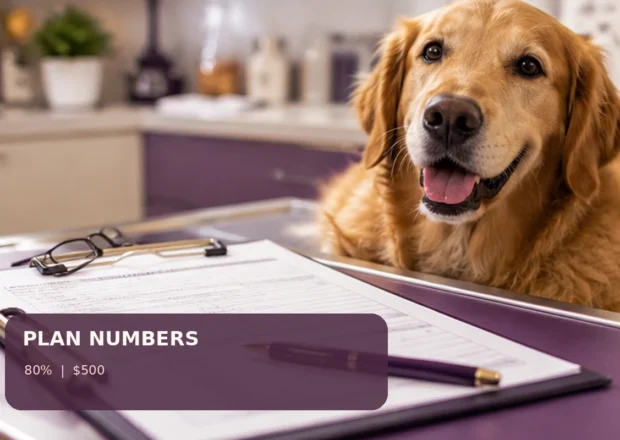
Consider an illustrative eligible bill of $2,000 with a $500 deductible and 80% reimbursement. Under a simplified deductible-first method, ($2,000 − $500) × 80% produces $1,200. The actual policy may calculate differently, exclude part of the bill or apply another limit. If the insurer pays $1,200 instead of $1,600, that alone is not evidence of a wrongful denial. You must examine the calculation and whether the deductible had already been satisfied.
Ask for a line-item breakdown and identify the disputed mathematical step, if any. If a benefit limit was reached earlier in the year, a legitimate eligible expense may still result in no further reimbursement. A policy renewal may not retroactively restore a prior year’s exhausted benefits. The policy documentation should answer how annual limits reset and how expenses are allocated.
Escalating to a state insurance department
When a good-faith attempt to resolve the matter with the insurer does not settle it, consumers can contact their state department of insurance. The National Association of Insurance Commissioners explains that departments may investigate complaints about unfair claim handling, denials, delays or failure to honor terms. The complaint process varies by state, and a regulator’s involvement is not the same as a promise that the claim will be paid.
A complaint should include the policy, relevant records, denial letter, appeal correspondence and a straightforward account of the concern. Keep copies of everything. If another route such as arbitration or legal action appears in the contract, obtain appropriate advice rather than assuming an insurance-department complaint replaces all available procedures or preserves every deadline.
Do not cancel the policy in anger without checking consequences
Changing insurers after a denial can create new waiting periods and pre-existing-condition questions. A health issue identified under the current policy may be excluded by a newly purchased policy. A different company’s advertised benefits do not establish that the current treatment will be covered there. Before deciding to cancel, consider what future illnesses or accidents may remain eligible under the existing policy and whether replacing it would leave a coverage gap.
You may still decide another insurer better fits the household, but make that decision based on the new actual policy and the pet’s medical history. If affordability is the concern, ask the current provider whether plan adjustments are possible at renewal and what trade-offs they create. Avoid assuming a lower advertised premium provides the same treatment benefits.
Maintain care while a claim is disputed
Insurance administration should not replace veterinary decision-making. If the pet requires urgent or ongoing treatment, discuss medical priorities and an itemized estimate with the veterinary team. A dispute may take time, and reimbursement-based plans can require payment before the insurer decides. Ask about payment arrangements that the clinic actually offers rather than counting on an appeal as guaranteed funding.
Keep all new invoices and records separate from the earlier claim while noting any clinical connection. If treatment changes or complications arise, update the insurer through its required process. Do not stop necessary medication or rehabilitation solely because a claim is being challenged without first discussing the medical impact with the veterinarian.
Before you send anything
Read the denial twice, match it to the applicable policy, ask for missing records, construct a truthful timeline and state a narrow, answerable disagreement. Keep copies and respect the insurer’s real appeal instructions. When there is a regulatory concern, use the state insurance department’s complaint route. Even when payment does not change, understanding the decision can help you avoid the same documentation problems on future claims and make a better-informed coverage choice.
Research sources
- NAIC, How to File a Complaint
- NAIC, How Do I File a Complaint Against My Insurance Company?
- Spot Pet Insurance, Submitting a Claim and Appeals
- Lemonade, How to File a Pet Insurance Claim
- Lemonade, Pet Claim Denials: Things to Keep in Mind
Research references checked October 10, 2026. Coverage, services and legal rules may vary; review current documents. EvePaw provides educational information, not medical diagnosis, legal advice or a binding insurance coverage determination.