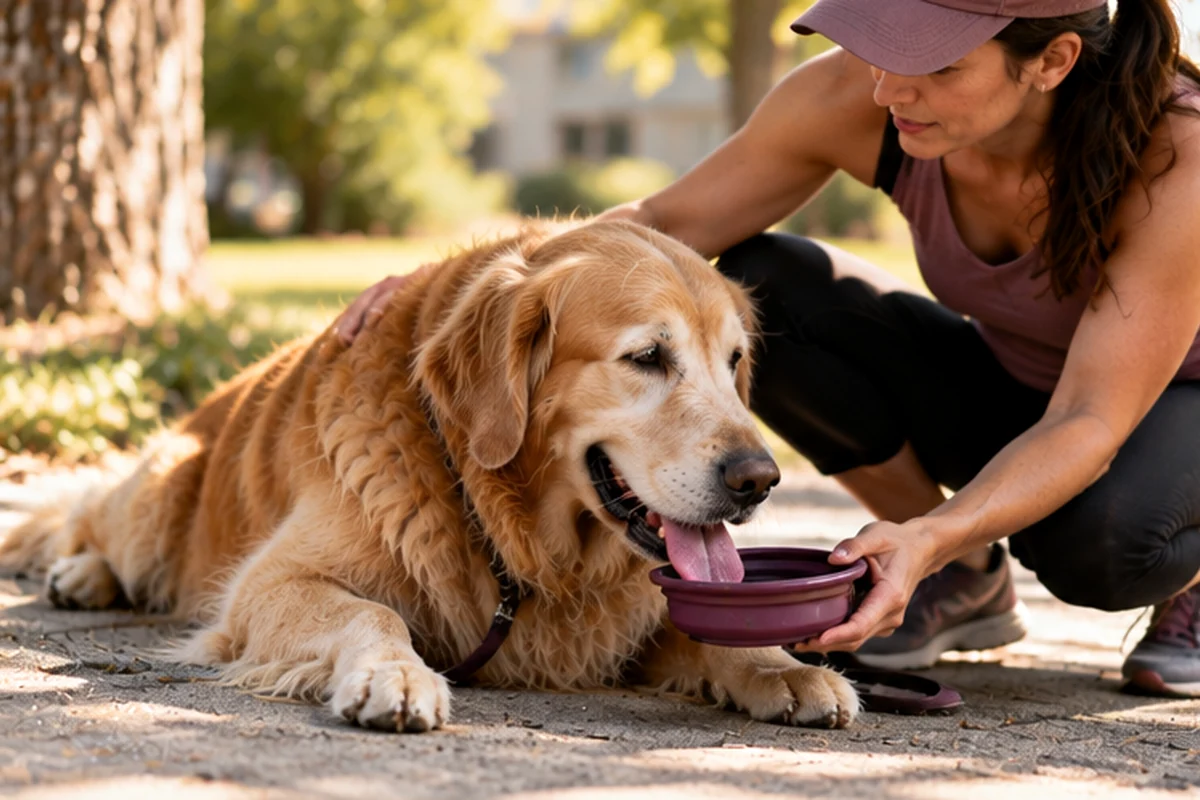
Dog Heatstroke: The Action to Take Before Anything Else
If a dog is struggling after heat exposure—especially with collapse, confusion, excessive panting, weakness, vomiting, or abnormal gums—treat heatstroke as an emergency. Move the dog into shade or a cool indoor environment, begin active cooling using cool running water over the trunk, especially the thin-haired underside, with moving air where possible, and arrange immediate veterinary transport. Do not wait to see whether the dog looks normal after a few minutes. Heat injury can affect the brain, kidneys, gut, and clotting system even when surface temperature starts falling. Call the nearest emergency hospital while another person helps cool and transport the dog. The American Veterinary Medical Association and Merck Veterinary Manual both describe cooling while obtaining urgent veterinary care. Their guidance is not an invitation to manage severe heat illness entirely at home. If a dog is unconscious, having seizures, struggling to breathe, or unable to stand, the priority is rapid professional care without delaying transport for prolonged home measurements. Never force liquid into the mouth of a distressed or poorly responsive animal. This guide explains warning signs, decisions owners can safely make, what a clinic may assess, and how to prevent a repeat episode.
Overheating Versus Heatstroke: Why the Difference Matters
Panting after exercise is not automatically heatstroke. Dogs use panting and other mechanisms to dissipate heat, so a healthy dog may breathe fast after playing and then settle with rest in a suitable environment. Heatstroke is a breakdown in effective temperature regulation associated with potentially damaging elevation in body temperature and systemic injury. Owners cannot reliably separate benign panting from serious illness by looking at a single sign or by assuming that a dog was outdoors for only a short time. The context changes the risk assessment. Heavy panting while lying motionless on a hot day is different from panting briefly after a moderate walk. A dog left in a parked car, exercising in humid weather, or struggling in an unventilated room may overheat rapidly. Short-nosed breeds, older dogs, animals with obesity, and dogs with heart or respiratory disease may have less margin for heat stress. A dog may also appear improved after removal from heat while internal effects continue. When illness signs accompany heavy panting, emergency evaluation is safer than relying on a presumed heat threshold.
Signs That Should Trigger Immediate Emergency Care
Watch for persistent heavy or rapid panting, unusual drooling, weakness, wobbling, agitation, disorientation, vomiting, diarrhea, abnormal gum color, collapse, and seizures. These findings can have more than one cause, including poisoning, respiratory disease or shock, but the presence of heat exposure makes heat-related injury a particular concern. Some dogs suddenly become quiet rather than agitated. A dog lying still, unable to rise, or seeming mentally absent may be more seriously affected than one panting loudly. Do not make the decision by checking whether the ears or nose feel hot. Skin temperature is an unreliable substitute for clinical assessment. Similarly, a dog does not need to have every textbook sign before receiving help. A dog showing distress after exposure to heat needs immediate attention. If you are uncertain about severity, telephone an emergency veterinary service, describe the dog’s breathing, responsiveness, recent activity and surroundings, and follow its transport instructions. That call should occur during cooling, not after an extended period of observation.
How to Start Cooling Safely
First remove the heat source: get out of direct sunlight, stop exercise, and move to a ventilated location. Apply cool or room-temperature water to the dog’s body, focusing on areas that can be wetted safely, and use a fan or airflow if available. AVMA first-aid guidance describes wetting towels with room-temperature water and rewetting them frequently, while Merck advises cool water and fans. A key practical principle is to keep evaporative cooling working rather than wrapping a dog in thick, wet material that remains warm against the body. Avoid putting the dog in icy water or delaying transport to administer an elaborate treatment. A chilled bath may complicate care, and forceful handling can distress an animal that already struggles to breathe. If a dog will willingly drink small amounts and can swallow normally, ask the receiving clinic about offering water, but never force it. If you have another adult available, one person can contact the hospital and organize transport while the other gently wets the dog’s coat and keeps air moving. Cooling during a car ride may be helpful if done without compromising safe transport.
What Not to Do While Waiting for Help
Do not use ice packs as the sole cooling strategy, press ice directly onto large areas of skin, or cover the dog with heavy soaked blankets and assume the problem is solved. Avoid alcohol rubs, fever medication intended for people, and attempts to induce vomiting. Human pain relievers or fever reducers are not a substitute for heatstroke treatment and can be toxic to dogs. Avoid force-feeding or making a weak dog walk around to test whether it has recovered. Do not spend valuable time searching online for a particular temperature number before calling a veterinarian. A rectal temperature may be part of the clinical evaluation, but taking it at home can be difficult or unsafe in an agitated, collapsed or breathing-compromised animal. If a dog has a history of airway trouble or is brachycephalic, minimize stressful restraint. The most important early work is cooling, contacting emergency care, and arriving promptly for assessment.
Why a Dog Can Look Better and Still Need Evaluation
The visible problem is often the beginning, not the entire course. Heat injury can compromise circulation and produce inflammation affecting several organs. Vomiting or diarrhea may reflect gastrointestinal effects; altered behavior can indicate neurological involvement. Severe cases can be associated with kidney injury, abnormal blood clotting or shock. Only a veterinarian can assess these risks through examination, history and suitable testing. A dog that stands up again after cooling has not necessarily escaped complications. A clinic may recommend serial blood tests and monitoring because changes can emerge over time. That recommendation can feel disproportionate when the animal is now looking around the waiting room, but the decision is based on concern for delayed organ effects. Ask which warning signs are present, what monitoring will detect, and what would change the treatment plan. Do not equate a brief improvement in panting with veterinary clearance.
What the Veterinary Team May Do
The team first assesses airway, breathing, circulation, mental status, hydration and temperature. Oxygen, intravenous fluids, careful ongoing cooling, medications for specific complications, and diagnostic testing may be used according to the patient’s condition. Blood tests can evaluate kidney function, electrolytes, glucose and other indicators; coagulation testing may be recommended in severe cases. Continuous observation helps the team respond when complications develop rather than relying on one reassuring measurement. Treatment is not identical for every heat-exposed dog. A patient still standing and alert may require different support from one arriving collapsed. Your veterinarian can explain which findings justify hospitalization and how the dog is responding. If the clinic proposes a transfer to emergency or critical-care services, ask about urgency and safe transport; a transfer often reflects a need for closer monitoring or equipment rather than proof that recovery is impossible.
Vet Bills, Hospitalization, and Financial Decisions
Heat-related emergencies can involve much more than an exam fee. A case may require triage, oxygen, venous access, fluid therapy, blood panels, repeat laboratory measurements, monitoring, or hospitalization. Severe complications can require intensive nursing. Request an itemized estimate showing immediate stabilization separately from monitoring and optional procedures. Ask the team to distinguish what is urgently required to protect the animal from what could reasonably be discussed once the dog is stable. If you have pet insurance, heatstroke is not automatically reimbursable merely because the event was accidental. Eligibility depends on the policy wording, waiting periods, exclusions, and medical history; cooling at home does not establish coverage. Retain the hospital’s itemized invoice, clinical notes and test results. If finances are a concern, be open about the budget early while also understanding that delaying necessary treatment can increase both the medical risk and eventual expense.
Which Dogs Need Extra Precautions?
Dogs with short muzzles, reduced respiratory reserve, excess weight, advanced age, or previous heat intolerance deserve particular planning. Even a fit, young dog can overheat during hard exercise in high humidity, especially when enthusiasm exceeds its ability to cool. Dark pavement, direct sun, poor ventilation and excitement may compound risk. A dog’s ability to exercise safely yesterday does not guarantee the same tolerance during a warmer or more humid afternoon. Know the individual dog’s behavior at a comfortable baseline. A pet that pants unusually hard on a mild day may need veterinary evaluation for respiratory or cardiovascular problems, not simply a new cooling vest. Tailor activity to the animal rather than using one walking schedule for every breed and age. For high-risk dogs, plan shorter outings in cooler periods and choose indoor enrichment on oppressive days.
Preventing Dangerous Heat Exposure at Home and Outside
Never leave a dog in a parked vehicle, even with windows cracked or for a quick errand. Avoid strenuous exercise during hot, humid periods. Provide shade, ventilation and fresh water, and keep an indoor retreat available. Check the walking surface with your own comfort and common sense: hot pavement can add painful paw injuries to heat exposure. If you are traveling, confirm cooling and ventilation at both ends of the trip rather than only in the car. Prevention should be practical and repeatable. Put water and a collapsible bowl with the leash; check weather conditions before dog sports; schedule rest breaks; and agree in advance which emergency clinic you would call. In a household with multiple caregivers, share the plan so nobody assumes another person will move the dog out of a hot room or vehicle. Watch animals after intense exercise even when the weather is not extreme, because exertional heat injury can occur outside a stereotypical heat wave.
What to Watch During Recovery
After discharge, follow the treating veterinarian’s activity, feeding, hydration, medication and recheck instructions. Ask whether further bloodwork is required and which symptoms warrant an immediate return. Persistent vomiting, unusual fatigue, weakness, changes in urination, breathing trouble or altered behavior should not be dismissed without consulting the clinical team. Do not restart vigorous exercise on the assumption that the dog looks completely normal at home. Keep notes on what happened: approximate heat exposure, exercise, first symptoms, when cooling began and any medications or treatments. This history can help a veterinarian interpret evolving findings and guide prevention. Once the immediate crisis has passed, identify the conditions that created the exposure—a car, yard, walk, grooming environment, sports event or poorly ventilated room—and change the routine so it is not repeated.
The Next Useful Step
For a dog currently showing symptoms after heat exposure, the next step is emergency veterinary care while beginning safe cooling. For a dog that is now well, build a prevention plan matched to its health, environment and activity. Ask your veterinarian about exercise restrictions if the dog has breathing or cardiac issues. Heatstroke guidance should make an urgent decision clearer, not invite self-diagnosis or replace hands-on treatment. If an episode led to a large bill, review an itemized hospitalization invoice and your insurer’s actual policy rather than assuming the entire invoice will be reimbursed. Keep the treatment records. EvePaw’s role is to explain how to recognize danger, organize the next action, and understand what care may involve; the treating veterinarian decides what this particular dog needs.
Research sources
- AVMA: Pet First Aid brochure, heatstroke guidance
- Merck Veterinary Manual: What to Do in a Dog or Cat Emergency
- 2026 RECOVER First Aid Guidelines: Active cooling and emergency transport for heatstroke
Research checked October 12, 2026. EvePaw provides educational information, not veterinary diagnosis or confirmation of insurance coverage. Medical decisions require a veterinarian. Insurance benefits depend on the applicable state policy and effective dates. Cost examples are hypothetical, not measured average prices.