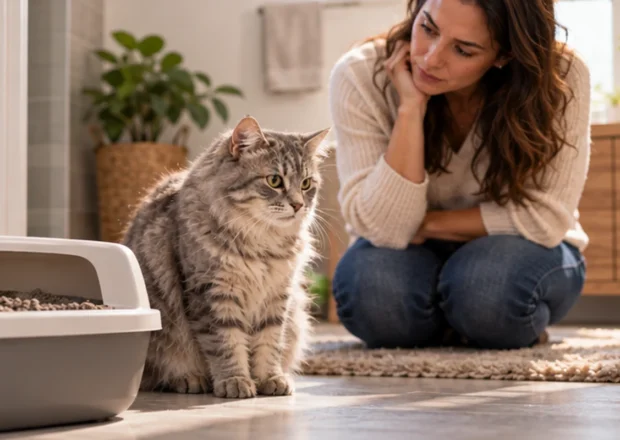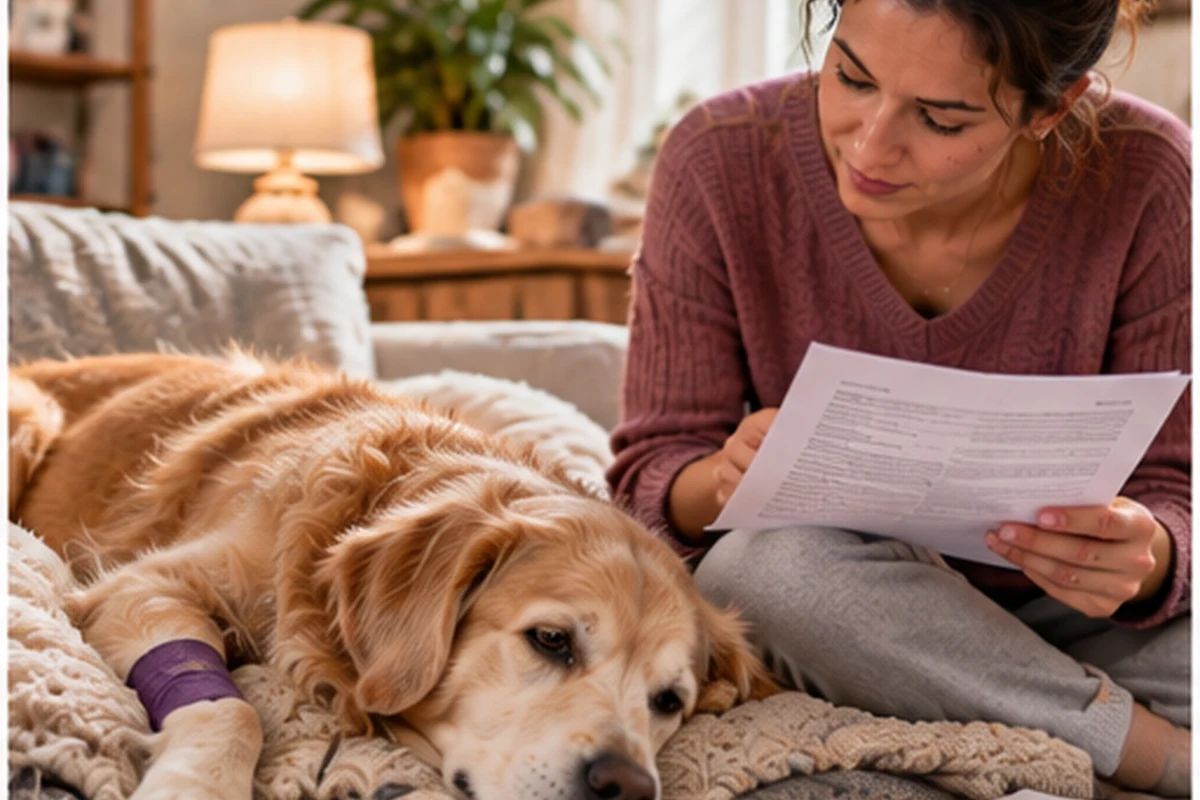
When a dog or cat comes home after hospitalization, the most important document is not the final bill: it is the discharge plan. Before leaving, confirm the diagnosis or working diagnosis, the prescribed medication schedule, restrictions on food and activity, incision or device care when relevant, the next appointment, and the warning signs that require a call or immediate return. If any instruction is unclear, ask the clinical team to explain it in plain language and write it down. Home care begins with understanding what the hospital expects to happen next.
This guide is about organizing care, not choosing a treatment. The veterinarian who examined your pet determines the medication, wound care, confinement and follow-up appropriate to that patient. If your pet has severe trouble breathing, collapses, has uncontrolled bleeding, becomes unresponsive or shows another serious emergency sign, seek emergency veterinary care immediately. Do not wait for an online checklist to classify the problem.
Before discharge, identify the actual treatment goal
Hospitalization can happen for very different reasons: treatment of an acute injury, recovery after surgery, management of vomiting or dehydration, an illness requiring monitoring, or stabilization after an emergency. Therefore, home instructions should not be copied from another pet’s recovery. A dog leaving after orthopedic surgery may need substantial movement restrictions; a cat recovering from an unrelated medical condition may have an entirely different plan. Ask the clinician: what has improved, what is still uncertain, and which observation at home will tell us whether treatment is working?
Write down the names of any tests performed and what results are pending. Some decisions depend on a culture report, pathology or repeat bloodwork. Ask how and when the clinic will contact you, and who you should call if results do not arrive. If the plan says “recheck,” find out whether that means a telephone update, a quick incision assessment or another examination with testing. Those are not equivalent, and budgeting and scheduling depend on knowing the difference.
Check that the discharge paperwork states a contact number for both the regular hospital and after-hours emergencies. Ask whether an emergency facility can view the case records electronically, or whether you should carry a summary if your pet needs care elsewhere. Save a digital copy and a paper copy. In a stressful night, being able to show the next clinician what medication was administered and when may be more useful than trying to reconstruct the story from memory.
Medication instructions should be unambiguous
For each prescription, confirm the medication name, formulation, precise dose, how often it is given, when the first home dose is due, how long treatment continues, and whether it must be given with food. Do not assume all medicines can be crushed, mixed into food or split. Ask what to do if a dose is missed or the pet spits it out; the safe answer depends on the medicine. Never double a dose simply to “catch up” without explicit veterinary instructions.
List medications in a simple schedule that all caregivers can understand. Include the person giving each dose and a checkbox for recording completion. If you have two adults alternating care, this helps avoid accidental repeated doses. Record any vomiting, refusal, diarrhea, extreme drowsiness or unusual behavior after a medication and contact the clinic for guidance. Some changes may be expected and others may require adjustment; the prescriber should decide rather than a household guessing.
Do not add human painkillers, over-the-counter antidiarrheals, sedatives, herbal products or leftover antibiotics. Drugs tolerated by people may be dangerous to pets, and interactions can complicate recovery. Even a supplement described as natural can interfere with treatment. If medication administration is becoming a daily struggle, tell the veterinary team; an alternative formulation, demonstration or different plan may be possible depending on the condition.
Prepare a recovery area for the actual restrictions
A recovery area should make the recommended level of rest achievable. Choose a comfortable, clean, easily monitored space away from stairs, slippery flooring, rough play and other pets if the discharge plan requires separation. For an animal with restricted mobility, place water and a suitable toilet area within the access allowed by the clinician. For a cat, consider a litter box with a low entrance when mobility is impaired, but avoid replacing the animal’s entire familiar environment at once without reason.
A dog under strict movement restriction should not be allowed to race across the living room because it seems energetic. An energetic pet is not necessarily healed. Ask the hospital exactly what “rest” means: leash-only toilet outings, no jumping, no stairs, confinement during unsupervised periods, or a different set of restrictions. If a pet becomes distressed by confinement, contact the clinic for safe solutions rather than stopping restrictions on your own.
Arrange practical help. A large dog may require assistance getting into a car or going out safely. A recovering cat may need a quiet room away from playful companions. Work schedules, children and other pets can undermine a sensible care plan if no one has decided who will supervise. If the prescribed plan cannot realistically be followed at home, say so to the veterinary team before discharge or as soon as the difficulty becomes clear.
Eating, drinking and toilet habits are meaningful observations
Ask what appetite and thirst to expect over the next several hours and days, and what would be outside the expected recovery pattern. An animal recovering from anesthesia may have different immediate needs than one treated for a kidney or gastrointestinal condition. Do not impose a generic feeding schedule. Your instructions might specify a particular diet, portions, gradual reintroduction or monitoring after a treatment. Follow that specific plan.
Track offered food and water alongside what the pet actually consumes. If the pet refuses all food, vomits repeatedly, cannot keep prescribed medication down, or seems more lethargic than expected, contact a veterinarian. A cat that does not eat can require prompt assessment; do not assume prolonged food refusal is harmless “post-hospital stress.” Discuss the exact urgency with the treating clinic, especially where there are known underlying conditions.
Elimination matters too. Record urination and bowel movements without interpreting every deviation as a diagnosis. Pain medication, fluid treatment, altered activity and illness may affect patterns, but straining without urine, repeated ineffective attempts, or a painful distended abdomen need urgent veterinary attention. A recovering pet that is unexpectedly incontinent or has blood in the urine or stool should also be discussed promptly. Give the clinic concrete observations rather than only saying the pet seems “off.”
Incisions, dressings and devices: observe, do not improvise
If your pet has a surgical incision, request written guidance for how frequently to inspect it, what appearance is expected, how to keep it protected, and when stitches or staples will be checked or removed. Check for changes the surgeon identified as concerning, including increasing swelling, discharge, bleeding, bad odor, wound opening or persistent interference by licking. Do not apply creams, disinfectants or bandages unless instructed. Products safe on human skin are not automatically suitable for animal wounds.
If a cone or recovery garment was prescribed, find out whether it needs to remain on continuously and how to ensure the pet can drink and rest while wearing it. A pet may quickly damage an incision during a short unsupervised period. If the device rubs, prevents eating or causes distress, call for a better-fitting alternative rather than abandoning protection. Animals with tubes, special dressings, drains or catheters need exact demonstration from the veterinary team; online instructions are not a safe replacement for hands-on training.
Take photographs only if the clinic says they would help with remote progress assessment. Date the photos and use similar lighting, but avoid repeatedly manipulating a painful area to get a better image. An owner cannot rule out internal complications from a normal-looking skin incision. If the pet’s overall condition is deteriorating, respond to that change even if the outside wound appears ordinary.
Build a 24-hour observation record, then simplify it
During the first day home, a log can capture appetite, water intake, urination, bowel movements, prescribed medicines, comfort, breathing, mobility, and any condition-specific parameter requested by the hospital. Some patients require much closer observation. Ask what you should record and how often; too much data can distract caregivers from the few indicators that really affect a treatment decision.
Use factual observations. “Walked to water bowl twice” is clearer than “seems better.” “Refused breakfast and vomited once at 8:15” is more actionable than “acting strange.” If breathing appears labored, do not spend time counting for a perfect log before seeking help. The point of recording is to help clinicians make decisions, never to delay care. Share notable trends at the planned recheck and report concerning deterioration earlier.
If several people provide care, keep the record in a shared place with clear dates and initials. Avoid altering previous entries after the fact; note corrections separately. This sounds formal, but it protects against common household confusion about whether medicine was given, which animal ate the food, or whether a follow-up appointment has already been booked. For multi-pet homes, temporary separation may be needed to track the recovering animal accurately.
Understand which problems deserve a call now
The discharge paperwork should name the complications particularly relevant to your pet. As a general safety framework, serious breathing difficulty, collapse, seizures, uncontrolled bleeding, inability to urinate, extreme weakness or obvious severe pain should prompt immediate emergency evaluation. Other problems—persistent vomiting, worsening diarrhea, growing swelling, refusal of medication, abnormal urination or a change in mental alertness—warrant timely veterinary contact. The exact urgency depends on condition, age and treatment, so use the treating team’s instructions.
Do not let the cost of returning become a reason to conceal important information. Explain the change honestly and ask whether the hospital recommends immediate examination or another step. If the original clinic is closed, contact the designated emergency provider and bring the discharge summary. A second clinic should be told about recent medications and procedures, including the time of the last dose.
The recheck is part of treatment, not an optional formality
A pet that appears comfortable may still need stitches removed, imaging reviewed, blood values rechecked, medication adjusted or the underlying disease reassessed. Confirm what the recheck is meant to determine before deciding whether to skip it. Ask what would trigger an earlier visit, how long the pet should remain on restrictions, and when normal exercise or diet may resume. If the clinician changes the plan by phone, write down the change and the date.
Keep receipts, itemized invoices and medication labels together with the clinical record. If you carry pet insurance, ask the clinic for the documents required by your insurer; this may include a detailed invoice, discharge report and medical notes. A submitted claim is not proof the expense qualifies for reimbursement, and coverage may depend on waiting periods, exclusions, limits and the history of the condition. Follow the pet’s health needs first, and resolve paperwork separately.
Plan for the emotional and financial side of home recovery
Home care can be tiring. Owners may worry about every movement or feel unsure they can manage lifting, cleaning and medication. Identify a backup caregiver and a realistic overnight plan, particularly after a major procedure. If the treatment plan is physically difficult or the pet’s distress is worsening, call the hospital; the goal is safe recovery, not proving you can manage without help. In many cases the most useful next step is asking one precise question about the plan rather than searching for another generic guide.
The financial plan should include the original hospitalization, take-home medication, supplies, scheduled rechecks, and any potential repeat diagnostics or rehabilitation mentioned by the veterinarian. Ask for an itemized estimate for predictable follow-up care; do not confuse that estimate with a guaranteed total. If the cost is becoming difficult to manage, discuss prioritization and payment logistics openly with the clinic. Never reduce prescribed treatment independently to save money.
Leaving hospital care behind safely
A good discharge process ends with a clear ownership of the plan: who gives medicines, who observes, who calls if something changes, and when the veterinary team expects to hear from you again. Keep the instructions accessible even after your pet looks brighter. Recovery is not a contest to return to normal fastest; it is a series of decisions guided by the treating clinician and by changes you can observe reliably at home.
Before you put the paperwork away, ask yourself three practical questions: Can I explain the medication and activity plan to another caregiver? Do I know which signs mean I should phone the clinic or seek emergency help? Is the next review date on the calendar? If any answer is no, the safest next action is a call to the hospital for clarification.
Research sources
Research checked October 10, 2026. Provider terms and veterinary advice should be rechecked before publication. These sources support factual context; examples and analysis are labeled in the article.