An older cat who stops visiting a favorite windowsill or begins toileting beside the litter box may not be stubborn or simply “slowing down.” Jumping, turning, stepping over a high box edge and crossing slippery floors can become uncomfortable. A more accessible home can help, but a change in mobility or litter habits also deserves veterinary evaluation. Pain, urinary disease and other conditions can overlap, and furniture adjustments cannot diagnose the cause.
Start with the routes your cat travels every day. Can they reach food, water, a resting spot and a clean litter box without an uncomfortable jump or a flight of stairs? A few carefully placed changes may improve everyday life more than buying an elaborate senior-pet gadget.
The first sign may be a changed route, not a limp
Cats often show discomfort through decisions. A once-enthusiastic jumper might wait beside the sofa instead of climbing onto it. Another may reach the bed only after using a chair as a step. Changes in grooming, sleeping spots or willingness to play can also be relevant. Pain is only one possible explanation, but it should be considered rather than dismissed because the cat is older.
Look for repeated patterns: stopping before a jump, landing awkwardly, hesitating at stairs, missing the litter box, resenting handling or using fewer rooms. Note when the change began and whether both front and back legs seem equally affected. Short videos of everyday movement can help a veterinarian understand what happens away from the clinic.
Sudden inability to use the legs, dragging hind limbs, severe distress, a very cold limb or labored breathing warrants immediate veterinary attention. Such events are different from the gradual decline this home-accessibility guide addresses. Avoid trying to manipulate a painful limb or giving human pain medicines; many are dangerous for cats.
Start by drawing a map of the household
Imagine your cat’s day as a route rather than a series of objects: wake from bed, reach water, go to the litter box, move to a sunny spot and find people. Each doorway, slippery corner and change in height is a potential barrier. Walk that route at cat level and look for narrow turns or difficult jumps.
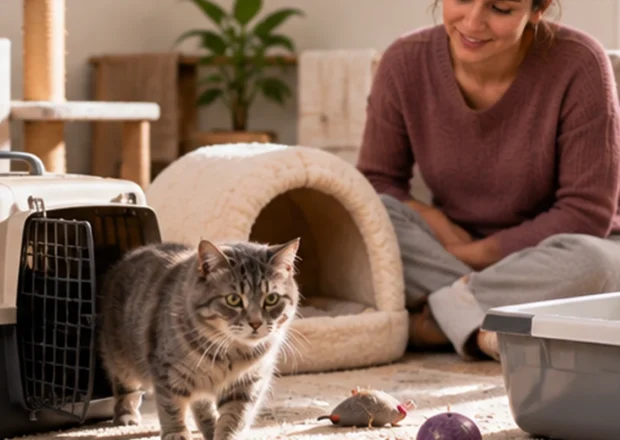
Put essential resources close to areas the cat uses. For a two-story house, consider a litter box and water on both levels so the cat does not have to use stairs every time. In an apartment, a box behind a busy laundry area may be physically accessible but psychologically difficult if another cat guards the doorway.
Do not change the entire environment overnight. Older cats may rely on familiar landmarks, especially if vision, hearing or cognition is changing. Introduce one improvement, observe how it is used, and keep trusted resting places intact where possible. Comfort and predictability matter together.
Make the litter box easier to enter and leave
One of the most consequential modifications is a low-entry box with enough space to turn comfortably. A small box with a low front may still be unsuitable for a large cat with stiffness. Look for a generous floor area, a stable base and an opening that does not require stepping high. Some owners modify a large storage container, but cut edges must be smooth and safe.
Place the box close to a regular resting area without putting it beside food or in a noisy passage. Provide privacy without making the only escape route a tight corner. If there are several cats, distribute boxes so the older cat cannot be blocked by a housemate. A familiar litter texture may be easier to accept than a sudden new scented substrate.
An older cat eliminating outside the box still needs a medical assessment. AAHA notes that urinary, metabolic and joint conditions can all contribute to changes in elimination. A low edge can remove a mobility barrier, but it will not treat urinary infection, diabetes, kidney disease or constipation. Repeated straining with little or no urine is an emergency, not a box-design problem.
Ramps, steps and furniture placement
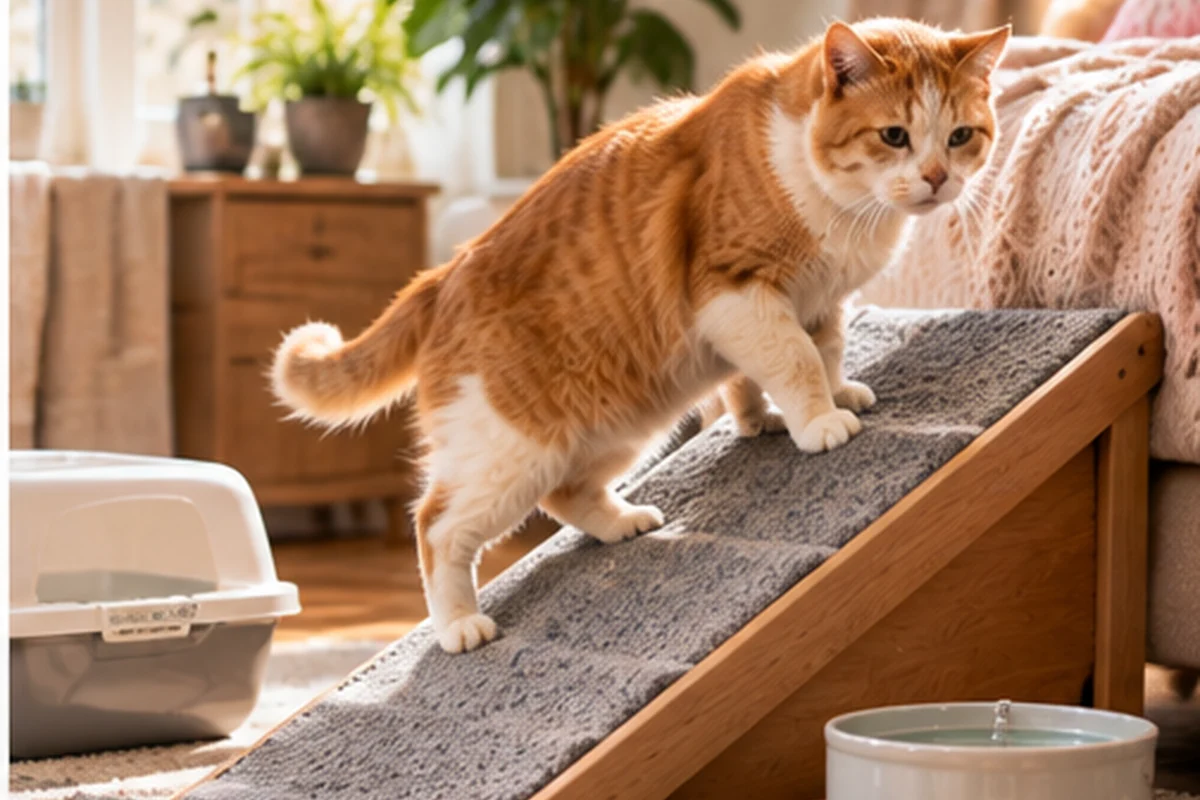
A ramp is useful only if the cat can and will use it. Select a stable surface with grip, a comfortable incline and no wobble. Put it alongside furniture the cat already values. A low upholstered step or series of sturdy platforms may suit a cat who prefers small hops, while a gentler ramp may suit one avoiding impact on landing.
Test access without forcing the cat. Encourage investigation with treats or play at a comfortable pace. Do not lift a frightened cat onto the ramp or place a treat so far uphill that it creates a struggle. Observe whether the cat chooses the aid repeatedly after the novelty has worn off. If not, adjust location and angle before spending more money.
Floor traction may matter just as much. Carpet runners or securely placed nonslip mats can improve confidence on tile or polished wood. Loose throw rugs that skid are a tripping hazard, so secure them or remove them. Keep pathways uncluttered, particularly at night.
Food, water and comfortable resting places
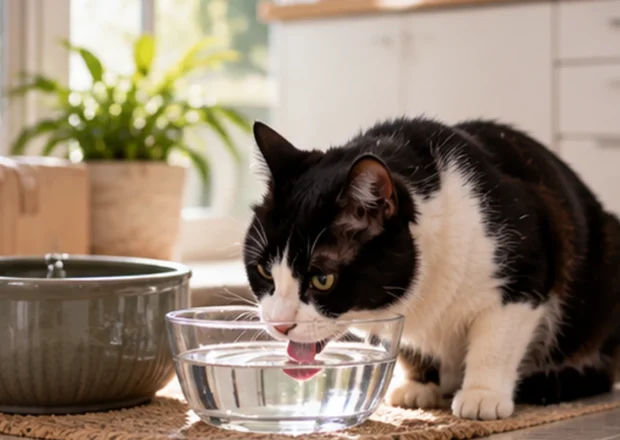
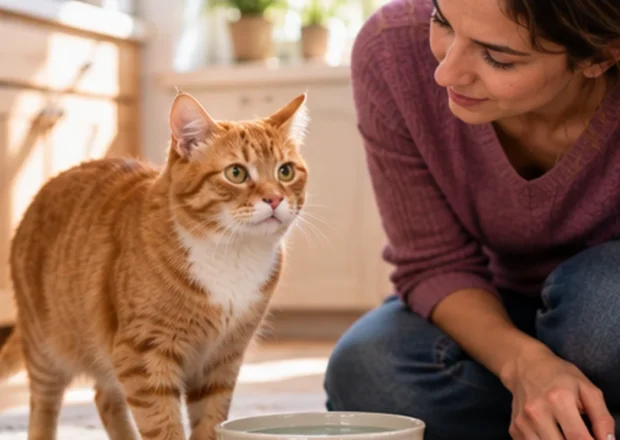
A cat who must jump onto a counter to eat or travel across the house to drink may use those resources less often. Place bowls on accessible surfaces and keep more than one water location if helpful. Bowl height should be comfortable for the individual animal; do not assume every senior cat needs raised feeders. If bending, swallowing or eating behavior changes, discuss it with the veterinarian rather than treating bowl height as the explanation.
Warm, supportive bedding in a quiet place can improve resting comfort. Avoid heating devices that could cause burns or require the cat to move away quickly if overheating. A bed should allow the cat to stand and turn without sinking into an unstable surface. Multiple accessible resting locations let the cat choose between company and privacy.
Senior cats still benefit from observation points. If a high windowsill is no longer accessible, a lower platform near a secure window can preserve the activity without an uncomfortable leap. Owners sometimes remove climbing opportunities entirely in an effort to protect a frail pet; offering safe alternatives is usually more satisfying than making the home featureless.
Grooming, claws and litter scattered around the house
Reduced flexibility can make it difficult for a cat to groom their lower back or hindquarters. You may notice matting or a greasy coat rather than obvious lameness. Ask the veterinarian whether discomfort, weight, dental disease or another medical condition could be contributing. Gentle brushing can help if tolerated, but never pull tight mats or use scissors near fragile skin.
Claw growth may need more monitoring in a less active cat. Nails that curve toward the paw pad can be painful and require veterinary or professional grooming care. Practice brief, low-stress paw handling and ask for a demonstration if trimming is needed. Do not continue through struggling or pain simply to finish every claw in one sitting.
Check whether litter tracks because the cat cannot assume a comfortable posture or climb into the box. A high-sided mat that traps the paws may be harder to cross than loose granules on the floor. In many cases removing one unnecessary obstacle is the best modification.
Mobility support does not replace pain management
Arthritis and degenerative joint disease are common considerations in older cats, but not every older cat has the same diagnosis or treatment needs. A veterinarian may review movement history, examine the joints and muscles, consider imaging or laboratory tests, and assess other conditions. Treatment may include prescribed pain control, weight-management decisions, monitoring or other interventions specific to the cat.
Never give over-the-counter human pain medicines without explicit veterinary direction. Do not assume a supplement advertised for joints is safe or effective for your cat. Some animals need special consideration because of kidney disease, concurrent medication, hydration status or other illnesses. An accessibility project is a support plan, not a medical plan.
If a prescribed medicine seems to cause concerning effects, call the treating clinic rather than quietly stopping or changing the dose. Keep a record of mobility, appetite, litter habits and response to the environment; it can inform future treatment discussions.
Monitor whether the changes actually help
Choose a few specific measures. Can the cat reach the box without hesitation? Is the cat using the lower step to reach the couch? Has grooming resumed in a previously neglected area? Are there fewer accidents outside the box? Compare observations over a week or two while keeping in mind that medications and underlying disease may also affect the result.
Photographs of the home layout and short videos of movement can be more useful than a general report that the cat seems better. Record problems honestly. If the ramp is avoided or the cat stops using the bedroom, do not conclude that the animal is refusing your help; reconsider the route, noise, other pets or stability of the new object.
Changes in thirst, appetite, vocalizing, confusion or nighttime activity need their own attention. AAHA’s senior life-stage guidance emphasizes that unusual behavior in senior cats should be evaluated for medical causes. A home adjustment should never become a reason to postpone care for new or worsening signs.
Plan costs in sensible stages
Start with low-cost environmental fixes before assuming a major renovation is required: move a water bowl, bring a litter box to the main floor, stabilize a runner or use an existing low bench as a step. Then consider a fitted ramp, larger low-entry box, extra litter stations and supportive bedding if the cat demonstrates a need. Save receipts and prioritize safety and stability over appearance.
Veterinary expenses are separate. An examination, diagnostics, medication or follow-up may be necessary to understand the mobility change. Ask for an itemized estimate and what the clinician needs to rule out; costs depend on the investigation, location and individual cat. Insurance eligibility may depend on existing symptoms and policy definitions, so a newly bought policy cannot be assumed to cover ongoing mobility problems.
The life-stage perspective
This is Growing Older, not an instruction to stop activity. A useful senior-cat environment makes ordinary choices possible with less effort: resting, watching the world, playing gently, drinking and using a litter box without unnecessary obstacles. Combine adaptations with veterinary assessment and periodic reassessment. The best arrangement may change as the cat’s medical needs and confidence change.
EvePaw is an educational publication. Sudden limb weakness, inability to urinate, collapse or breathing difficulty requires urgent care. Other new mobility and elimination changes also deserve veterinary evaluation rather than self-diagnosis.
Research sources
- AAHA, 2023 Senior Care Kits (reviewed October 10, 2026)
- AAHA/AAFP, Senior Cats: Elimination (reviewed October 10, 2026)
- AAHA/AAFP, Behavioral and Environmental Needs of Senior Cats (reviewed October 10, 2026)
- AAHA, Senior Pet Quality of Life (reviewed October 10, 2026)