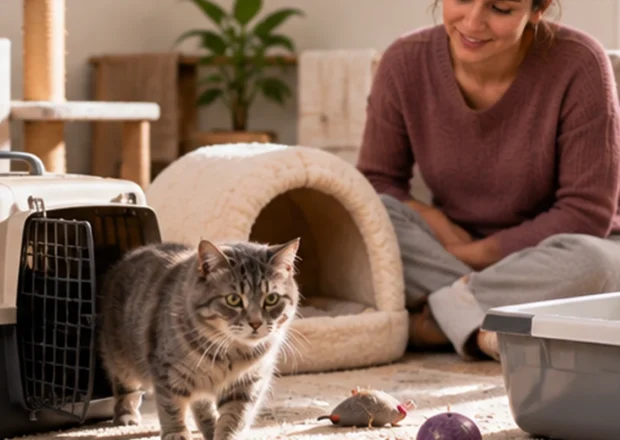
A carrier is easier to use when it is part of your cat’s ordinary environment rather than an object that appears only before a stressful journey. Carrier training means teaching your cat, gradually and without force, that entering a secure travel container can predict rest, food or another pleasant outcome. It may take days for a confident kitten or weeks for an adult cat that has learned to fear the carrier. The goal is voluntary entry and calmer transport, not a guarantee that the cat will enjoy every veterinary procedure.
If you must leave for urgent veterinary care today, do not delay treatment to complete training. Use a safe, secure carrier and ask the veterinary clinic for handling and transportation guidance if getting the cat inside is difficult. A carrier-trained cat still needs safe placement in the vehicle and gentle handling on arrival.
Choose a carrier your cat can actually use
The Feline Veterinary Medical Association recommends a secure carrier that fits the cat and can be opened from the front or top; a hard-sided design with a removable top can make examinations less stressful. The important practical features are a sturdy floor, a dependable closure, sufficient room to reposition, ventilation and access that lets the veterinary team work without pulling a frightened cat through a narrow opening. Do not confuse an attractive bag with equipment that is safe for the animal’s weight and travel situation.
Check the handle, clips and door before each trip. Place familiar bedding that will not bunch around the cat’s face, and use a material you can wash if the cat urinates or vomits during travel. If the cat has impaired mobility, avoid steep carrier entrances. A design that opens from above or separates into two halves may be kinder than a rigid front-only crate. A carrier for a larger cat should be chosen based on real body dimensions, not the manufacturer’s claim about a generic ‘average cat.’
Give the carrier a permanent place at home
Choose a calm room where the cat already spends time. Leave the carrier open and stable against a wall or beneath a table, with a familiar blanket inside. Initially, do not insist the cat walk into it. Let curiosity do the work. Some cats approach immediately; others may investigate from across the room. Both are useful information about the starting point. Keep the door secured open so it cannot swing shut unexpectedly while the cat is exploring.
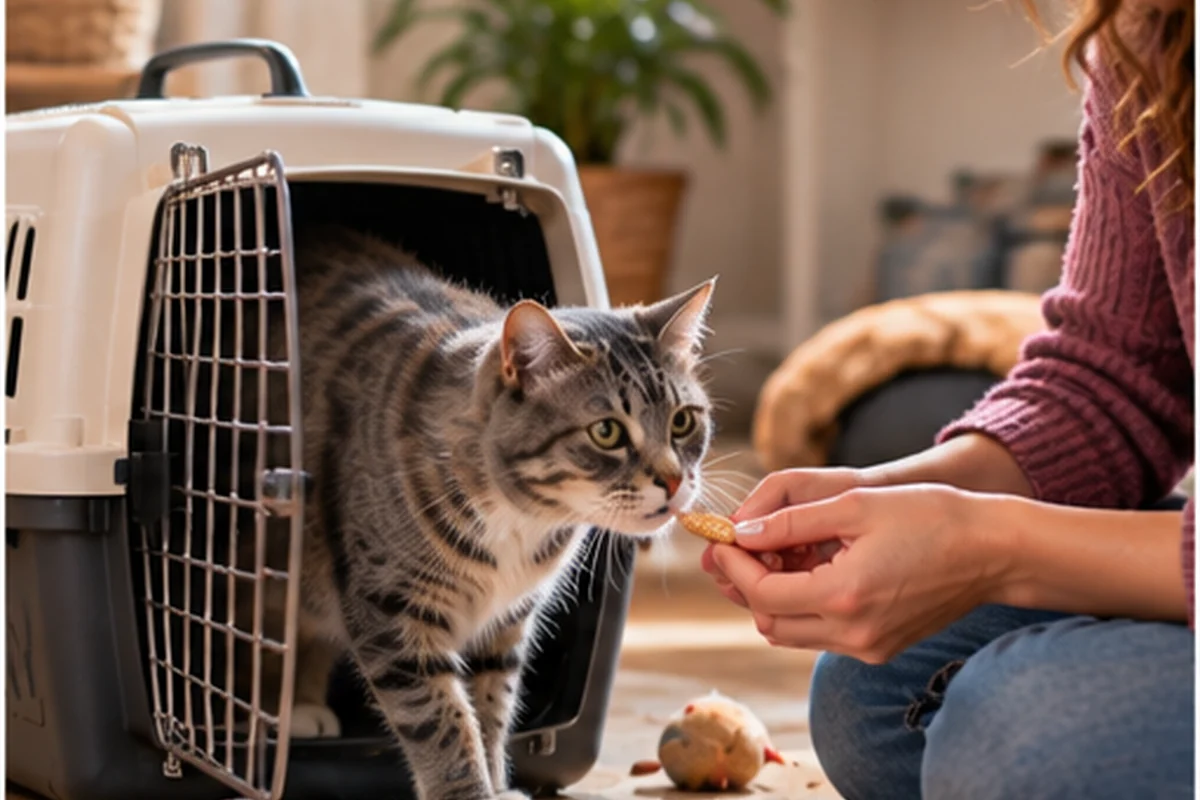
You can place a small treat near the entrance or feed an ordinary meal several feet away, then slowly move the food closer when the cat remains relaxed. If the cat eats at the doorway but avoids stepping inside, that is not stubbornness; it tells you the next step is too large. Stay with the previous comfortable distance for several sessions. This approach helps prevent the carrier from becoming a trap that you have to outsmart your cat into entering.
Teach one small behavior at a time
Start by rewarding a glance toward the carrier, then a step toward it, then a paw at the threshold. Do not rush to shut the door the first time the cat enters. Allow the cat to back out freely, and reinforce repeated, voluntary visits. When entering becomes ordinary, place the reward farther inside and allow the cat to settle on its own. A very short session can be more productive than a single exhausting training marathon.
Look for signs of comfort: the cat explores, accepts food, moves with a relatively loose body and returns after leaving. Stop or reduce the challenge if the cat freezes, flattens its ears, thrashes its tail, growls, hisses or abruptly refuses treats it usually wants. A cat that is frightened by the carrier is learning something too, and repeating the fright will make the next session harder. Progress should be measured in calm repetitions, not the number of times the animal is physically placed inside.
Add the door only after entry is easy
When your cat regularly goes in to rest or investigate, touch the door without closing it, reward calmly, and let it remain open. Next close it for a moment and reopen it before the cat becomes distressed. Increase the duration in small increments. Spend time nearby so the cat learns that a closed door does not necessarily predict abandonment or an unpleasant surprise. Eventually walk a short distance away and return before offering a reward.
Do not leave an anxious cat confined as a ‘lesson.’ If the cat panics at the closed door, return to training with the door open. Some cats adjust more readily when a person sits quietly nearby; others prefer that nobody hover. Let the animal’s response guide the progression. Training usually moves back and forth between easier and harder steps. That is expected and preferable to forcing a timetable simply because a veterinary appointment is approaching.
Practice lifting, carrying and setting down
The carrier is only one part of the trip. Once the cat can spend brief calm periods behind the closed door, lift the carrier a few inches, lower it, and reward when the cat is settled. Gradually practice walking across one room, then a hallway. Keep the carrier level and support its base. A cat should not swing in a carrier held only by a flexible handle if that creates substantial movement and instability.
A trial with the car parked and engine off can come before a short drive. Follow with very brief journeys that do not always end at a veterinary clinic. Your cat may still vocalize during transportation, and silence alone is not proof of comfort. Watch for heavy panting, vomiting, urination and prolonged fear. Ask the veterinarian about motion sickness or anxiety when these recur. Never sedate a cat or give a human medication without the clinician’s specific prescription and directions.
Keep the car trip physically safe
The FelineVMA’s 2025 transportation statement discusses a properly sized and secured carrier, and recommends the vehicle floor behind the front seat as a position that can reduce movement. If a seat belt is used, the association cautions that only crash-test-certified carriers should be restrained that way. Follow the carrier manufacturer’s tested securing instructions where relevant, and never allow the cat to roam freely inside a moving vehicle.
Before leaving, check the door latch twice. Covering parts of the carrier with a breathable towel may lower visual stimulation for some cats, but keep ventilation unobstructed and protect the animal from overheating. Avoid placing the carrier in direct, intense sun or leaving a cat alone in a parked car. For a long journey, plan safe breaks and supplies ahead of time. Opening a carrier door outdoors or in an unsecured parking lot can turn a routine stop into an escape emergency.
Build a calmer arrival at the veterinary clinic
Tell the practice that your cat is carrier-training and describe any travel stress. Some clinics offer quiet waiting spaces or let you wait in the car until an examination room is ready. Ask before trying that approach, especially in extreme temperatures. Keep the carrier elevated on a stable surface instead of placing it beside barking dogs, when space and staff advice permit. A familiar towel or bedding can help preserve a recognizable scent.
A removable-top carrier may allow a frightened cat to remain in its familiar base during part of the examination. Veterinary staff should choose appropriate handling based on the animal’s condition, pain and behavior. Do not attempt to restrain an injured cat firmly just because it practiced an exam at home. For a cat that has repeatedly become highly distressed, a veterinarian may recommend a tailored pre-visit plan. That plan is an individual medical decision, not an over-the-counter trick.
What if your cat already hates the carrier?
Begin at the distance where the cat can see the carrier without retreating. That may mean placing it across the room rather than next to the food bowl. Reward calm observation, then move slowly toward interaction over multiple sessions. Replace worn or noisy hardware and wash away lingering odors from frightening experiences. If one carrier has a particularly strong negative association, a better-designed replacement can be useful, but a new carrier alone will not teach a different emotional response.
For a cat that hides at the sight of the carrier, keep the object visible and unthreatening throughout normal life rather than bringing it out only before appointments. Avoid using hunger or forced confinement to accelerate the process. Seek veterinary behavioral advice if your cat bites, injures itself, refuses all approach or becomes so distressed that routine medical care is repeatedly postponed. The goal is access to safe healthcare, not proving that an owner can complete training unaided.
Special planning for kittens, seniors and mobility problems
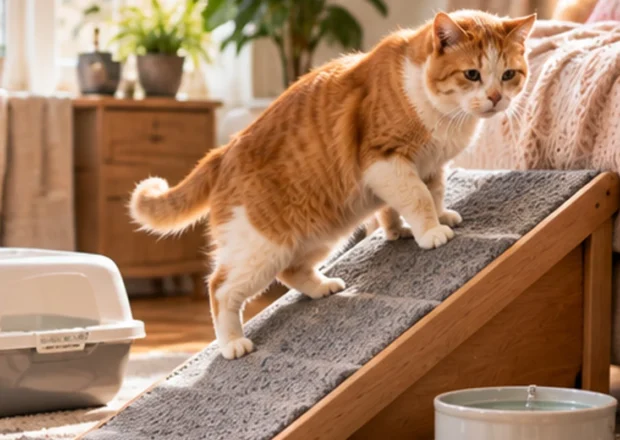
Young kittens often learn through many brief explorations, but they still need an age-appropriate, secure carrier and protection from escape. Pair carrier use with the first-year veterinary schedule so the kitten does not learn that the carrier predicts only injections or examinations. For an older cat, consider whether climbing into a high doorway hurts. Joint pain, muscle weakness and changes in vision may make a familiar carrier newly difficult even when the cat used it happily for years.
A cat recovering from surgery needs a different approach from a healthy cat learning voluntary entry. The veterinarian may specify how the animal should be lifted, whether the carrier requires a flat floor and how movement should be limited. Do not substitute a training exercise for post-operative transport directions. If a senior cat suddenly refuses handling or vocalizes when picked up, ask about pain or illness instead of assuming the animal’s temperament has changed.
Prepare a practical day-of-visit kit
Keep the carrier in its normal spot until departure. Assemble a fresh towel or absorbent pad, a spare liner, the clinic’s contact details and relevant medical or medication information. Have treats ready only if the pet’s planned procedure does not require fasting. If the veterinarian instructed you to withhold food or water before anesthesia or testing, those directions override ordinary reward routines. A favorite small blanket may be more suitable than food that day.
Leave enough time to enter the carrier calmly, check every latch, get to the clinic safely and discuss the cat’s behavior with staff. Make a note afterward of what worked: whether the cat entered on its own, how it reacted to the drive and whether recovery at home was prompt. These observations are not a formal anxiety scale, but they make subsequent training more thoughtful. Avoid announcing success or failure from a single appointment; look for a pattern across several trips.
When to request extra veterinary help
Contact the veterinarian if your cat vomits repeatedly in transport, struggles to breathe, collapses, becomes injured during handling or experiences severe prolonged distress. New respiratory difficulty is an emergency, not a carrier-training problem. If anxiety makes necessary examinations impossible, discuss a pre-visit handling or medication plan rather than experimenting with sedatives from home. The clinic can also help identify whether pain, motion sickness or environmental noise is contributing to the reaction.
A practical question to ask is: ‘What do you want us to do differently before the next visit?’ That opens a useful conversation about appointment timing, travel, restraint, calming routines and the carrier itself. For a cat with a chronic condition requiring frequent visits, even small improvements can make healthcare more accessible. There is no fixed number of days by which every cat should be carrier-trained. Consistency and safe transport matter more than speed.
What to do next
Today, put the carrier somewhere ordinary and stop treating it as a once-a-year object. Over the coming days, record the smallest step your cat can perform calmly and repeat it until it becomes easy. Then increase difficulty without forcing the next stage. If an appointment is already scheduled, tell the clinic how far training has progressed so staff can plan accordingly. Familiarity cannot remove every stressful element of veterinary care, but it can remove a major avoidable barrier between your cat and the care it needs.
Research sources
Original sources reviewed October 10, 2026. Health content is educational and requires qualified clinical review; insurer products vary by state and policy form.