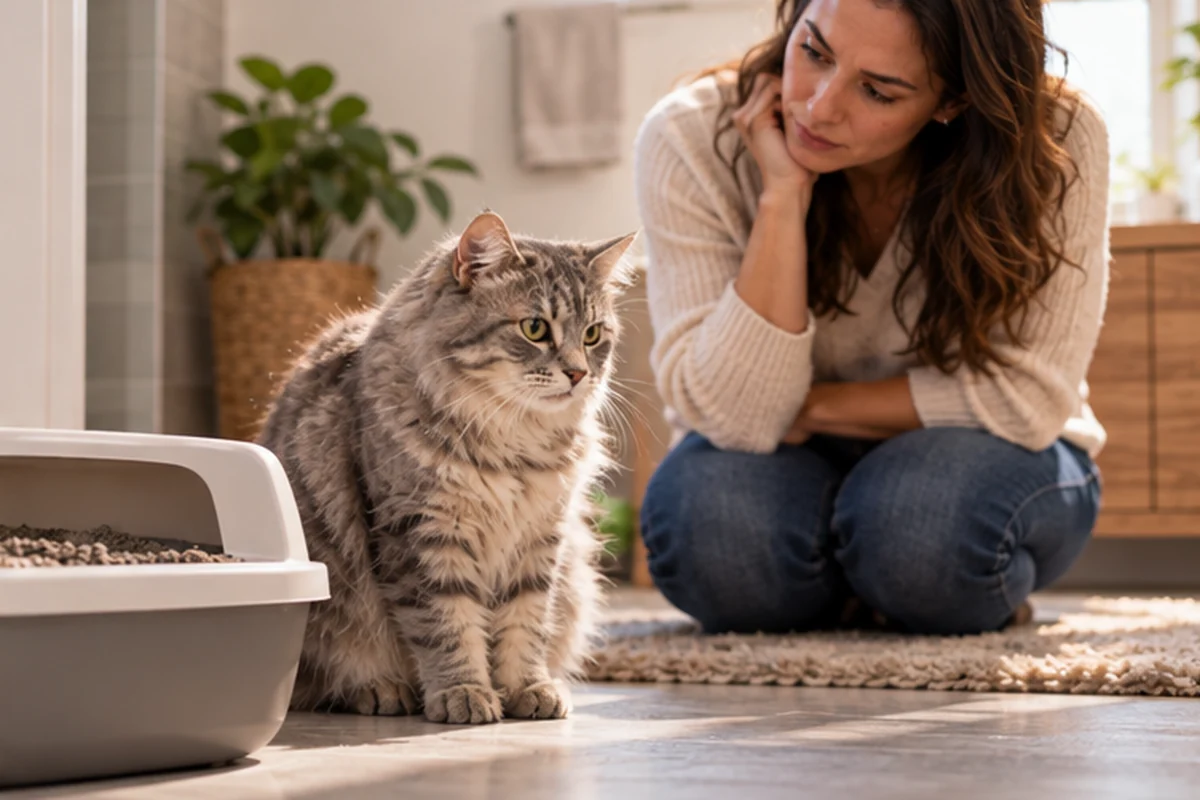
A Cat Straining in the Litter Box Needs a Careful Look
A cat who repeatedly strains in the litter box may be constipated, but a urinary blockage can look similar and can become life-threatening. If your cat makes repeated attempts to urinate yet produces little or no urine, especially with crying, vomiting, weakness, or a painful-looking abdomen, seek emergency veterinary care immediately. Do not wait for an overnight observation period to distinguish urine trouble from difficult bowel movements. Male cats are at particular risk of urethral obstruction, though urinary problems can affect any cat. Cornell’s Feline Health Center identifies blockage as an absolute emergency. Constipation also warrants veterinary assessment, especially when persistent or accompanied by loss of appetite or vomiting. The first practical question is not "Which remedy should I try?" but "Is my cat passing urine normally?" If you cannot tell, call an emergency clinic for guidance rather than experimenting at home.
What Constipation Usually Means
Constipation describes difficulty passing stool or passing unusually hard, dry feces. Some cats visit the litter box repeatedly, hunch, vocalize, and eventually produce small hard pieces. Others pass little stool for a period while also eating less, grooming differently, or hiding. The behavior alone does not prove simple constipation. A cat may also strain from diarrhea, colitis, rectal discomfort, or urinary disease. Owners sometimes assume a cat is blocked because no stool is visible, when the pet is not eating enough to produce much stool. Conversely, a cat with a completely full bladder may appear to be trying to defecate. Record the date of the last confirmed stool and last confirmed normal urination separately. If several cats share boxes, individual observation may be necessary. Do not delay a vet visit to obtain a perfect diary if the cat appears unwell.
The Urinary Emergency That Can Be Mistaken for Constipation
Feline lower urinary tract disease can produce frequent litter-box trips, straining, discomfort, licking near the genitals, blood-tinged urine, and urination outside the box. An obstruction means urine cannot leave the bladder appropriately. Toxins and electrolytes can build up, creating a potentially fatal emergency. Watch for repeated unsuccessful attempts and the absence of normal urine clumps. An obstructed cat may cry, become lethargic, vomit, or hide. Cornell advises immediate veterinary treatment when a blockage is suspected. Do not attempt to squeeze a cat’s abdomen to express urine; forceful pressure is unsafe. Do not give a household diuretic or increase water intake by force as an alternative to urgent care. Even if a tiny amount of urine appears, there may still be serious urinary disease. The veterinarian needs to assess the bladder and the overall condition of the cat.
How to Check the Litter Box Without Losing Valuable Time
Look for a recent normal-sized urine clump, fresh stool, and the number of unsuccessful visits. In a multi-cat home, temporarily place the affected cat in a quiet room with its own clean box if this can be done quickly and without postponing urgent care. Watch from a comfortable distance; crowding the cat may worsen stress. A photo of an unusual stool or blood-stained litter can help the veterinarian. Note whether the cat arches to urinate, strains with the tail lifted for stool, or cries, but do not rely on posture to decide that no emergency exists. If the cat is repeatedly straining and you cannot verify urine output, ask the clinic whether to come in immediately. Household monitoring is useful for communicating a history, not for ruling out obstruction with confidence. If the pet is collapsed, vomiting repeatedly, or severely painful, stop collecting evidence and go.
Why a Cat May Become Constipated
Cornell lists multiple possible contributors, including dehydration, changes in bowel motility, ingested hair or material, a narrowed passage, medication effects, metabolic problems, and other illnesses. Pain from arthritis or mobility problems may also make it difficult for some older cats to assume a comfortable posture, potentially worsening litter-box avoidance. A diet change does not automatically explain a prolonged absence of stool. The cause matters because treatment for mild dehydration-related stool firmness differs from treatment for a genuine obstruction, neurological problem, or enlarged colon. Cats with recurrent episodes may need a more complete assessment than a single dietary recommendation. Tell the veterinarian about the pet’s normal food, water access, grooming habits, medications, litter-box setup, and recent health changes. Avoid assigning blame to one ingredient or assuming that a small amount of hair in the stool explains every episode.
What a Veterinarian May Examine
The clinician may assess hydration, temperature, comfort, the abdomen, and the urinary bladder. Based on findings, rectal examination, abdominal imaging, blood tests, urinalysis, or other studies may be considered. X-rays can help assess the amount of stool in the colon, look for changes in colon size, and investigate certain foreign bodies or other abnormalities. Not every constipated cat needs all available tests. If obstruction of the urinary tract is suspected, stabilizing the pet and addressing the blockage take priority over a routine constipation workup. Ask which tests help distinguish urinary from bowel disease, what results would change the plan that day, and whether sedation or hospitalization is needed. The goal is to identify the reason behind the straining rather than to label all effort in a litter box as a behavior problem. Share any photos or notes without insisting they replace an examination.
Treatment Options Depend on the Cause
Veterinary management of constipation may involve addressing dehydration, adjusting diet under supervision, prescribed laxatives or other medications, or removing impacted stool in more severe cases. Some cats need assisted evacuation or treatment for an underlying disease. Severe, persistent constipation can lead to enlargement and loss of normal function of the colon, sometimes referred to as megacolon. Cornell describes surgical treatment in refractory severe cases; that does not mean surgery is common or needed for a first mild episode. Urinary blockage requires an entirely different emergency plan, often including catheter placement, fluids, monitoring, and treatment of complications. These procedures should never be attempted at home. Ask the vet what treatment accomplishes, when normal elimination should return, and which signs indicate a setback. A successful single bowel movement is reassuring but does not rule out recurring disease.
Why Home Enemas and Human Laxatives Are Risky
Giving an over-the-counter human enema to a cat can be dangerous. Certain formulations, particularly those containing sodium phosphate, can cause serious or fatal electrolyte disturbances in cats. Do not administer suppositories, mineral oil, or oral laxatives unless a veterinarian has instructed you on the specific product and dose for your pet. Force-feeding pumpkin or large amounts of water is not a safe shortcut for a cat that may be blocked or vomiting. Dietary fiber may help some cats but can make management harder for others if hydration or underlying disease is not addressed. An article describing veterinary tools is not permission to copy the procedure. If your cat appears to have a small, temporary change in stool consistency but is otherwise normal, call the regular veterinary practice for individualized advice rather than choosing random social-media remedies. If urine output is uncertain, treat that as a higher-priority question.
Costs: What Might Appear on the Invoice
A straightforward visit for constipation may include an examination, diagnostic imaging, medication, and a follow-up discussion. A complicated episode can involve blood tests, fluid therapy, hospitalization, anesthesia, or procedures to remove accumulated stool. A suspected urinary blockage may add emergency stabilization, urine testing, catheterization, repeated electrolyte testing, and monitored overnight care. These are different clinical pathways, so a single national "constipation treatment price" would be misleading. Request an estimate organized by immediate care, diagnostics, treatment, and follow-up. Ask whether hospitalization includes all nursing and medications or whether items are charged separately. Never postpone urgent treatment merely to shop for a cheaper label. If cost is a concern, tell the veterinary team early so they can explain medically acceptable sequencing and available payment arrangements.
What to Monitor After Veterinary Treatment
Your veterinarian may ask you to track stool consistency, frequency, appetite, water intake, body weight, and urine output. Record medication timing and any vomiting, discomfort, or loss of energy. Do not interpret a cat passing stool as proof that urinary problems have resolved; monitor normal urination separately. For recurring constipation, review the size and accessibility of the litter box, especially for older or arthritic cats, and talk about long-term diet and hydration with the clinician. Avoid frequent unsupervised diet experiments that make patterns harder to interpret. Follow the prescribed recheck plan, because a cat who looks comfortable may still need reassessment of the underlying cause. If a cat has a history of urinary obstruction, obtain explicit emergency return instructions rather than assuming the prior treatment guarantees future protection.
Special Considerations in Multi-Cat Homes
Shared litter boxes can conceal which animal is having trouble. Count and distribute boxes according to your household and veterinarian’s recommendations; place them where a cat can enter without being cornered or disturbed. A timid cat may avoid a box that another cat guards, but behavioral stress should not be used to explain away repeated straining or blood in the urine. If one cat is recovering from illness, temporarily monitoring a separate litter box can establish a clearer baseline. Keep notes about each cat’s feeding and toileting where feasible. If there is a sudden change in accidents or box visits, separate the animals humanely rather than punishing them. Cornell’s lower urinary tract guidance notes that environmental stress can be relevant, but medical assessment still comes first when warning signs appear.
Insurance and Previous Symptoms
Pet insurance may cover certain eligible illnesses, diagnostics, hospitalizations, or surgeries, subject to the contract, waiting periods, and medical history. A cat whose straining was observed before enrollment may have a history relevant to a later urinary or bowel claim even without a completed diagnosis at that earlier point. Review the insurer’s definition of pre-existing symptoms and conditions. Some plans handle examinations, medications, or follow-up differently. Keep the entire medical record and itemized bill, and describe symptoms accurately when filing. Do not conflate constipation and urinary blockage for claim purposes simply because both involve the litter box; the veterinary diagnosis and claim documentation matter. If you are comparing coverage, focus on applicable illness benefits, waiting-period rules, and whether annual limits would affect a costly recurrence, rather than assuming the company with the lowest advertised premium is best.
The Next Step That Matters Most
The vital distinction is simple: straining with little or no urine requires emergency veterinary evaluation. Constipation also deserves attention when persistent, painful, recurrent, or accompanied by other illness signs. Owners can observe litter-box output and record the history, but cannot reliably differentiate dangerous urinary disease from bowel trouble at home. Get help early, bring clear observations, and ask a clinician to explain the next safe step. EvePaw’s purpose is to make that decision easier without pretending that a page can diagnose your cat.
Research sources
- Cornell Feline Health Center: Constipation
- Cornell Feline Health Center: Feline Lower Urinary Tract Disease
Research checked October 9, 2026. EvePaw publishes educational guidance, not veterinary diagnosis or a statement of insurance eligibility. Medical decisions belong with a veterinarian. Policy conditions depend on the applicable state form and effective date. Example calculations are illustrative, not market prices.