What Will Treating a Dog’s Ear Infection Cost?
The total depends less on the word “infection” than on what the vet needs to examine, test, treat, and recheck. A first uncomplicated outer-ear episode may involve an examination, ear cytology, prescribed medication, and a follow-up visit. A painful, recurrent or resistant problem may require culture testing, sedation for a complete exam, treatment of underlying allergies, imaging, or referral. There is no responsible single price for all of these situations. If your dog is shaking its head, scratching, has discharge or odor, or seems painful when the ear is touched, arrange veterinary assessment rather than buying drops at random. An ear problem can be caused by yeast, bacteria, foreign material, ear mites, underlying skin disease, or more than one process. A clinician needs to assess the canal and, where possible, the eardrum before selecting treatment. This guide shows why invoices differ and which questions make an estimate more useful.
The First Invoice: Examination and Ear Cytology
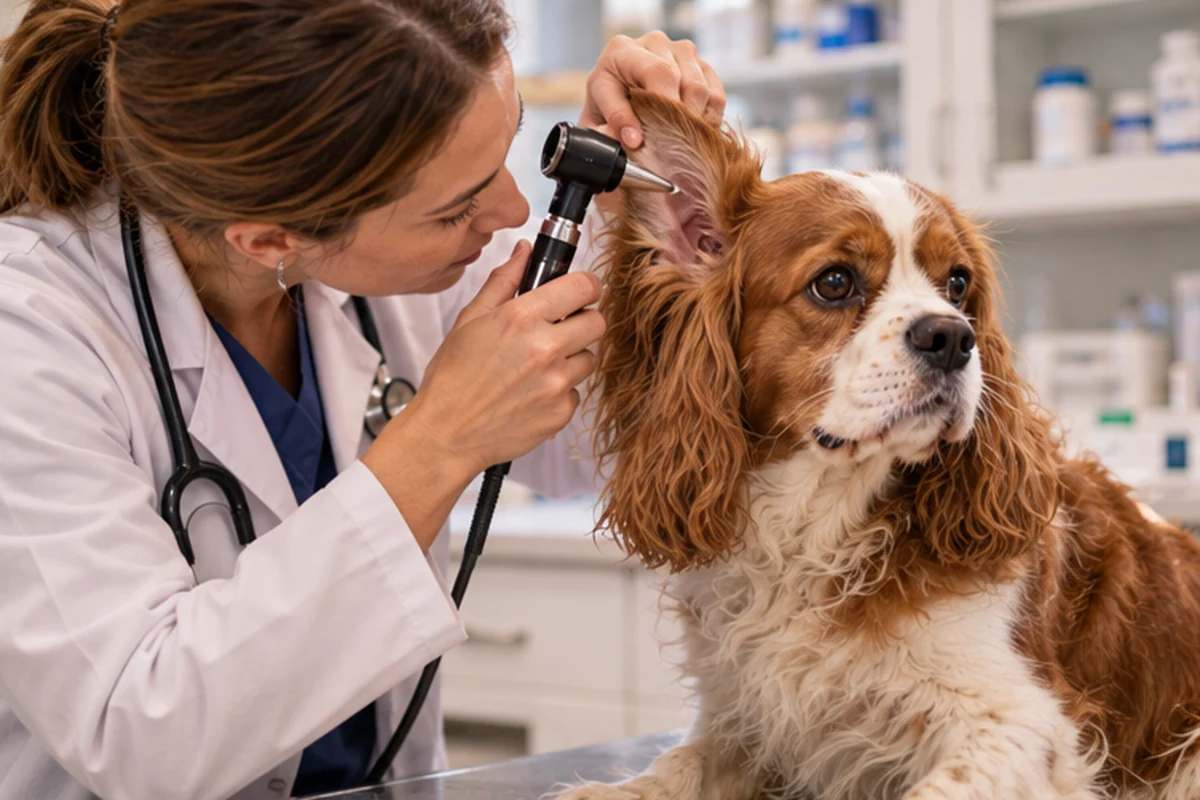
A typical first visit begins with a history and an examination of the outer ear, surrounding skin, and overall animal. The veterinarian may use an otoscope to inspect the ear canal and determine whether the eardrum can be seen. Ear cytology involves taking a sample of material and looking at it under a microscope. Merck Veterinary Manual emphasizes cytological examination as a useful way to determine what is happening in the ear canal; it can help guide responsible antimicrobial choices. Some clinics package certain tests with the consultation, while others itemize them. Ask whether the quoted exam includes cytology for one or both ears and whether there is a separate charge for ear cleaning. If the canal is too swollen or painful to see deeply, the clinician may advise medical treatment first and a later recheck. Paying for an initial exam is not a guarantee the entire condition will be resolved in one appointment.
When Cleaning Is a Medical Procedure, Not a Grooming Add-On
Ear cleaning can vary from a brief in-room procedure to a more involved flush. Some dogs tolerate gentle cleaning; others are painful or have debris that prevents a safe examination. A complete flush may require sedation or anesthesia, particularly when a foreign body is suspected or deep material is present. The charge then can include monitoring, medications, equipment, and staff time, not just a bottle of ear solution. Ask why a particular cleaning level is needed and whether the veterinarian has confirmed that the eardrum is intact. Applying an inappropriate liquid when the eardrum is damaged can create additional risks. Routine at-home ear cleaning is not suitable for every dog; some animals do better with minimal manipulation. A groomer cannot replace a veterinary diagnosis of a recurrent painful canal. Request clear written instructions if the team recommends home cleaning after the visit.
Why Medication Prices Differ
A prescription may contain antifungal, antibacterial, and anti-inflammatory components in one product, or the plan may use a different approach based on cytology. Medication prices vary by product, dose, how often it must be applied, length of therapy, and whether one or both ears require treatment. Large differences in bottle size do not necessarily mean the cheaper bottle is the medically appropriate choice. Some treatments are administered by clinic staff rather than daily by an owner, and the overall cost comparison should include the number of visits required. Ask what the medication is intended to treat, what changes should be visible by the recheck date, what adverse signs require a call, and what to do if your dog resists application. Do not borrow leftover drops from another animal. Merck notes that antimicrobial selection should consider cytology and the underlying disease, not just the appearance of discharge.
Why a Recheck Can Be Part of Proper Care
An ear may smell better before inflammation or infection has fully resolved. A recheck allows the clinician to look at the canal again, assess remaining debris, and decide whether additional treatment is needed. Sometimes cytology is repeated to establish whether yeast or bacteria are still present. This is particularly relevant when the earlier canal was too swollen for a complete examination. The recheck may be quoted as a separate exam and laboratory charge, so ask at the first appointment whether follow-up is expected and whether costs are bundled. Stopping medication because the dog is scratching less can allow a problem to persist. On the other hand, continuing old medication indefinitely without assessment is not a sound strategy. Use the timeline supplied by the treating veterinary team, and bring back an accurate record of doses, missed applications, and changes in signs.
Recurrent Ear Problems Require a Different Budget
If an infection seems to return shortly after treatment, the financial plan should shift from buying repeated courses of drops to investigating why the ear stays inflamed. Allergic skin disease, chronic moisture, anatomical factors, foreign material, and other disorders may contribute. Some dogs also have changes to the canal that make cleaning and medication harder. Depending on clinical findings, the veterinarian may recommend skin assessment, additional cytology, culture and susceptibility testing, a dietary investigation, endocrine testing, or dermatology referral. Not every test belongs in every case. Ask the clinician to identify the leading suspected causes and the diagnostic value of each proposed next step. VCA’s clinical guidance explains that chronic or severe infections can require culture and investigation of underlying disease. A cheap repeat prescription may become expensive if it delays recognition of that underlying problem.
When Cultures and Advanced Tests Enter the Picture
Culture and susceptibility testing is more likely to be discussed when infections are severe, recurrent, or not responding as expected. The test can help select treatment when resistant organisms are a concern, although interpretation still requires clinical expertise. Its price may include specimen collection and an outside laboratory fee. For suspected middle-ear disease or a deep chronic condition, the veterinarian may discuss advanced imaging or referral; CT or MRI is not part of the routine workup for most uncomplicated ear infections. Make sure an estimate identifies which imaging is proposed, whether sedation or anesthesia is needed, and whether a specialist will interpret results. If a clinic recommends several tests at once, ask which answer would change the immediate treatment and which may be deferred safely. This is not an invitation to reject important diagnostics, but a way to understand their purpose and the resulting invoice.
How Severe Ear Disease Changes the Cost Picture
Longstanding inflammation may narrow the ear canal and make medication difficult to deliver. Severe cases can be associated with middle-ear involvement, painful tissue changes, and occasionally surgery. Such care may require specialist consultation, imaging, anesthesia, operating room charges, postoperative medication, and follow-up visits. Surgery is not the usual treatment for a recent straightforward episode, so a high estimate from a surgical service should not be presented as the expected bill for every owner. If the recommendation involves an ear canal operation, discuss the expected quality-of-life benefit, effects on hearing, complications, recovery restrictions, and alternatives with the surgeon. Request an estimate separating diagnostic work, surgery, hospitalization, and follow-up. The clinical goal is relieving persistent pain and controlling serious disease, not simply eliminating an unpleasant odor.
A Hypothetical Comparison of Two Treatment Pathways
Consider Dog A, who has a first episode of outer-ear inflammation, is comfortable enough for an exam, and responds to targeted medication. The bill might contain an exam, cytology, a prescription, and one recheck. Now consider Dog B, whose ear has been painful for months, whose canal is difficult to examine, and who has failed prior medication. That dog may need sedation, repeated samples, culture, longer treatment, or referral. The second bill may involve many more line items even before surgery is considered. These are scenarios, not measured national averages or promises of treatment. They explain why asking a neighbor what their dog “cost” can mislead you. Compare the specific services included in each clinic’s estimate rather than assuming two invoices describe equivalent medical situations.
How to Read the Estimate Line by Line
Ask for an itemized treatment plan under four headings: diagnostic evaluation, therapy, follow-up, and possible escalation. Under evaluation, look for examination, cytology, culture, imaging, or sedation. Under therapy, look for medication and cleaning. Under follow-up, check whether recheck visits and repeat samples are included. Under escalation, ask what would trigger referral or a more invasive procedure. Clarify whether taxes, prescription dispensing, or anesthesia monitoring are listed separately. If you have a firm budget, be transparent about it and ask which steps are essential for a safe plan today. A good medical conversation explains trade-offs; it should not make you feel that understanding the invoice means you are declining care. Always follow the clinic’s guidance about urgent complications such as marked pain, head tilt, loss of balance, or sudden hearing changes.
Pet Insurance: When Ear Treatment May Be Eligible
An accident-and-illness plan may reimburse eligible examination, diagnostic, or medication costs for a new condition, but policies differ. Some plans treat office exam fees as an optional benefit; others exclude them. Pre-existing symptoms, ear disease documented before enrollment, waiting periods, or chronic underlying conditions may affect eligibility. Routine grooming and preventive cleaning are not necessarily covered even when a medically necessary treatment is. Do not assume a plan pays for a bottle simply because it has a veterinary label. Retain the original detailed invoice, medical notes, cytology results, prescription details, and follow-up documentation. Ask the insurer whether a deductible and reimbursement rate apply to covered amounts after exclusions. A claim can be partly eligible rather than wholly paid or wholly denied. If the same issue has recurred, precise medical timelines matter more than attempting to describe every episode as new.
Prevention Without Overcleaning
The right maintenance approach depends on the dog’s ear anatomy, skin health, activity, and prior infections. A veterinarian may recommend a suitable cleaning schedule, particularly after swimming, or may advise minimal handling for a sensitive ear. Avoid alcohol, peroxide, cotton swabs pushed into the canal, and other improvised treatments unless specifically directed by a clinician. Keep track of signs that recur after swimming, grooming, diet changes, or seasonal allergy flares, but remember that timing alone does not prove causation. If repeated infections are part of allergic disease, controlling the broader skin condition may matter more than frequent deep cleaning. Ask whether there is a preventive plan worth following and what should trigger a repeat appointment. Prevention is useful when it is tailored, not when every dog receives the same bottle and schedule.
A Useful Bottom Line
Budget for the actual medical pathway, not a headline number. For a new ear problem, start with an exam and diagnosis; for repeated problems, expect questions about underlying disease and whether additional testing is warranted. Ask why cytology, rechecks, culture, or sedation are recommended, and get the likely next costs in writing. Prompt care reduces the chance that a painful canal problem will be left to worsen. EvePaw cannot diagnose an individual ear or quote a real clinic’s charges. Your veterinarian can decide what testing and treatment are appropriate for your dog.
Research sources
- Merck Veterinary Manual: Otitis Externa in Animals
- Peer-reviewed review: Canine Otitis Externa Treatment and Complications
Research checked October 9, 2026. EvePaw publishes educational guidance, not veterinary diagnosis or a statement of insurance eligibility. Medical decisions belong with a veterinarian. Policy conditions depend on the applicable state form and effective date. Example calculations are illustrative, not market prices.