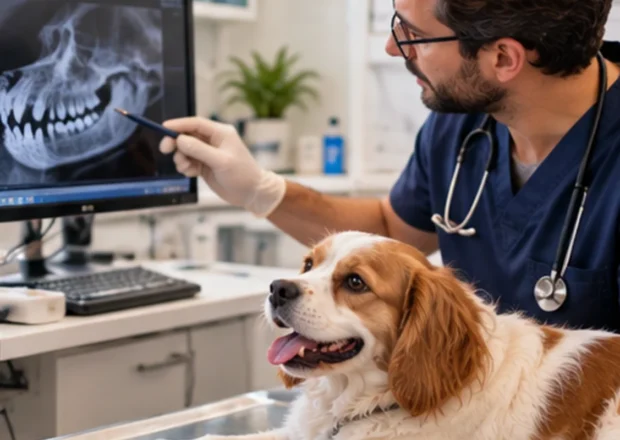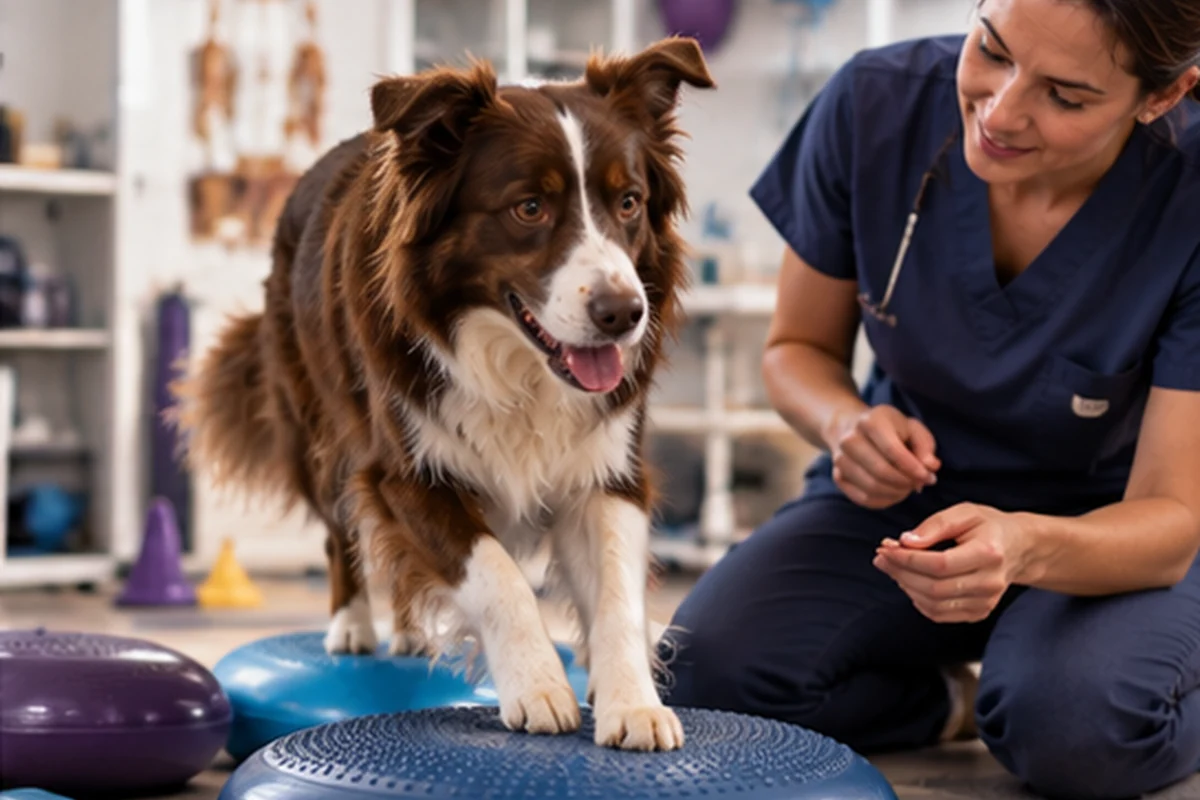
Veterinary rehabilitation may be recommended after orthopedic surgery, certain injuries or as part of a long-term mobility plan. Its cost is usually better understood as a course of care than as one session fee. The full estimate may contain an initial assessment, hands-on sessions, supervised exercise, equipment or modalities, progress reviews and home-program coaching. Without an actual clinic quote for a particular dog and treatment plan, a single nationwide “average” can conceal more than it explains.
Start with the problem rehabilitation is meant to solve
The first question is not how much an underwater treadmill costs. It is what the rehabilitation team believes can improve for this dog. An animal recovering from a cruciate-ligament procedure may need a plan for controlled weight bearing, progressive muscle strength and safe movement as tissues heal. An older dog with chronic arthritis may instead need a sustainable maintenance program focused on comfort and confidence. A neurologic patient can have different priorities, such as balance or controlled limb placement.
VCA’s veterinary rehabilitation resources describe an approach built around health assessment and tailored physical therapies. A session should have an identifiable purpose, whether that is assessing function, teaching an exercise or progressing an established plan. Asking about purpose helps owners avoid paying for every available modality without understanding why it is appropriate.
What usually happens at the first rehabilitation visit
An initial visit may include a review of medical and surgical history, discussion of the owner’s goals, examination of how the dog stands and walks, assessment of joint motion and muscle condition, and the beginning of an individualized home plan. Some teams coordinate with the referring veterinarian or surgeon before starting. The first appointment can therefore involve more evaluation than a follow-up session.
When comparing fees, ask whether the quoted “evaluation” includes the first treatment, whether a referral is required, how much time is scheduled, and whether a printed home program is provided. A clinic charging separately for an initial assessment is not automatically more expensive if another clinic bundles that work into a higher session rate. Compare the scope of the service, not only the number on the first line.
Therapeutic exercise is often the foundation
Rehabilitation can include controlled walking, sit-to-stand variations, step exercises, weight-shifting and other movements chosen for the patient’s medical situation. Exercise selection and progression depend on tissue healing, pain, neurologic status and function. VCA describes therapeutic exercise as a central rehabilitation modality, supported by periodic reassessment. It should not be interpreted as a universal exercise list that every owner can download and follow.
A supervised session may be partly about teaching the owner to carry out a safe version at home. That can make an apparently brief appointment valuable if the dog subsequently practices the movement correctly between visits. Conversely, a dog that worsens after the home plan may need a pause and reassessment, not a more intense session to compensate for missing one.
Hydrotherapy does not mean every dog should swim
Water’s buoyancy can reduce load on joints during movement, while resistance offers an opportunity to work muscles. An underwater treadmill is a controlled clinical setting rather than the same experience as swimming in a lake. The clinician can select water depth, speed and duration based on the dog’s condition. Some dogs are fearful of water, have wounds or medical concerns, or cannot safely take part at a given stage of recovery.
Ask whether hydrotherapy is essential to the treatment goal, optional or inappropriate. A clinic may bill for a treadmill session, an integrated rehabilitation appointment or a package combining several methods. If a dog cannot tolerate water treatment, ask what evidence-informed alternative the team would use rather than assuming the entire rehabilitation plan is impossible.
Other modalities may appear on a treatment plan
Depending on the condition, a rehabilitation provider may discuss massage, controlled stretching, laser therapy, electrical stimulation, manual techniques or heat and cold applications. These methods differ in purpose and in the strength of evidence for any particular problem. A clinic offering a long menu of technology does not prove that each machine is necessary for the dog in front of you.
For every additional technique, ask what it is intended to achieve, what benefit the clinician expects, what contraindications have been checked and how success will be judged. If the modality adds an extra fee, ask whether it changes the visit length or replaces another component. A high-quality home program and reassessment may be more important than purchasing a bundle solely because the equipment sounds advanced.
Build the estimate from components
A transparent quotation separates the initial assessment from follow-ups and identifies the planned number or frequency of visits. It may also state whether treatments are billed individually or bundled, whether travel or parking will be an ongoing expense and whether necessary support devices are included. Some practices charge separately for reassessment appointments or written progress reports; others incorporate these tasks into care.
| Item to ask about | Why it can change the bill |
|---|---|
| First assessment | Longer history, gait review and plan design |
| Supervised sessions | Length, clinician qualifications and number of visits |
| Hydrotherapy | Equipment, staffing and whether offered separately |
| Reassessment | Review and modification of goals or exercises |
| Home equipment | Harnesses, traction mats or other recommended aids |
| Follow-up with primary vet | Medication or surgical progress may need separate review |
This table describes possible costs, not items every patient must purchase. A provider should be able to explain why each recommended component is present.
Example: comparing two clinic proposals
Consider an illustrative rehabilitation plan for a dog after knee surgery. Clinic A quotes an evaluation and six supervised sessions; Clinic B quotes an evaluation and four appointments plus a detailed home coaching session. The total for B cannot be judged simply by counting visits. You need to understand appointment duration, clinician involvement, what is included, and whether the surgeon’s recovery restrictions match the plan. An owner who can confidently carry out prescribed exercises at home may have different logistical needs from one who cannot.
A fair comparison would list the same expected treatment period and goals, then ask each provider to explain costs and follow-up. The illustrative example does not predict how many sessions a particular dog needs. If a patient experiences complications or takes longer to improve, the course and total cost can change.
The role of home exercises
Home care can be an essential part of rehabilitation, but it should be prescribed and demonstrated. Good written instructions specify the movement, intended frequency, conditions for stopping and contact point for concerns. Ask whether somebody can watch the owner demonstrate the technique before the first visit ends. A dog that slips on flooring or struggles to settle may need practical changes before practice is safe.
Do not reproduce advanced balance exercises, forced joint movements or intense walking based only on a social media video. For a dog with recent surgery, restrictions from the surgeon take priority. If advice from different clinicians conflicts, ask them to coordinate a single written plan. A program that is manageable in the dog’s actual home is more useful than one requiring equipment or space the household lacks.
Costs after surgery differ from maintenance care
Postoperative rehabilitation often follows milestones related to tissue healing and the procedure performed. Progress may be reevaluated as the dog increases activity. A maintenance program for chronic mobility problems may instead involve less frequent check-ins over a longer period. One quotation for “six rehabilitation sessions” is therefore not a universal cost unit. Its relevance depends on treatment phase and goals.
Ask when the dog might be discharged from supervised sessions, what maintenance looks like and what changes would justify rebooking. Understanding the intended endpoint helps prevent open-ended spending without measurable benefit. When a patient is not progressing, further diagnostics or a new clinical assessment may be more important than adding more sessions automatically.
Watch for a therapy plan that needs reassessment
A dog that becomes markedly more painful, refuses to bear weight, develops swelling, seems unusually weak or has a new neurologic change needs veterinary reassessment. Rehabilitation is not a replacement for diagnosing acute deterioration. Even milder patterns—such as steadily decreasing willingness to exercise or consistent next-day discomfort—should be reported before increasing difficulty.
Keep a small record of walking distance, rising, stairs if permitted and recovery afterward. For a dog with arthritis, the relevant target might be steady comfort on a familiar walk. For a postsurgical dog, the surgeon may define a much narrower stage-specific goal. Using the correct benchmark matters more than doing the same number of exercises every day regardless of response.
What pet insurance might reimburse
Some pet policies cover eligible rehabilitation connected to a covered condition, while others exclude it from the base contract or offer a specific optional benefit. Never conclude that physical therapy is covered merely because surgery was covered. Lemonade, for example, describes an optional physical-therapy add-on in its current pet materials, which can affect treatment eligibility. Another insurer’s policy may handle rehabilitation differently. Check the actual state-issued contract and any attached endorsements.
Ask whether authorization is required, whether a veterinarian must recommend the therapy, whether the provider’s qualifications matter, and how annual limits, deductibles or exclusions apply. Pre-existing-condition rules can be especially important for a dog with long-standing arthritis. Obtain a written interpretation where feasible. Keep medical referrals, itemized invoices, clinical notes and dates together rather than relying on a brochure’s short summary.
Finding a suitable provider
Ask the primary veterinarian or surgeon for referrals, then confirm the clinician’s specific rehabilitation training and experience with the dog’s problem. Ask who supervises sessions, whether an emergency protocol exists, how progress is shared with the primary vet and whether the clinic accommodates anxious or mobility-impaired animals. A nearby clinic with strong coordination and a manageable plan may fit better than a distant facility with more equipment.
Practical issues matter. A dog that becomes distressed during long car rides may expend more energy getting to a session than during treatment. A household that cannot attend three daytime appointments each week should say so before agreeing to the plan. Discuss alternative frequencies or realistic home components rather than silently failing to follow an impractical schedule.
Questions before paying for a package
Ask: What is the diagnosis and functional target? Who will assess and treat the dog? Are any modalities optional? What is included in an initial visit versus follow-ups? What exercises must happen at home, and can we do them safely? When is progress reviewed? What happens if the dog worsens or cannot tolerate a technique? What part, if any, may be eligible under our policy? Can the clinic provide an itemized estimate and adjust the plan when clinical needs change?
If the proposal is a discounted prepaid package, also ask about cancellation, refunds for unused appointments, expiry and rescheduling rules. The lowest advertised visit price can be less useful than a clear plan that the household can actually complete. Avoid buying a long package before understanding how the dog responds to the initial assessment.
A better budget is a plan, not a guessed average
Rehabilitation costs come from a clinical pathway: evaluation, appropriately chosen care, owner participation and repeated reassessment. Request a quote that explains each step and shows the likely near-term commitment. If affordability is limited, tell the team early and ask for a medically sensible priority order. Do not substitute uncontrolled exercise for supervised care just to avoid fees. The objective is safer, more comfortable function—not the maximum number of sessions on a receipt.
Research sources
- VCA, Veterinary Rehabilitation Medicine
- VCA, Rehabilitation Modalities
- VCA SouthPaws, Rehabilitation Services
- AAHA, 2022 Pain Management Guidelines
- Lemonade, Pet Insurance Add-Ons, Updated August 2026
Research references checked October 10, 2026. Coverage, services and legal rules may vary; review current documents. EvePaw provides educational information, not medical diagnosis, legal advice or a binding insurance coverage determination.