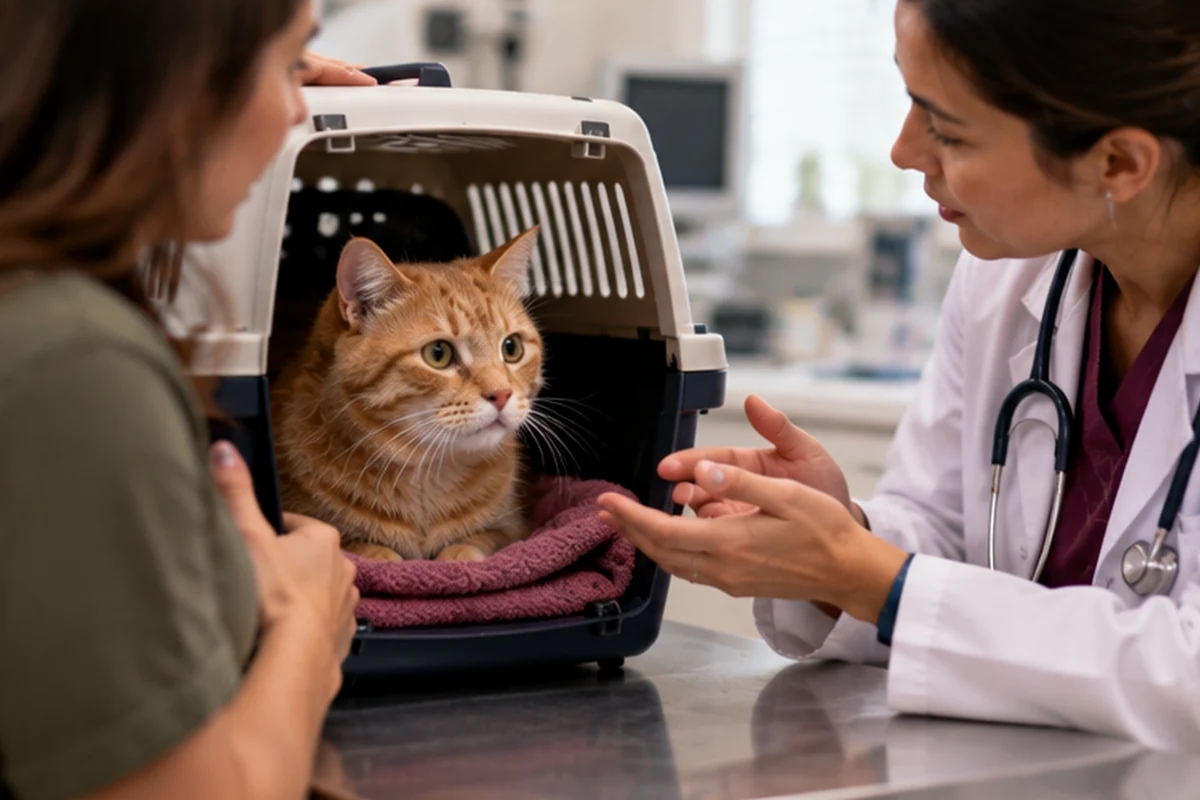
Cat Urinary Blockage: Treat the Signs as an Emergency
A cat repeatedly trying to urinate but producing little or no urine may have a blocked urethra and needs immediate veterinary evaluation. Male cats are at particular risk because of their narrower urethral anatomy, although urinary signs can occur in any cat. A complete obstruction can rapidly disrupt kidney function and dangerous electrolyte balance. Cornell calls urethral obstruction an absolute emergency. Do not wait until morning, offer medication from an earlier illness, or assume the cat is simply constipated because it is crouching in the litter box. If a blockage is suspected, contact an emergency veterinary hospital and transport the cat promptly. The purpose of this cost guide is to help owners understand why an emergency invoice may include stabilization, testing, sedation, catheterization, hospitalization, drugs and rechecks. It is not a price quote or a home treatment guide. The correct intervention depends on whether the cat is actually obstructed, how sick it is on arrival and what the veterinarian finds.
The Difference Between Urinary Signs and Confirmed Obstruction
Frequent litter-box visits, crying, blood in urine, straining, genital licking and accidents outside the box can occur with several lower urinary tract problems. A cat may have inflammation, crystals, stones, infection or another disorder without complete obstruction. Owners cannot safely distinguish all of these possibilities from posture alone. A blocked cat may initially show similar signs but becomes progressively distressed, especially when little or no urine passes. Cornell explains that urethral plugs and urinary stones are among possible causes, and that complete blockage can produce life-threatening changes. A veterinarian may palpate the bladder, evaluate the cat’s condition and use bloodwork or imaging to help direct treatment. An apparently mild beginning should not persuade you to wait for vomiting or collapse. Acting early can protect the cat and may reduce the need for more intensive stabilization, although individual outcomes cannot be predicted.
Why the Emergency Visit Costs More Than an Office Examination
A routine consultation is designed for a comparatively stable patient. A suspected obstruction may require rapid triage, urgent assessment, laboratory work and treatment while the hospital simultaneously prepares supplies and staff. Charges can reflect emergency facility overhead, continuous nursing and the complexity of caring for a painful or metabolically unstable animal. The timing of admission and the services required can differ substantially among clinics. An estimate often changes as tests reveal whether the kidneys and electrolytes are affected. The bill may initially cover diagnostics and stabilization, followed by a separate estimate for catheter placement and hospitalization. Ask for the immediate authorization amount, when the clinic expects to update the estimate and what would trigger additional charges. A hospital should explain clinically necessary work; owners can ask questions while understanding that some decisions must happen quickly.
Diagnostic Testing: What the Veterinarian Needs to Know
Blood tests can assess kidney-related values and electrolytes, including potassium, because an obstruction can create dangerous biochemical changes. Urinalysis can provide information about blood, crystals, inflammation and other findings, although testing methods and timing depend on stability and the sample available. Radiographs or ultrasound may be recommended to look for urinary stones, assess the bladder or investigate complications. No single test is automatically needed in every case. Ask whether the diagnostic charge includes the sample collection, laboratory processing, interpretation and any repeated measurements after treatment. Follow-up blood tests are not merely duplicates if the team needs to confirm that electrolyte disturbances are improving. Similarly, repeat imaging may answer a new question after initial stabilization. When a clinic suggests a test, ask which finding will alter the treatment plan and whether it is urgent or can safely wait.
Stabilization Before Catheter Placement
A very ill obstructed cat may need intravenous access, fluids, pain relief and treatment for life-threatening electrolyte abnormalities before anesthesia or catheterization. The clinical team may place monitoring equipment and evaluate heart rhythm depending on the patient’s state. That preliminary care may make the invoice seem unexpectedly long, but it addresses risks created by the inability to pass urine and potential dehydration or shock. The sequence cannot be dictated by a price article. A stable cat may move quickly to a procedure, while a severely affected cat needs more stabilization first. Ask the emergency clinician to identify the highest immediate risks and explain what the proposed interventions aim to correct. Do not request that essential stabilization be omitted simply to match an estimate from another hospital or an anecdotal online bill.
Urethral Catheterization and Anesthesia
Cornell describes catheterization—passing a narrow tube through the urethra—as common treatment to relieve obstruction, usually requiring sedation or anesthesia. The veterinary team may also need to address plugs or stones and manage bladder drainage. Charges can include anesthesia drugs, monitoring, catheter equipment, staff time, procedural supplies, pain control and post-procedure care. Not every case is relieved in exactly the same way, and some require additional procedures. Ask whether the quote includes catheter placement only or also the time the catheter remains in place, nursing checks and removal. A catheterized cat may wear an Elizabethan collar, need careful handling and require a closed collection system or other monitoring. If the cat cannot be unblocked conventionally, the clinician will discuss the next medically appropriate steps, which can involve a new estimate and different prognosis.
Why Hospitalization May Be Necessary
After the obstruction has been relieved, veterinary staff may monitor urine production, comfort, hydration and the return of normal electrolyte and kidney values. The catheter may need to remain temporarily, and the cat must be observed after it is removed to see whether urination is possible. Cornell notes that hospitalization length can vary greatly with severity and complications. A short stay for one cat should not become an expectation for every cat with urinary obstruction. Hospital billing often includes room or cage charges, nursing care, IV fluids, drugs, monitoring, lab work and veterinarian reassessments. Request an estimate for a realistic range of hospitalization time, and ask what clinical milestone would allow safe discharge. An extra night may be recommended because the cat is not yet urinating reliably, not because the hospital automatically bills a fixed number of nights to every patient.
When Surgery Enters the Discussion
Some cats have stones requiring a procedure or suffer recurrent obstruction despite appropriate medical care. In selected cases, a veterinarian may discuss perineal urethrostomy, an operation that creates a wider urinary opening. Cornell describes it as a possible approach for difficult recurring cases, not the standard first step for every urinary complaint. Surgical candidates require specific evaluation, and the procedure has its own complications and postoperative care needs. A surgical estimate is not interchangeable with the estimate for initial emergency catheterization. It may involve surgeon expertise, anesthesia, hospitalization, medication and additional follow-up. Ask why surgery is recommended now, what medical alternatives are still reasonable and which risks and expected outcomes apply to this cat. Avoid assuming that a single obstruction automatically means the cat must undergo permanent reconstructive surgery.
How to Read an Itemized Emergency Invoice
Request separate lines for emergency exam, diagnostics, sedation or anesthesia, catheterization, fluids, medication, hospitalization, repeated testing and discharge medications. Ask which line items are completed versus projected, whether the estimate includes taxes or administrative fees, and whether costs could increase if kidney values remain abnormal. If payment is required before treatment, confirm the amount due and how additional consent will be obtained. For illustration only, suppose an emergency facility estimates $500 for initial diagnostics and stabilization, $900 for catheter-related procedure services and $1,100 for monitoring and other hospitalization services: the modeled total is $2,500. These are invented teaching amounts, not typical, median or quoted U.S. prices. An actual invoice may be lower or much higher. What matters is the bill structure and the underlying medical needs, not treating an illustrative calculation as a price promise.
What Changes the Total Bill?
The biggest differences can arise from how sick the cat was on arrival, kidney and electrolyte abnormalities, suspected stones, difficulty relieving the blockage, need for repeated catheterization, length of hospital care, additional medications or need for surgery. A referral specialty or 24-hour emergency facility may use different staffing and billing structures than a primary-care clinic. Geographic cost of care also changes the estimate, even for broadly similar treatment pathways. The cat’s treatment history matters too. A first uncomplicated episode is not medically equivalent to repeated blockages or a cat with established kidney problems. Two invoices that have the same heading, “urinary obstruction,” may reflect different urgency, testing and recovery. If you are comparing clinics, ask about the comprehensive care plan and emergency capability, not simply the posted initial examination fee.
Pet Insurance and Medical Records
A cat’s emergency urinary treatment may be eligible under some accident-and-illness policies, but coverage depends on the actual diagnosis, symptom history, waiting periods, applicable exclusions and issued policy wording. The absence of a microchip or an old veterinary chart does not erase signs that may have occurred before coverage began. Insurers may request earlier records or ask about previous inappropriate urination or urinary medications when assessing whether a condition is pre-existing. Save the itemized paid invoice, discharge instructions, urinalysis and lab results, imaging reports and clinical notes. Ask the insurer what its definition of pre-existing conditions includes, whether a related recurrence is treated under the same exclusion and whether urinary conditions have specific limitations. A quote or generic website coverage list is not evidence that this particular claim will be paid. Seek care promptly regardless of claims-processing uncertainty.
Discharge, Diet and Recurrence Planning
At discharge, ask how much urination to expect, which changes require immediate return, what medicines must be administered and when follow-up testing is due. Your veterinarian may advise changes to water access, food, litter-box placement or stress management based on the established diagnosis. Do not independently prescribe urinary acidifiers or switch diets because of a blog post; Cornell cautions that diet decisions require clinical context. Recurrent inability to pass urine is another emergency. A cat can be more comfortable after hospitalization and still require careful monitoring at home. Keep all follow-up receipts and records together because ongoing care can add to the full episode cost. If the family has multiple cats, consider how to observe the affected cat’s individual litter-box use without causing excessive stress. A simple written plan for caregivers can reduce dangerous delays.
Financial Planning Without Delaying Care
Emergency treatment bills can be intimidating, especially when the estimate changes as the patient stabilizes. Be candid about your available funds and ask the hospital about payment processes, staged authorizations or suitable referral options. Financial conversations are appropriate; withholding information from the care team is not helpful. Ask which services are medically essential now and which are contingent on diagnostic results. Request written discharge instructions and invoices before leaving. For a cat currently straining without producing urine, the only safe financial-planning first step is arranging emergency veterinary evaluation. After the crisis, an itemized invoice and clear follow-up plan can help you build a sensible reserve or evaluate insurance. An article about costs cannot tell whether the bladder is blocked or authorize delaying relief of a life-threatening condition.
Research sources
- Cornell: Feline Lower Urinary Tract Disease and Urethral Obstruction
- Merck Veterinary Manual: What to Do in a Dog or Cat Emergency
Research checked October 9, 2026. EvePaw provides educational information, not veterinary diagnosis or confirmation of insurance coverage. Medical decisions require a veterinarian. Insurance benefits depend on the applicable state policy and effective dates. Cost examples are hypothetical, not measured average prices.