An older cat that drinks more, fills the litter box with larger urine clumps or quietly loses weight deserves a veterinary appointment. Those changes can occur with chronic kidney disease (CKD), but they can also accompany diabetes, thyroid disease and other problems. CKD cannot be diagnosed from drinking behavior alone. A veterinarian uses the history, examination, urine tests, blood results and often blood-pressure readings to understand whether kidney function is affected and what to do next.
If your cat is repeatedly vomiting, struggling to breathe, collapsing, unable to urinate, profoundly weak or refusing food, seek prompt veterinary care rather than waiting for routine monitoring. Cats with kidney disease can develop dehydration and other complications, but a suddenly unwell cat needs an assessment of the immediate problem—not an online attempt to determine a kidney-disease stage.
What chronic kidney disease means—and what it does not
The kidneys help regulate body water, remove metabolic waste, control aspects of blood pressure and support red-blood-cell production. Chronic kidney disease describes an ongoing loss of kidney function; it is not the same as a one-time abnormal laboratory result. A cat may compensate remarkably well early on, which is one reason annual or more frequent checks become especially useful in later life. Cornell's Feline Health Center identifies age as an important risk factor but also emphasizes how variable individual disease is.
Many families picture kidney failure as a single dramatic event. In practice, CKD can progress gradually. One cat may keep eating and playing for a long time with a carefully managed plan; another may struggle with nausea, dehydration, blood-pressure problems or concurrent illness. The clinician's job is to determine which factors are actually present. An article should not predict a cat's remaining lifespan from one laboratory number, and neither should a family feel compelled to make big treatment decisions before the results have been explained.
Subtle changes owners can notice at home
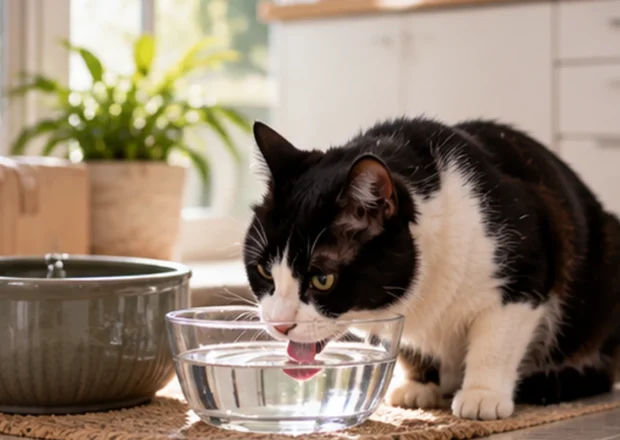
Changes in the water bowl and litter box are often easier to recognize than changes in the cat's behavior. Larger or more frequent clumps may indicate more urine is being produced. A cat may visit a water fountain repeatedly or prefer a sink. Weight loss may be hidden beneath a fluffy coat; a monthly weigh-in, using the same scale when practical, is more informative than a visual guess. Some cats develop reduced appetite, vomiting, less grooming, bad breath or lower activity as illness advances.
None of these findings is exclusive to kidney disease. Drinking a lot can point toward diabetes or other endocrine or metabolic disease. An owner might also mistake an increased number of small bathroom visits for increased urine volume, when the real issue is urinary discomfort. Keep a brief log with dates, appetite, approximate water intake if reasonably measurable, litter changes and weight trends. Do not restrict water to see whether the symptoms improve. A cat should continue to have easy access to fresh drinking water while you arrange veterinary evaluation.
The first veterinary visit: what information is useful
Bring information about your cat's food and treats, prescription and nonprescription products, previous diagnoses and recent examinations. If the cat has changed diets or appetite, say when. Tell the veterinarian whether weight loss was gradual, whether the cat seems to urinate larger amounts or strains, and whether vomiting is occasional or frequent. A short video can document unusual behavior without subjecting the pet to prolonged observation when it is uncomfortable.
The clinician may review hydration, body condition, muscle mass, oral health, heart rate and blood pressure and suggest bloodwork and urine testing. Asking for a clear explanation of each test is reasonable. Rather than demanding a 'kidney panel' in isolation, ask what else might explain the changes and whether tests for thyroid disease, infection, diabetes or other conditions are indicated. An appointment becomes more productive when the family and clinician agree on what the results need to answer.
Reading kidney bloodwork without turning numbers into a diagnosis
Common measurements include creatinine, blood urea nitrogen (BUN) and symmetric dimethylarginine (SDMA). Each contributes information; none should be interpreted without context. Creatinine can be influenced by muscle mass, while dehydration and other factors affect several measurements. A thin older cat may have relatively low creatinine despite clinically meaningful disease. Your vet will also look at electrolytes, phosphorus, red-blood-cell findings and results from prior tests when available.
Suppose two cats have a similar creatinine reading. One is dehydrated after an illness and the other is clinically stable with a history of progressively less concentrated urine. Their interpretation and next steps may differ. The lesson is not to disregard abnormal numbers but to avoid treating them as a complete medical story. Ask whether the sample was obtained when your cat was adequately hydrated, whether repeat testing is recommended and which trend matters most. Keep copies of the laboratory reports; future clinicians can compare them with the same cat's history.
Why urine tests and blood pressure matter
A urinalysis helps the veterinary team evaluate urine concentration, protein, blood cells and other findings. The urine protein-to-creatinine ratio may be relevant if protein loss is suspected; a culture can help assess whether bacteria are present when infection is a concern. Urine collection methods vary by clinical question. The veterinarian should explain why one method is being recommended and whether an at-home sample would be adequate for that particular test.
Blood pressure is not merely an optional extra for a cat with suspected or established kidney disease. Hypertension can damage organs, including the eyes, and may require treatment. Tell the veterinary team promptly if vision seems suddenly impaired or behavior changes abruptly. When anxiety affects clinic readings, the clinician may discuss low-stress measurement techniques or repeat assessment rather than assuming a single reading fully characterizes the problem.
Understanding IRIS staging without self-staging your cat
The International Renal Interest Society (IRIS) provides a clinical staging framework using kidney-related findings in a stable patient, followed by additional consideration of blood pressure and protein loss. A stage is a tool for choosing management and follow-up, not a personality label or fixed prediction for an individual animal. If your cat is dehydrated or dealing with an acute illness, staging may need to wait until it is clinically stable.
The right questions are: Has a diagnosis of CKD been established? Which measurements support that diagnosis? What stage and substages apply, if any? What changes would alter the plan? Ask for the next review date and what should prompt an earlier visit. A useful written care plan might cover diet, blood pressure, hydration and weight as separate issues. It should also distinguish treatments aimed at an underlying complication from those aimed at day-to-day comfort.
Kidney diets: why the transition needs care
Veterinarians commonly recommend a therapeutic renal diet for appropriate cats with CKD because formulation matters; these foods are not simply ordinary diets with a 'senior' label. Dietary changes may address phosphorus and other nutrient considerations. The specific choice must fit the cat's disease, concurrent conditions and willingness to eat. It is often more important to avoid prolonged food refusal than to force an abrupt switch to a diet the animal rejects.
Discuss a gradual transition, acceptable textures and wet-versus-dry choices with the veterinarian. Offer small portions according to the agreed feeding plan, note what the cat actually consumes and report a meaningful reduction in intake. Do not independently improvise severe protein restriction or add supplements without checking whether they suit the patient. The research on kidney diets is encouraging, but those findings do not eliminate the need for an individualized prescription and reassessment as the disease evolves.
Hydration and medication: the details that change between cats
Easy access to drinking water matters. Multiple clean bowls, a fountain if the cat likes it and wet food when consistent with the prescribed diet can all support intake. Some cats need supervised fluid treatment, anti-nausea medication, treatment for blood pressure or protein loss, or correction of certain biochemical changes. These interventions are not interchangeable. The clinician should specify whether a treatment is needed, what benefit is expected, how to administer it and what problems would justify calling back.
At-home subcutaneous fluids are sometimes prescribed, but they require hands-on training and are not an automatic next step for every CKD diagnosis. An owner should not copy another cat's schedule or fluid volume. If giving medication becomes difficult, ask about formulations and safe alternatives rather than hiding a dose in food without checking interactions or whether the cat consumes the entire portion. Maintaining a reliable routine is valuable; accurate communication about missed or refused doses is more valuable than pretending every day went perfectly.
How follow-up changes as the disease progresses
Regular reviews commonly assess weight and muscle condition, appetite, hydration, blood and urine findings, blood pressure and medication tolerance. The interval depends on the cat's stability and what changed last time. A stable cat on a consistent plan may need a very different schedule from one starting new medication or recovering from dehydration. Ask which measurements the clinic plans to repeat and whether testing can be grouped to reduce stressful visits when clinically reasonable.
Keep one page listing the current diet, drugs, doses, last lab dates, results worth watching and the clinic's urgent-contact instructions. This helps everyone in the home act consistently. If the cat becomes more tired, drinks dramatically more, stops eating or develops new vomiting, do not wait for the calendar date. The point of follow-up is to adapt treatment to the animal's condition, not to collect tidy charts while quality of life declines.
Planning for costs without pretending one bill fits every cat
The first diagnostic work-up can involve a consultation, bloodwork, urinalysis, blood pressure and sometimes imaging or a urine culture. Subsequent expenses might include therapeutic food, medications, rechecks, repeat laboratory tests and treatment of complications. Ask the clinic to distinguish items recommended now from those contingent on the first results. Prices depend on region, facility, patient complexity and whether care is routine or urgent; EvePaw does not publish a made-up nationwide quote.
For a transparent *hypothetical budgeting exercise*, assume a clinic proposes an exam for $95, combined blood-and-urine testing for $190 and blood pressure for $55. That adds to $340 before any medications, imaging, diet or follow-up. Those amounts are invented teaching inputs, not observed market prices or a forecast for your cat. Replace every amount with your veterinarian's written estimate and ask which charges could increase if further testing is indicated. The actual care plan—not a generalized price blog—should drive your budget.
Quality of life remains the point of treatment
A cat who can eat, move to a comfortable resting spot, use the litter box and enjoy familiar interactions has a different day-to-day experience from one struggling with persistent nausea or pain. Observe the animal's usual activities rather than judging from a single energetic afternoon. Your veterinarian may suggest treating a complication, adjusting a diet or reconsidering goals as the disease advances. Palliative and end-of-life discussions are part of compassionate veterinary care, not an admission that earlier treatment was pointless.
There is room for both realistic planning and hope. Many management decisions are small, repeated ones: getting a meal accepted, making water reachable, keeping a medication tolerable and reviewing laboratory trends before a crisis. The immediate next step for a newly symptomatic cat is veterinary assessment; the longer-term step, after a confirmed diagnosis, is a clear monitoring plan that the family can actually follow.
Research sources
Research checked October 10, 2026. Sources support the medical, consumer or policy background; illustrative budgets and editorial interpretations are identified in the article.