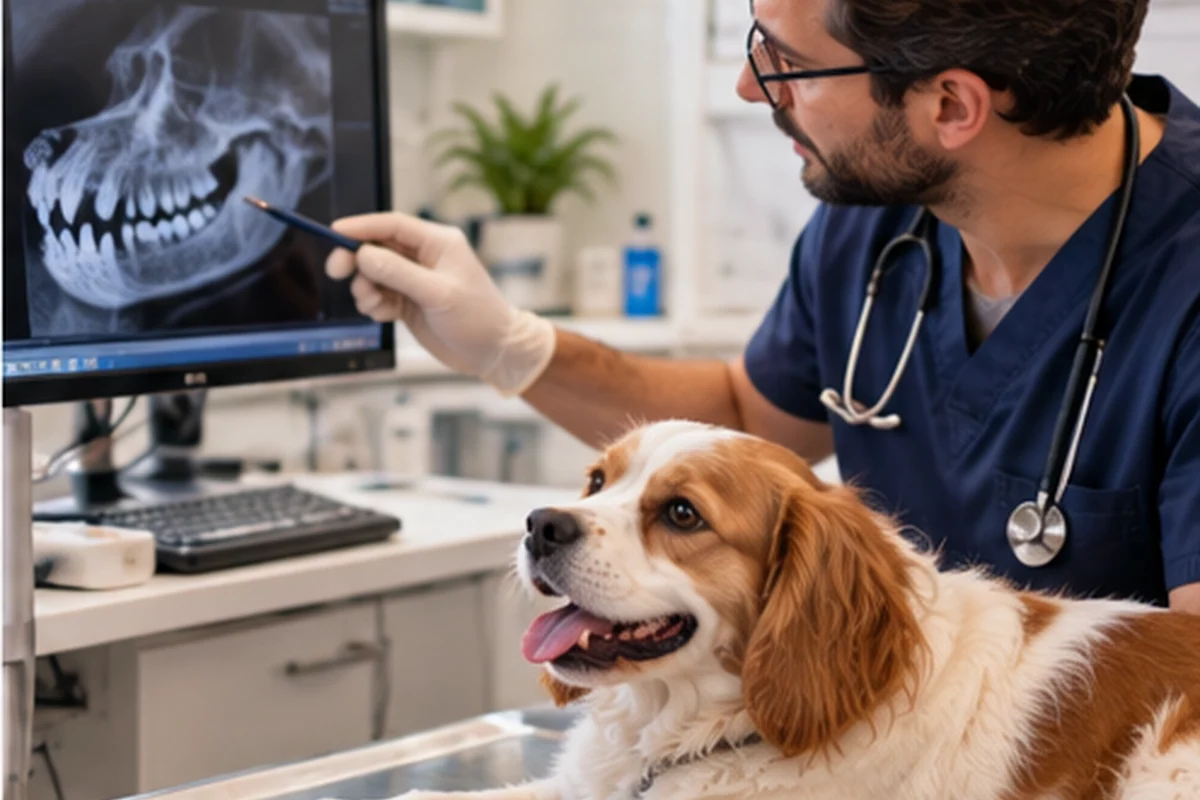
Dental X-rays are part of looking below the gum line, not merely an optional photograph of visible teeth. In veterinary dentistry, the surfaces that a clinician sees in an awake dog or cat can look better than the roots and surrounding bone actually are. The American Animal Hospital Association (AAHA) dental guidelines explain why an anesthetized oral examination and intraoral radiographs are important for detecting hidden disease. A quotation that includes radiographs can therefore be more complete than a seemingly cheaper quotation limited to visible cleaning.
There is no reliable single U.S. price for pet dental X-rays. The charge depends on whether imaging is included in the full dental package, how many images are required, the animal’s condition, the clinic’s equipment, anesthesia and monitoring, and whether unexpected treatment follows. Ask for a written, itemized estimate before comparing clinics; the radiograph line alone may not represent the cost of obtaining clinically useful images.
Why an X-ray matters when teeth look normal
A visual check can identify tartar, broken surfaces, inflamed gums, or missing teeth, but much of each tooth sits beneath the gum. Radiographs help the veterinarian assess roots, bone loss, unerupted or retained structures, and lesions that may not be visible during an awake examination. The AAHA guidelines emphasize that clinically important dental findings can exist even when the crowns appear grossly normal. For cats, tooth resorption may require careful assessment of structures that are not obvious from casual inspection.
Ask whether the veterinarian plans full-mouth intraoral radiographs, targeted views, or a staged approach and why. An isolated radiograph of an obviously damaged tooth may not identify separate problems elsewhere. Conversely, a narrowly indicated follow-up view can serve a different purpose from a complete first diagnostic survey. “Dental X-rays included” is only useful comparison language when both quotes refer to the same intended clinical examination and image scope.
Intraoral dental imaging is not the same as an ordinary body X-ray
Dental radiographs are designed to show a small area of teeth and supporting structures with detail appropriate to oral diagnosis. A general chest or abdominal radiograph has a different purpose, field of view, and often different equipment. Dental work may require multiple images to view different teeth and root angles. Clinics can differ in whether they have digital dental imaging on site and whether a specialist or referral center is needed for complex disease.
One common misunderstanding is that a dental X-ray price can be compared directly to the cost of a single abdominal X-ray. The two services do not measure the same thing. Ask how many images the plan expects, whether retakes are included, whether interpretation is performed by the treating veterinarian, and if the estimate covers record storage and documentation. A practice that lists radiographs separately might still offer a complete service; another may bundle them under an anesthesia-and-dentistry package.
Why anesthesia appears beside the imaging fee
Comprehensive veterinary dental examination and treatment are generally performed under general anesthesia with airway protection and monitoring. AAHA explicitly distinguishes these procedures from anesthesia-free cleaning, which does not permit the same thorough subgingival work or assessment. Dental radiography requires positioning that most awake animals cannot safely or reliably tolerate for a complete study. The associated anesthesia is not merely a charge for keeping the patient still; it is part of a supervised clinical procedure with a safety plan.
An estimate may contain a pre-anesthetic evaluation, laboratory testing if indicated, anesthetic drugs, intravenous access, airway management, monitoring, dental assessment, dental radiographs, scaling and polishing, and recovery. Not all animals need identical screening or protocols. Older pets and patients with medical conditions merit individualized risk assessment rather than a blanket declaration that dental anesthesia is either entirely safe or unacceptable. Ask the clinician what monitoring is included, who watches the patient, and how recovery is handled.
What commonly changes the total bill
First, the purpose: routine periodontal evaluation, suspected painful dental disease, oral trauma, or a referral consultation may involve different work. Second, the mouth itself: a cat with multiple painful lesions or a dog with fractured teeth may need additional images and procedures. Third, the scope of treatment: a cleaning-only estimate is not equivalent to an estimate that anticipates extractions, pain control, and follow-up. Fourth, the clinic: local labor, equipment, specialist availability, and emergency scheduling affect charges.
A dental estimate is often provisional until the veterinarian performs an anesthetized examination and reviews the radiographs. Significant disease can be identified after the animal is asleep. Ask whether the practice contacts you before adding major treatment, whether it requires advance authorization for extractions, and what happens if you cannot be reached. An ethical plan should address potential findings before the procedure rather than leaving you surprised by the clinical significance of X-ray results afterward.
An example of comparing two estimates without inventing market prices
Consider two hypothetical quotes, expressed as categories rather than market rates. Clinic A lists “dental cleaning” with anesthesia but no explicit imaging or itemized treatment authorization. Clinic B lists examination, anesthesia and monitoring, scaling, full-mouth dental radiographs, pain control, and a procedure-specific consent plan. You cannot conclude A is more affordable overall merely because its headline charge is lower. You need to ask whether radiographs are omitted, included elsewhere, or billed only if ordered after the initial examination.
A better comparison sheet has columns for anesthetic assessment, monitoring, full-mouth imaging, scaling, polishing, pathology or extraction charges, medications, and recheck. Put “included,” “additional if needed,” or “not offered” beside each line. If Clinic A can supply the same service at lower total cost, that may be genuinely valuable. The comparison should remain about equal clinical scope, not arbitrary numbers produced for an online article.
Imaging changes treatment decisions
Radiographs are not just evidence to keep in a chart. They can influence whether a tooth is retained, extracted, or further evaluated; how the clinician plans treatment; and whether surrounding bone or roots need attention. This can affect time under anesthesia, post-procedure medication, and follow-up. A radiograph cannot answer every oral-health question alone: the clinician interprets it together with a probing examination and the animal’s history.
If an extraction is recommended, ask what the image shows, whether root structure or periodontal loss explains the recommendation, and what alternative management would entail. If a tooth appears intact on the surface but the radiograph suggests clinically important disease, ask for a plain-English explanation instead of assuming the practice is selling unnecessary services. Conversely, a radiograph that looks reassuring does not eliminate the need for preventive dental care or future assessment.
Full-mouth versus targeted radiographs
A full-mouth survey aims to examine the entire dentition, including regions without obvious visible problems. Targeted radiographs focus on known or suspected areas of concern. The AAHA guidance supports broad imaging as a component of comprehensive dental assessment because an awake inspection may miss important pathology. Still, an individual animal’s exact plan is a medical decision. A recheck following a particular extraction, for instance, is different from a first comprehensive dental workup.
Ask the clinic whether its price represents a full-mouth series, a number of images, or a separate imaging package. If you receive a transfer or referral recommendation, ask whether the existing images will accompany the records and whether repeat images are anticipated. Radiographs are part of the medical chart; retaining copies is useful for continuity of care, later specialist consultation, and insurance documentation. The goal is better clinical information, not a particular minimum number of exposures chosen by the owner.
When the pet needs extractions or specialist care
The large expense in a dental visit may come from treatment discovered after imaging, rather than from imaging itself. Extra activity might include difficult tooth removal, suturing, local anesthesia, medication, prolonged monitoring, or referral for complex oral surgery. It is reasonable to request estimates that distinguish expected work from a potential range for added procedures. Ask what level of uncertainty remains before anesthesia and how the practice communicates changes during treatment.
A patient with severe dental pain should not be left untreated purely to secure a cosmetic cleaning appointment elsewhere. On the other hand, you can request records and another professional opinion for a non-emergency decision when clinically appropriate. Ask whether follow-up visits, food modification instructions, and medication are included. Accurate comparison involves both the procedure and what recovery will require at home.
How pet insurance interacts with radiography
Accident-and-illness plans may treat diagnostic dental imaging differently depending on whether it relates to eligible dental injury or illness. Routine preventive cleanings are often outside the accident-and-illness benefit, although optional wellness products can have separate allowances. A policy may pay eligible diagnostics for certain dental conditions while excluding routine prophylaxis, pre-existing disease, or particular procedures. That makes “Does insurance cover dental X-rays?” a question about the actual condition and contract—not just the imaging technology.
Before a non-emergency procedure, ask the insurer for the relevant dental terms and whether pre-authorization or additional records are recommended. Read deductibles, copayment/reimbursement order, annual limits, waiting periods, and exam-fee provisions. A reimbursement calculation should apply only to eligible line items. Even if the insurer confirms that dental imaging can be eligible, it may not guarantee payment for the rest of the dental package or for a condition documented before coverage began.
Questions that make a written estimate useful
Ask: Are full-mouth dental radiographs included? Is anesthesia with protected airway and monitoring included? Is cleaning beneath the gum line included? Who interprets the images? What is the authorization process if the X-rays reveal a tooth needing extraction? Which medicines, recovery instructions, and return visits are anticipated? What does the clinic charge if treatment takes longer than expected? Will the invoice separately identify radiographs for insurance purposes?
A veterinarian should be able to explain the diagnostic value of the imaging and the clinical plan without relying on vague “premium cleaning” labels. Keep a copy of the estimate, the final invoice, and discharge instructions. Dental radiography should be judged as one element of thorough oral care; the lowest headline price does not necessarily represent the least expensive or most appropriate plan for the animal.
Research sources
- AAHA: 2019 Dental Care Guidelines Summary
- AAHA: Explaining the Role of Anesthesia
- AAHA: Comprehensive Unconscious Oral Evaluation
- American Veterinary Dental College: Radiograph Examples
Research reviewed October 10, 2026. EvePaw provides consumer education, not veterinary diagnosis or a binding insurance determination. Confirm the actual applicable insurance policy, and seek professional veterinary advice for health concerns. Numerical scenarios are illustrative and not national price claims.