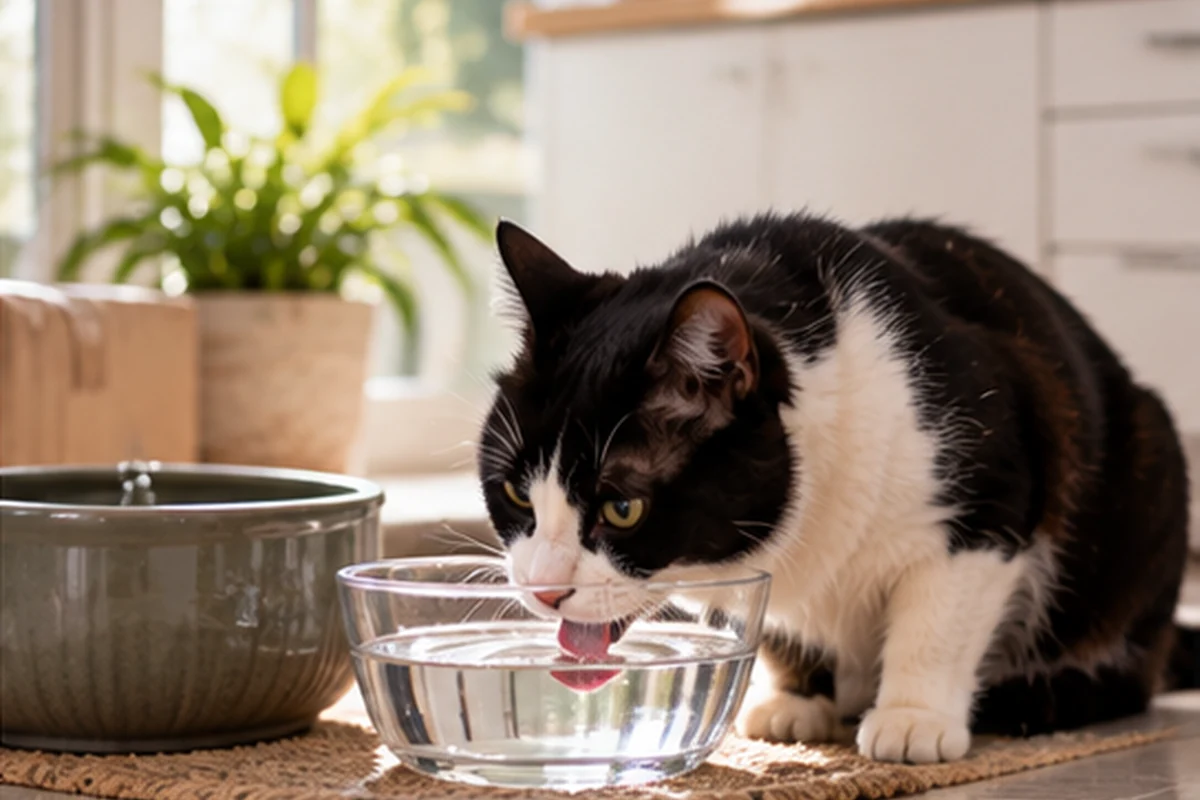
A cat who suddenly spends longer at the water bowl, empties it faster, or produces noticeably larger urine clumps should have a veterinary assessment. Increased drinking is not a diagnosis. It can reflect changes in diet or environment, but it can also accompany diabetes, chronic kidney disease, hyperthyroidism and other medical problems. The safest response is to leave fresh water available, document the change and arrange a veterinary appointment rather than restricting water or guessing which disease is responsible.
First, decide whether this is actually a change
Cats obtain water both by drinking and through food. A cat switching from wet food to dry food may drink more from a bowl without necessarily drinking more water overall. Hot weather, greater activity, household temperature, a newly discovered fountain or different bowl placement can also change observable behavior. That makes the previous routine a useful comparison point. If the cat has always visited the fountain often and everything else remains stable, that is different from a clear increase over three days.
Ask what has changed in the household: a new diet, a medication, boarding, another animal, or a different feeding schedule. Record the timing instead of trying to calculate a perfect universal drinking target. Cornell’s feline hydration guidance notes that wet-food consumption can substantially change the amount a cat visibly drinks. A single number taken out of dietary context is therefore less useful than the cat’s own pattern.
Urination may tell you as much as drinking
More water going in may mean more urine coming out. Watch for larger or more numerous litter clumps, a box that needs cleaning sooner, or a cat visiting a box at different times. Owners of multiple cats may struggle to know which cat is producing which clump. Where practical, temporary separate spaces or a camera directed toward the box entrance can help identify changes without disrupting the animals excessively. Never withhold litter-box access to make measurements easier.
Importantly, repeated straining with little or no urine is a different kind of warning. A cat who seems unable to urinate, vocalizes in the box, has a painful abdomen or becomes weak may have an obstruction and needs immediate veterinary attention. Do not interpret unsuccessful attempts to urinate as simple increased drinking. If you cannot tell whether the cat is producing urine, call an emergency veterinarian for guidance promptly.
When you should act urgently
Seek urgent advice when increased thirst is accompanied by marked lethargy, repeated vomiting, collapse, breathing difficulty, inability to urinate or rapid deterioration. These combinations can reflect illnesses that should not wait for a routine appointment. A cat who stops eating, loses weight or appears dehydrated also deserves timely assessment. Do not attempt to treat suspected diabetes with another pet’s insulin or adjust an existing medication without a veterinarian.
A cat who otherwise seems comfortable but has a persistent clear increase in drinking still warrants a booked examination. Cats may conceal illness and early disease does not always produce dramatic behavior changes. Early attention provides an opportunity to assess the underlying cause and address problems before they become more severe.
Diabetes is one possible explanation
Cornell’s feline diabetes guidance describes increased thirst and urination as common signs. Some affected cats lose weight despite eating well, but an individual cat’s appetite may not follow that pattern. Diabetes involves problems with blood glucose regulation; glucose in urine can increase fluid losses, which can lead to compensatory drinking. None of these facts means an owner can diagnose diabetes by looking at a bowl or litter box alone.
Veterinarians may evaluate blood glucose, urine glucose and other findings together. A stressful clinic visit can temporarily elevate a cat’s blood glucose, so a clinician may need additional tests when results are uncertain. If diabetes is diagnosed, the treatment and monitoring plan depends on the patient and should not be borrowed from online examples. A pet insurance policy bought after relevant signs developed may also consider the condition pre-existing under its definitions.
Kidney disease can change water habits
The kidneys help regulate fluids and concentrate urine. When kidney function declines, some cats lose more water through dilute urine and drink more to compensate. Cornell describes increased urination and drinking as possible signs of feline chronic kidney disease, particularly in older cats. Earlier in the disease process, outward signs may be mild or absent, which is one reason scheduled veterinary checks for seniors matter.
A workup may involve blood chemistry, urine concentration, blood pressure measurement and additional testing based on findings. Treatment choices can involve diet, monitoring and addressing complications, but those choices belong with the clinician. A cat who drinks less after a new diet does not thereby prove that kidney disease has improved; clinical measures and the whole health picture must be considered.
An overactive thyroid is another possibility
Hyperthyroidism is a common endocrine concern in older cats. Cornell lists weight loss, often with increased appetite, and increased thirst and urination among possible signs. Some cats may also vomit, have diarrhea or become unusually active. Because these signs overlap with diabetes and other disorders, they do not identify a specific disease. A veterinarian may evaluate thyroid hormone concentrations alongside the physical examination and other laboratory findings.
Do not rely on whether the cat seems hungry or lively to rule illness out. A cat who rushes to meals may still be losing weight or developing other problems. Track weight if you can do so without stressful handling, and mention grooming changes, restlessness, behavior and stool changes to the clinic.
How the veterinarian investigates an increase in drinking
A useful appointment begins with a history: the duration and magnitude of the change, medications, diet, urination, appetite, weight and other symptoms. The veterinarian will examine the cat and decide which tests help distinguish the likely causes. Urinalysis and blood testing are common starting points, but the exact workup may differ depending on age, previous results and physical findings. Additional imaging or specialist care is not automatic.
Bring medication containers or a photographed list. Mention supplements and prescription diets. If the cat was treated at another clinic, request the records rather than assuming the current veterinarian can see them. Lab results are most useful when interpreted alongside clinical history; a single abnormal number without context can create unnecessary alarm or false reassurance.
A practical way to record water intake
When the cat is the only animal using a bowl, you can fill a measuring jug and use it to replenish the bowl over a full day, accounting for water remaining and spills. Do not become so focused on measurement that the cat is prevented from drinking naturally. For households with multiple pets or fountains, rough behavioral records can be more realistic: number of refillings, litter-box changes, and whether the cat seeks new water sources.
Record when the observation was made and whether you also changed food. Include whether the cat is eating, active and grooming normally. Photographs of larger urine clumps can help, but avoid exposing animals to stress merely to collect evidence. The record should help the veterinary team, not postpone booking the appointment.
Why reducing water is not a solution
Taking the water bowl away to stop urination or test whether the cat is “really thirsty” can worsen dehydration. A cat losing excess water through urine may need to drink more to maintain fluid balance. Continue offering clean water in familiar places unless the veterinarian gives a specific medical instruction. Keep access easy for senior cats or those with limited mobility.
Changing the diet abruptly, giving medication without guidance, or using home remedies may make the history harder to interpret and could be harmful. A fountain might encourage normal hydration, but it is not a treatment for diabetes, kidney disease or a thyroid disorder. Treat supportive household changes and medical evaluation as separate issues.
What an itemized diagnostic estimate can show
If the clinic recommends tests, ask which question each one addresses. For example, a complete blood count has a different role from chemistry tests measuring organ-related markers; urinalysis can reveal features not visible from drinking behavior alone; thyroid testing may be appropriate in the relevant patient. Some services require collection or laboratory processing charges, and rechecks may be needed after results. Ask which fees cover the visit, laboratory work and follow-up interpretation.
Avoid assuming a quoted diagnostic package will settle every possibility. A vet may change the plan when the first results reveal an unexpected problem. If cost is a concern, explain the budget honestly and ask the clinician to prioritize medically appropriate steps. This is a more reliable planning approach than invented national average prices.
Pet insurance and the timeline of symptoms
Whether diagnostic or treatment expenses are eligible for reimbursement depends on coverage, effective dates, exclusions, waiting periods and medical history. If the cat began drinking excessively before a new policy began, that symptom may matter to an insurer’s pre-existing-condition decision even without a diagnosis at the time. A lack of a microchip or a missing veterinary record does not automatically erase medical history. Insurers can consider clinical notes and symptoms as defined by the applicable policy.
If insured, preserve itemized invoices, test results and consultation notes. Confirm what the insurer asks for rather than delaying veterinary care while waiting for an insurance answer. Routine screening and illness-related testing may be treated differently under the policy; do not assume that all bloodwork is classified the same way.
Questions to take to the clinic
Ask whether the change is concerning for the cat’s age and history, what the examination suggests, which tests are needed now, and whether the cat has any dehydration or weight-loss concerns. Ask what results would trigger a follow-up test and what signs require immediate care at home. If the cat has several known conditions, ask how a new treatment might interact with existing medication or diet.
Be ready to describe the change plainly: “The bowl that usually lasts two days now needs filling daily, and the litter clumps are larger” is more actionable than “She drinks all the time.” If the cat is ill enough for emergency attention, do not spend time measuring water before leaving.
The next sensible step
Keep water available, observe urination and associated behavior, and contact a veterinarian about a persistent or marked change. Treat straining without urine, severe lethargy or other acute illness as urgent. Bring the diet, medication and litter-box history to the appointment, and let the clinician decide which tests are warranted. Increased drinking is a sign worth understanding—not a reason to diagnose your cat at home.
Research sources
- Cornell Feline Health Center, Hydration
- Cornell Feline Health Center, Feline Diabetes
- Cornell Feline Health Center, Chronic Kidney Disease
- Cornell Feline Health Center, Hyperthyroidism in Cats
Research references checked October 10, 2026. Coverage, services and legal rules may vary; review current documents. EvePaw provides educational information, not medical diagnosis, legal advice or a binding insurance coverage determination.