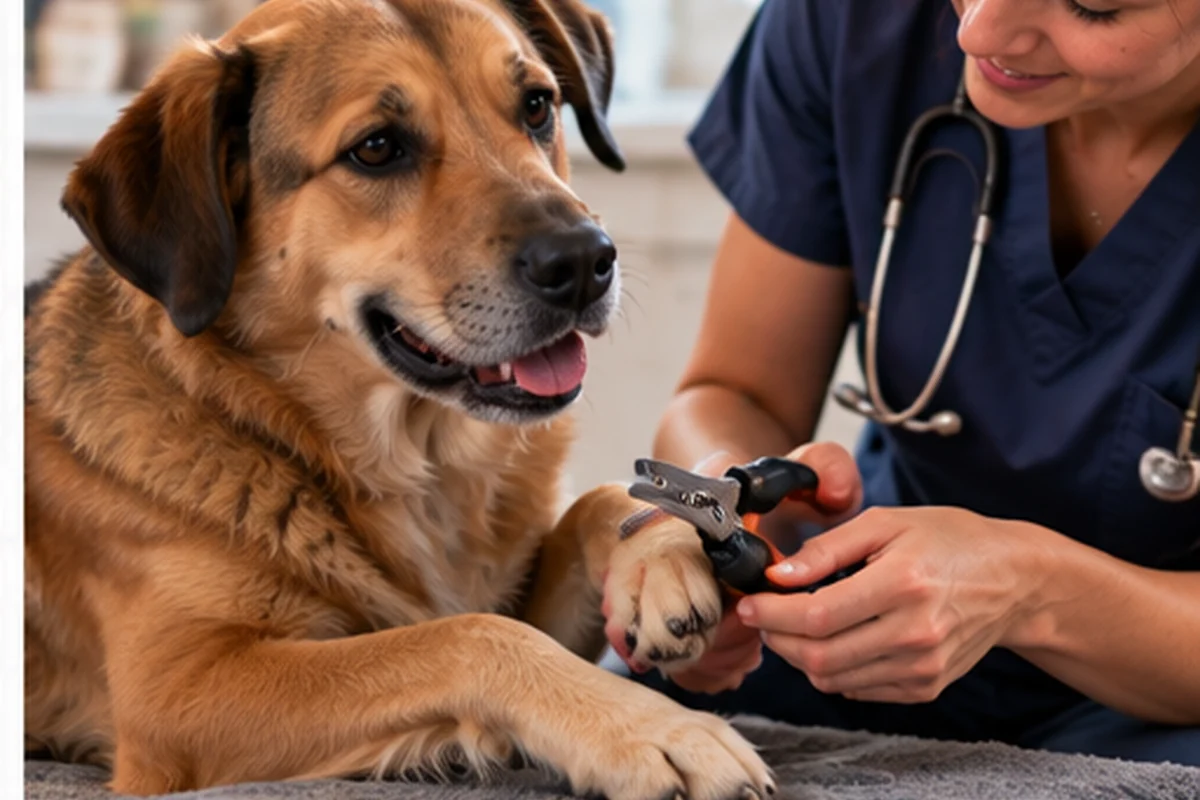
Dog nail trimming is routine care, but it should never become a wrestling match. A dog with nails that are too long may have trouble walking comfortably, while cutting into the living tissue inside a nail can hurt and cause bleeding. The safest approach is to learn where the quick may be, introduce the tools gradually, remove only a little nail at a time, and ask a veterinarian or trained grooming professional for help when your dog is frightened or the nails are difficult to assess.
If a nail is torn, bleeding substantially, embedded in the paw pad or associated with limping, seek veterinary advice instead of treating it as a regular trim. Dogs with painful paws, mobility difficulties or strong handling fears may need a different plan. There is no prize for completing every claw in one session.
Why nail length matters in everyday movement
A dog’s nails continually grow. Walking on some surfaces may wear them down, but that natural wear varies with exercise, the environment, the individual dog and the location of each nail. Dewclaws often do not touch the ground, so they can keep growing even if the other nails appear short. An overgrown nail can snag in fabric or bend as the paw bears weight. In extreme cases, a curling nail can press into the pad and create an injury.
Do not use a single visual rule for every dog. Some naturally have differently shaped toes, and some have long quicks after months without nail maintenance. Instead, look for repeated clicking on hard floors, nails extending beyond the normal contact position, snagging, unusual paw posture and sensitivity when the feet are handled. Those observations are clues rather than diagnoses. A veterinarian can assess whether discomfort arises from nails, joint disease, foot injury or another cause.
Identify the quick before making a cut
The quick contains living tissue within the nail. On many light nails it appears as a pink region; on dark nails its exact extent is harder to see. VCA’s veterinary guidance recommends small, conservative cuts when the quick is uncertain rather than taking off a large section. Use bright light and support the paw without twisting it. If you are unsure where to stop, ask a veterinarian or groomer to demonstrate on your dog’s actual feet.
The final safe length may take multiple appointments if the quick has grown long. A person who insists on immediately shortening such a nail to a textbook shape can injure the dog. Removing a very small amount regularly may gradually improve the situation, but the pace should follow professional advice. Dogs differ in nail shape, and a dark, curved nail is not a reason to guess. The important decision is recognizing where your confidence ends.
Clippers, grinders and choosing a workable tool
Scissor-style and guillotine-style clippers are both used for dogs, but comfort with the tool matters more than product marketing. A clean, sharp clipper suited to nail size makes a more controlled cut than an oversized or blunt blade. A grinder removes material gradually and can be helpful for smoothing rough edges, but its noise and vibration may be frightening. It can also generate heat if held against one area too long.
Before bringing a tool near the paw, let your dog inspect it from a comfortable distance. Pair the sight of it with something pleasant, then practice touching the handle to the paw without cutting. For a grinder, begin with the tool off, then switch it on across the room before approaching over several sessions. Never assume that ‘quieter’ automatically means safe for a frightened animal; a dog may dislike vibration more than clipping.
Teach paw handling before trimming
Start when the dog is relaxed. Briefly touch a shoulder or leg, reward cooperation and let the dog move away. Progress toward touching the paw, holding it for a moment and gently separating a toe only when those actions remain comfortable. Keep sessions brief. This is cooperative-care training, not obedience under pressure. A dog pulling a paw away is providing useful feedback about the difficulty or discomfort of the exercise.
Some dogs tolerate front paws but resist hind paws. Others have an old injury or arthritis that makes one position painful. Do not pull the limb into an unnatural angle. A non-slip mat, an appropriate resting position and a calm helper may improve handling, but forceful restraint can increase fear. If your dog growls, snaps or struggles intensely, stop. Ask the veterinary team about a structured plan rather than trying to overpower the behavior.
Make the first trim deliberately small
Prepare the tool, treats and a stable, well-lit surface. Locate a nail you can see clearly, position the clipper and remove only a tiny tip while avoiding the quick. Praise calmly and release the paw. You can stop after one nail, especially with a novice dog. The goal of the first appointment is not perfectly trimmed paws but a low-stress experience your dog can repeat.
For dark nails, VCA recommends removing very small amounts and reassessing between cuts. If you see a change suggesting you are approaching living tissue, stop and ask for guidance. Do not try to cut the nail ‘even’ with all others without considering its individual quick. Check dewclaws separately and inspect pads for redness or foreign material while the dog is comfortable. Grooming can be a useful chance to notice problems, but it does not replace a veterinary examination.
A realistic schedule instead of a universal interval
There is no single trimming interval that fits every household. The need depends on how quickly the nails grow, which surfaces the dog walks on, whether dewclaws wear naturally, and whether nail length affects posture. A short regular inspection is more useful than a rigid monthly calendar. Keep a record of the last trim and which nails needed attention; that helps when several family members share the care.
If your dog has a long quick, a veterinarian or qualified groomer may recommend smaller, more frequent maintenance rather than infrequent major shortening. Puppies can practice tool introductions well before their nails seem too long. Senior dogs may need closer monitoring because activity and wear patterns change. A dog whose nails suddenly begin wearing unevenly or scraping the ground differently deserves assessment for changes in gait or mobility.
What to do if you cut too close
Stop cutting. Keep the dog calm and follow veterinary guidance for a minor quick injury; pet-safe styptic products are sometimes used for small nail bleeding. Do not assume all bleeding is harmless. Contact a veterinarian if bleeding persists, the nail splits deeply, the dog is markedly painful or the paw becomes swollen. A nail damaged near the base can be substantially different from a nick at the tip and may need clinical treatment.
A frightening injury can set back future training. After the problem is medically addressed, return to easier handling exercises before attempting another trim. Avoid apologizing with frantic restraint or trying to finish the other nails immediately. Instead, note what caused the error: poor lighting, a moving paw, dull equipment, impatience or an unclear quick. Changing the setup matters more than promising yourself to be more careful next time.
Dewclaws and nails that curl toward the pad
Dewclaws can be overlooked because they sit higher on the leg than weight-bearing claws. Their growth may be especially noticeable in long-haired dogs, where fur obscures the area. Gently part the hair to inspect for a nail curving toward the skin. If the nail has already punctured a paw pad or appears embedded, do not pull it free or attempt a routine cut at home; the dog needs veterinary assessment for pain, injury and possible infection.
Regularly inspect both front and rear paws, since some dogs have additional dewclaws. Be cautious around nails that look thick, unusually brittle, detached, misshapen or inflamed at the base. These findings have several possible causes. Trimming may be only a small part of the necessary care, and the veterinarian may need to assess underlying nail-bed disease or trauma before advising maintenance.
Dogs with black nails, thick coats or sensitive feet
Dark nails are challenging because the quick is not clearly visible from the outside. Thick hair between the toes can obscure the claw and make accurate positioning difficult. Rather than cutting blind, ask a professional to show you how to expose the nail gently and identify a sensible stopping point. Do not shave paw hair or use scissors near skin folds without knowing how to avoid injury.
For a dog sensitive to touch, start with a predictable sequence: rest on the mat, one brief paw touch, release, reward. Progress only when the dog remains willing. Some will accept a grinder when they fear clippers, while others show the opposite preference. Age, breed and size may affect equipment ergonomics, but temperament and physical comfort are more important than a brand-specific list of ‘best nail tools.’
When professional nail care is a better choice
A veterinarian or trained groomer may be the safest option for a dog that cannot hold still, has painful joints, has thick or badly overgrown nails, or has a history of biting during paw care. Tell the professional exactly what happens at home. Hiding prior problems may lead staff to prepare an unsuitable handling approach. If medication is considered to reduce fear or manage pain during the appointment, that requires individualized veterinary direction.
Ask what a successful appointment should look like. A professional who stops after a few nails to protect the dog’s emotional and physical safety may be providing better care than one who insists on completing every nail regardless of stress. You can also request a demonstration of paw position, trimming angle and early warning signs so subsequent home sessions can be calmer. Professional help does not mean the owner failed.
What the full cost of nail care can include
A grooming appointment may charge differently for a stand-alone nail trim, a full grooming package, a grinder finish or additional handling. Veterinary visits for embedded nails, injuries or nail-bed disease may include examination, treatment, pain management and follow-up. Those are not comparable services, so do not use one advertised nail-trimming price as a prediction of an injured dog’s treatment bill.
Ask whether the quote is for a simple clip or a medical assessment. If the paw is painful or swollen, a grooming visit may be the wrong starting point even if it seems cheaper. Pet insurance should not be presumed to cover routine grooming, and an accident-related injury is evaluated under the actual policy. Good planning means separating predictable maintenance from the unexpected medical problem.
Build a routine that keeps trust intact
Use the same location, tools and quiet cues each time. A dog that consents to touching one paw today may manage two nails next week. Record which claws were trimmed and stop when the dog shows meaningful distress. For multi-person households, share instructions so one person does not accidentally undo the other’s training by suddenly restraining the animal. Keep clippers safely stored and check that the blades remain clean and functional.
If a previously calm dog begins resisting nail trims, ask whether something hurts. Paw injury, joint discomfort and changes in balance may alter tolerance. Training can help with ordinary unease, but pain needs assessment first. The broader goal is a dog that walks comfortably and can receive necessary paw care with as little fear and risk as practical. Consistent gentle maintenance supports that goal better than occasional battles over nail length.
Your next practical step
Inspect the paws today without making any cuts. Note the dewclaws, visible nail length, whether the dog is comfortable standing and which paws can be handled calmly. If the quick is unclear or a nail is pressing into skin, arrange a professional assessment. Otherwise begin with tool familiarity and one small, positive experience. A controlled routine is more valuable than an impressive before-and-after photo, and your dog’s trust is part of its health care.
Research sources
Original sources reviewed October 10, 2026. Health content is educational and requires qualified clinical review; insurer products vary by state and policy form.