A dog who hesitates before climbing onto the sofa, takes longer to stand after sleeping, or stops enjoying a familiar walk may be experiencing pain rather than simply “getting old.” Osteoarthritis is one possible explanation, but a veterinarian needs to evaluate the dog before the behavior is attributed to arthritis. A useful first step is to record changes in movement, arrange an examination, and make the home safer while the cause is investigated. Arthritis usually requires ongoing management rather than a single treatment that permanently restores a joint.
The changes owners often notice first
The most useful early clues are often ordinary moments: getting out of bed, turning on a slippery floor, stepping into a car, playing with another dog, or returning from a walk. A dog may move stiffly at the beginning of activity and loosen up later. Another may seem comfortable on a level path but hesitate on stairs. Some continue wagging and eating normally, which can make discomfort easy to miss. Limping is possible, but pain does not always produce an obvious limp. A dog may instead sleep in a different position or stop following the family upstairs.
Keep observations specific. “He is slowing down” gives a veterinary team less information than “He pauses at the back step after dinner, especially after a long walk.” Note whether the difficulty is consistent, worse after exercise, limited to one limb, or accompanied by vocalizing. Short videos of the dog rising, walking and using a safe step can capture behavior that may not appear during a clinic appointment. The American Animal Hospital Association’s pain-management guidance emphasizes owner observation and repeated assessment as parts of care.
Arthritis is not the only explanation
Stiff movement can be linked to orthopedic injury, problems involving the back or nerves, paw pain, muscle weakness, or other illnesses. Sudden inability to bear weight, obvious trauma, marked pain, significant swelling, collapse or new neurologic abnormalities should not be treated as routine arthritis. Contact a veterinarian urgently when those signs appear; do not try an exercise program to “work it out.” Even gradual stiffness deserves an appointment because treating a problem as normal aging can delay needed care.
The veterinarian may examine the dog walking and standing, feel individual joints and muscles, assess range of motion, review earlier injuries and consider radiographs or other tests. Imaging can support a diagnosis, but the amount of change visible on an X-ray does not always match the pain a dog shows at home. The practical goal is to bring a complete picture of the dog’s function, not to demand a particular image or drug at the first visit.
What a management plan can realistically do
For many dogs, the goal is less discomfort, better movement and more participation in everyday life. Management may involve an individualized combination of veterinary-prescribed pain control, weight management, appropriately selected exercise, home adjustments and rehabilitation. The right combination depends on the dog’s medical history, kidneys and other health issues, activity level, body condition and the joints involved. Improvement is often assessed over weeks with repeated observations; a dog who improves in one setting may still struggle with a different movement.
Ask how improvement will be measured. Examples include walking a defined familiar distance without stopping, rising more easily in the morning, stepping over a low threshold, or recovering from activity without next-day stiffness. If the plan is not helping, the veterinary team should reassess rather than assuming the dog simply needs a bigger dose or more strenuous exercise.
Pain medication needs veterinary oversight
Do not give a dog human painkillers or another pet’s prescription. Common human medicines can cause serious harm, and even veterinary medications require an individual decision about suitability, monitoring and possible adverse effects. If the veterinarian recommends a pain medicine, ask what response to expect, which side effects need a phone call, whether bloodwork is needed, and what to do if a dose is missed. Keep a written medication list if several family members help with care.
Supplements, injections, acupuncture or other therapies can be discussed with the veterinarian, but they should not automatically replace treatments with stronger evidence. Owners should know which treatment is considered essential, which is optional, and which is being tried because an individual patient has not responded adequately to first-line care. Avoid combining products without checking interactions or giving medications based on online dosing anecdotes.
A safer way to think about exercise
Total inactivity can lead to reduced muscle strength, while sudden intense activity can aggravate discomfort. That is why a planned, repeatable amount of movement is often more useful than alternating several quiet days with one demanding weekend walk. A veterinarian or trained rehabilitation professional can help establish an appropriate baseline and identify exercises suited to the dog’s condition. Controlled leash walks on even footing may fit one dog; another recovering from surgery may have strict activity restrictions.
A practical diary can track walk duration, surface, weather, pace, pauses and comfort later in the day. Changes should generally be incremental and individualized, with clinician advice about setbacks. Do not force a stiff dog into stretches or balance movements that cause resistance, trembling or pain. If the dog becomes more reluctant the following day, report the change and adjust the plan rather than trying to push through it.
Small changes at home can reduce daily friction
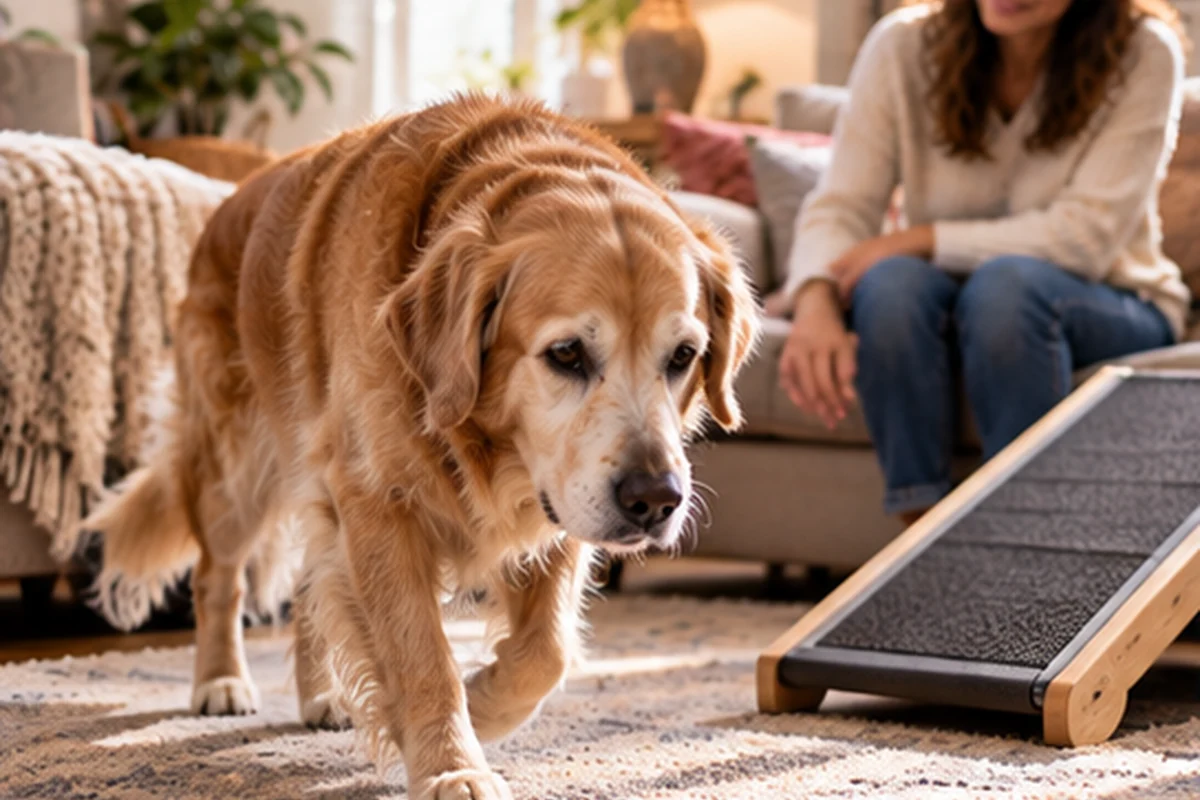
Traction is an unusually practical place to start. Runners or nonslip mats along frequently used routes can help a dog navigate tile or polished wood. Move food and water to a readily accessible place, create a resting area that does not require stairs and keep a clear path to the door. A well-fitted ramp may help with a predictable small elevation if the dog can use it confidently; a steep or unstable ramp may instead create another hazard. Let the dog learn at a comfortable pace and use equipment only if appropriate for the dog’s mobility.
For larger dogs, ask the veterinary team whether a supporting harness is useful and how to lift without causing pain. A low-entry bed can reduce repeated climbing. Consider how the dog gets into the vehicle before an appointment: a car trip should not require an uncomfortable jump simply to reach the clinic. In households with children or other pets, create an undisturbed resting place to protect the dog from enthusiastic play.
Weight and food questions deserve individual answers
Excess body weight can increase stress on painful joints. If the dog is overweight, a vet-supervised weight plan may be an important part of improving comfort. This is not a reason to sharply restrict food without calculating the dog’s needs, especially for an older pet with other medical conditions. Ask the clinician to assess body condition, muscle condition and a sensible rate of change, and to recommend a measured feeding plan.
Treats, table scraps and food offered by several household members can complicate progress. Measuring daily food and agreeing on who feeds the dog makes changes easier to evaluate. If weight loss occurs unintentionally, that is a different problem requiring investigation rather than celebration. Record weight alongside activity and mobility so that changes can be interpreted in context.
Why rehabilitation may be recommended
Veterinary rehabilitation can include carefully prescribed movement, balance work, strength training and sometimes supervised water-based exercise. It is not interchangeable with general obedience training or letting a dog swim wherever water is available. VCA’s rehabilitation resources explain that exercise selection depends on an assessment of health, injury, stage of healing and functional limitations. A qualified clinician should identify when a method might be inappropriate, for example shortly after a procedure or for a dog with additional cardiovascular or neurologic concerns.
Before paying for a course, ask the rehabilitation provider what outcome they are targeting, how many visits they initially recommend, how often the dog will be reassessed, and what work at home is expected. The goal is a coherent program with feedback, not simply a series of treatments offered because they are available in the clinic. Owners can also ask for a short demonstration and a printed or recorded version of safe home exercises.
Build a simple weekly mobility record
Choose three activities the dog performs regularly. For instance, record the time or effort needed to rise after a nap, the willingness to complete a short level walk, and comfort when turning at the doorway. Use the same route and broadly similar conditions when possible. Write down changes in medication, unusual activity, appetite or other symptoms so that the veterinary team can interpret the record accurately.
A rating such as “easy, hesitant, or unable” is often more consistent than an invented pain score. Videos taken from the same angle can show a trend. Record good days as well as difficult ones; judging a treatment only by the worst afternoon may hide meaningful improvement, while recording only the best outing can hide persistent limitations. If the dog deteriorates, do not wait for the next scheduled review just to finish the diary.
Questions for the veterinary appointment
Useful questions include: What findings support arthritis, and what other causes remain possible? Which movements should we avoid until the diagnosis is clear? What is the first change we should make at home? How will we assess medicine benefits and adverse effects? Is rehabilitation appropriate now or later? When should we return or contact the clinic sooner? If imaging or bloodwork is suggested, ask what each result could change about the treatment plan.
If the dog has had joint surgery or a previous injury, bring the records. If multiple clinicians are involved, ask for a concise plan explaining who handles medications, rehabilitation and follow-up. This can prevent conflicting advice about activity. If the proposed plan is expensive, request an itemized estimate and ask which elements are important now versus decisions that can wait until the dog’s response is known.
Where insurance and household costs fit
Pet insurance is relevant only insofar as the particular policy may cover eligible diagnosed conditions and treatment. If signs of arthritis or another orthopedic problem existed before coverage or during a waiting period, a new policy may treat the problem as pre-existing. Even a current policy may exclude certain rehabilitation treatments unless optional benefits were selected. Review the policy language and obtain a written insurer response to specific questions rather than assuming the word “arthritis” proves coverage.
Separately, budget for rechecks, monitoring tests, prescriptions, mobility supplies and any rehabilitation sessions. Some expenses recur even when there is no emergency. A manageable plan may be more valuable than a package that looks comprehensive on paper but cannot be continued. Tell the clinician about practical and financial limits; those constraints matter to selecting sustainable care.
What to do next
Arrange a veterinary evaluation for persistent stiffness or altered movement, and seek prompt care for sudden severe problems. Record two or three meaningful activities before the appointment. Improve traction and easy access to essentials without asking the dog to attempt unfamiliar movements. Once a plan is prescribed, reassess it using the same observations rather than expecting one good day to settle the question. Comfortable movement and a dog who can still take part in familiar routines are the measures that matter most.
Research sources
- AAHA, 2022 Pain Management Guidelines for Dogs and Cats
- AAHA, Chronic Pain Assessment in Dogs
- AAHA, Pain Management for Senior Dogs and Cats
- VCA, Exercising Dogs with Osteoarthritis
Research references checked October 10, 2026. Coverage, services and legal rules may vary; review current documents. EvePaw provides educational information, not medical diagnosis, legal advice or a binding insurance coverage determination.