Puppy socialization is not a contest to meet as many dogs and strangers as possible. It is a series of safe, positive experiences that help a young dog learn that ordinary sights, sounds, handling and unfamiliar situations can be manageable. You can start before the puppy’s vaccine series is finished, but the setting and disease risk matter. Ask your veterinarian which classes, visitors and outdoor places are appropriate for your puppy in your area.
The first three months are especially important for social learning, according to the American Veterinary Society of Animal Behavior (AVSAB). Yet a puppy who is frightened, cornered or forced into interactions may learn precisely the wrong lesson. A useful outing is often a short one that ends while the puppy still feels comfortable.
Start with the puppy in front of you, not a checklist
Two puppies of the same age can experience a sidewalk very differently. One may investigate a rolling suitcase with curiosity; another may freeze when it rattles. The goal is not to make the second puppy endure the suitcase until the fear disappears. Increase distance, reduce the intensity, and give the puppy room to choose whether to investigate. Reward calm observation and voluntary approach. If the puppy will not take familiar treats or cannot settle, the experience may already be too difficult.
Socialization includes people with different appearances, traffic sounds, bicycles, elevators, veterinary handling, grooming, surfaces, gentle car rides and being alone for manageable moments. Playing with other dogs is only one part of it. Your puppy also needs practice not greeting every dog or person they see. A puppy who can quietly watch a jogger pass is learning an everyday skill that may matter more than a chaotic dog-park encounter.
Make a private list of environments your adult dog will actually encounter. An apartment puppy may need experience with hallways and delivery carts; a suburban dog may need lawn equipment and visitors; a future hiking companion may need to tolerate car travel and trail equipment. Build the plan around that life instead of an arbitrary count of new stimuli.
What socializing before full vaccination actually means
Owners often hear two apparently conflicting pieces of advice: keep an incompletely vaccinated puppy away from infection, and socialize during a narrow developmental window. Both concerns are real. AVSAB’s puppy socialization position statement supports appropriate early socialization rather than waiting until every vaccination is complete. It discusses puppy classes beginning as early as approximately seven to eight weeks, subject to first vaccinations, parasite prevention, class hygiene and local veterinary guidance.
This does not mean that a young puppy should visit any public dog park or sniff unknown dogs’ waste. Disease risk varies with location, community outbreaks, vaccination status and the hygiene of the facility. A professionally supervised class that checks records and cleans surfaces differs greatly from a heavily used communal dog run. Ask the veterinarian caring for your puppy where recent infectious-disease concerns have been reported.
Low-exposure alternatives include watching the world from a clean blanket or carried position, inviting healthy vaccinated dogs with known temperaments to a controlled home, meeting friends in an uncluttered room, and listening to low-volume recordings of everyday sounds. These are examples, not a substitute for individualized veterinary advice. The point is to make the puppy’s world bigger without assuming every new environment is equally safe.
Learn the difference between curiosity and overload
A puppy who approaches, backs away, checks in with you and approaches again may be processing novelty normally. A puppy who hides behind your legs, repeatedly tries to escape, tucks their tail, trembles, yawns persistently, freezes or refuses food may need relief. These signals are not a diagnosis, and some can occur for other reasons, but they are reasons to stop escalating the exposure.
Give the puppy a retreat route. Never hold a frightened puppy in front of a stranger for a photograph or push them toward a dog that is pulling at the leash. Treats are useful when they predict pleasant outcomes, but a treat should not be used to lure the puppy into a situation they are clearly resisting. Reward choice and recovery, not forced proximity.
Small wins count. A puppy can successfully experience a vacuum cleaner by hearing it from another room while eating dinner. A week later the same dog may watch it from a safe distance while it is stationary. Only after comfortable responses would you consider brief movement or sound at a closer distance. The correct pace is individual.
A practical approach for the first two weeks together
During the first few days, focus on sleep, meals, toileting, predictable routines and learning the puppy’s normal behavior. Let the puppy explore safe areas at home and meet household members quietly. Record what seems easy and what is concerning. Avoid booking a succession of visitors merely because a socialization chart demands new faces.
In the next several days, add one manageable novelty at a time: a short drive, different floor texture, doorbell played softly, a person wearing a hat at a comfortable distance, or standing near a quiet street. Pair the experience with food, play or a chance to sniff if the puppy is interested. Stop before fatigue turns a good exercise into an unpleasant one.
For a puppy who is thriving, an appropriate supervised class can add training practice around unfamiliar dogs and people. Evaluate the instructor: Are puppies allowed to take breaks? Are frightened puppies pressured? Are dogs grouped thoughtfully? Does the school confirm veterinary prevention requirements and clean equipment? A class that leaves the puppy hiding under a chair is not automatically beneficial because it was marketed as socialization.
Keep sessions short and spread them across the day. A two-minute observation with a relaxed puppy can be more valuable than a forty-minute outing that finishes with frantic barking. Over-arousal and tiredness are common reasons for ending early, not evidence that you have failed.
Practice handling before the first uncomfortable appointment
Future veterinary care is easier when gentle touch has predictable consequences. While the puppy is calm, briefly touch a shoulder, offer a treat, and stop. Later practice looking at an ear flap, holding a paw for a moment or touching the outside of the muzzle. Never restrain a puppy through obvious distress or attempt an invasive examination. These exercises build familiarity, not a license to perform medical procedures.
Pair the carrier, car and waiting-room sights with calm practice when possible. If a clinic permits happy visits without an examination, consider asking whether staff can help with a brief, low-pressure experience. If your puppy growls, snaps or panics during handling, stop the exercise and speak with your veterinarian about a behavior plan. Punishing warnings can make future handling less predictable.
Owners also benefit from learning how to protect their puppy at greetings. Ask strangers not to lean over the puppy, reach into their face or lift them uninvited. Let the dog approach. For children, arrange seated, supervised, gentle interactions rather than chasing or hugging. The puppy does not have to accept touch from everyone to become a well-adjusted companion.
Other dogs: selective friendships beat crowded introductions
Choose known, socially skilled dogs for early meetings. A calm adult that pauses, sniffs and disengages can be a better teacher than an energetic group of puppies wrestling without breaks. Supervise and interrupt politely if one animal is repeatedly pinned, chased or prevented from leaving. It is acceptable for the experience to consist of a short parallel walk rather than physical play.
Leash greetings introduce tension because the dogs have limited room to move. Avoid letting strangers decide that their dog is friendly enough for a meeting. Watch your puppy’s signals and say no when the situation is unsuitable. Do not use the dog park as the main socialization classroom for a very young or incompletely vaccinated dog.
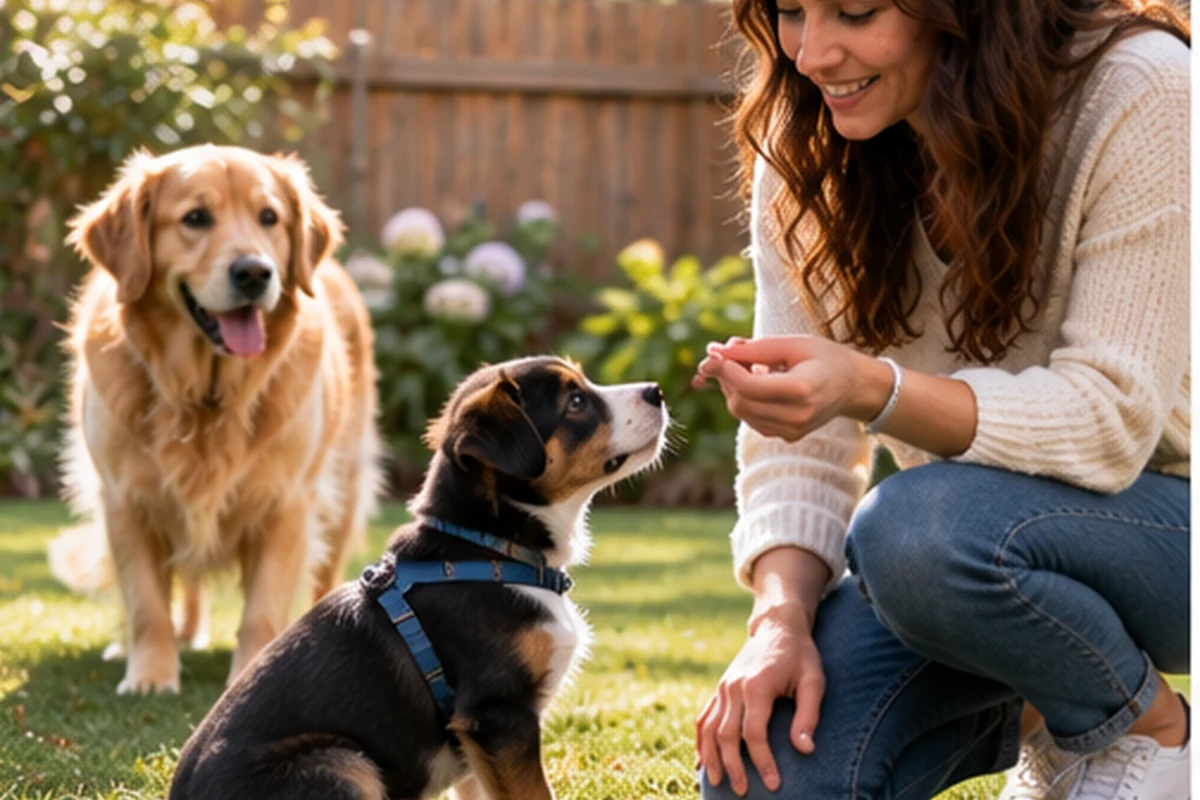
When the puppy watches an unfamiliar dog from a distance and remains relaxed, reinforce that choice. Learning to pass another dog without a greeting is particularly useful for urban walking, crowded veterinary waiting areas and travel.
When progress stalls or fear intensifies
A cautious temperament is not a moral failing, and flooding a nervous puppy with more exposure can worsen the problem. If the puppy repeatedly hides, growls, lunges, panics or cannot recover after a mild experience, consult the veterinarian. Pain, illness or sensory problems can change behavior; a qualified reward-based trainer or veterinary behavior professional may be appropriate once medical concerns are considered.
Be wary of instructions to punish fear, use intimidation, or let larger dogs teach the puppy a lesson. AVSAB supports reward-based training. For an owner, that means setting the situation up so the animal can succeed and reinforcing behavior you wish to see, rather than relying on a correction when something has already gone wrong.
Keep expectations flexible around developmental changes. A puppy may become more wary of a familiar object for a period. Reduce difficulty temporarily instead of deciding that more force is needed. A calm relationship with the owner is part of social learning: the puppy should discover that moving toward you helps them feel safe.
How to know the exercise worked
Do not measure success by whether the puppy walked up to the object. Measure whether the puppy could notice it, remain or become comfortable, and recover after surprise. Useful observations include relaxed movement, normal interest in food or sniffing, voluntary exploration and the ability to disengage. Record the setting, distance, duration and response after each meaningful exposure.
If a session ended badly, write down what happened before it escalated. Was the sound louder than expected? Had the puppy missed a nap? Was the stranger approaching directly? Use the answer to design a gentler attempt, not a longer repetition of the same stressful moment.
Socialization continues after the early puppy window. Adolescent and adult dogs still learn. Early positive experience matters, but there is no deadline after which training becomes pointless. Keep introducing ordinary life at a pace your dog can handle, with veterinary and behavior support when necessary.
An EvePaw life-stage next step
This guide belongs to Growing Up. From here, the most useful questions are how to coordinate safe outings with the vaccination schedule, what to expect at the first veterinary visit, how to begin reward-based leash skills, and how to budget for classes and preventive care. The right sequence is not one rigid calendar: the puppy’s behavior, health, environment and household needs should determine what comes next.
Research and medical note: this is educational guidance, not a vaccination recommendation for an individual animal. A veterinarian familiar with local infectious-disease risk should advise on classes and public exposure. Behavior concerns that worsen or persist deserve individualized help.
Research sources
- AVSAB, Puppy Socialization Position Statement (reviewed October 10, 2026)
- AVSAB, Position Statements and Handouts (reviewed October 10, 2026)
- ASPCA, Adoption Tips (reviewed October 10, 2026)