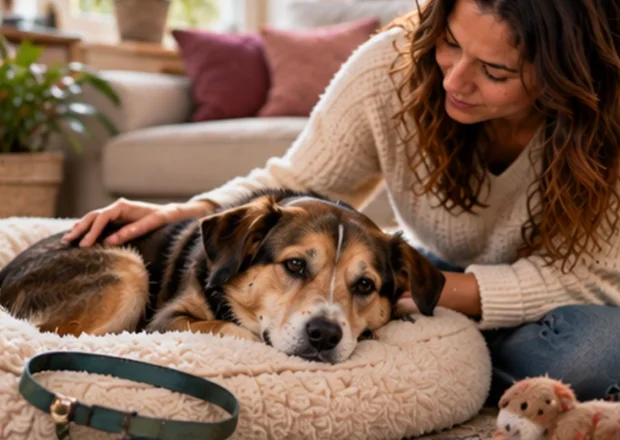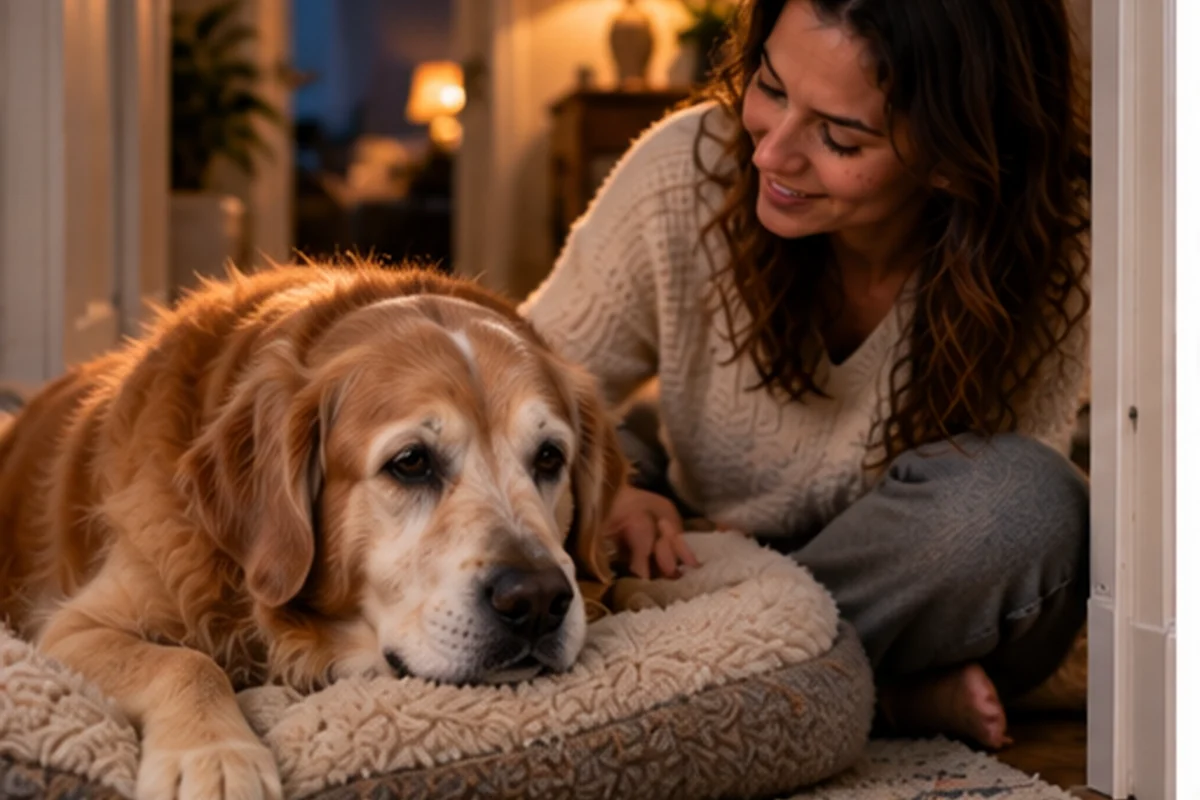
An older dog that starts wandering at night, becoming lost in familiar rooms or forgetting previously reliable routines needs a veterinary assessment—not an automatic label of ‘dog dementia.’ Cognitive dysfunction syndrome is one possible explanation for gradual changes in memory, orientation and behavior, but pain, impaired hearing or vision, medication effects, urinary disease and other medical or neurological problems may look similar. The useful first step is to record what has changed, how quickly it appeared and whether the dog is otherwise eating, drinking and moving normally.
Seek urgent veterinary care for sudden severe confusion, collapse, seizures, inability to walk, trouble breathing or other acute distress. Those are not problems to manage with home enrichment while waiting for a routine senior wellness appointment. This article explains how families can notice changes early, support daily life and have a more productive conversation with the veterinarian; it cannot diagnose the animal.
What cognitive changes may look like
The AAHA senior-care guidance groups common behavioral changes under the acronym DISHAA: disorientation, altered social interactions, sleep-wake changes, house-training or learning changes, altered activity and anxiety. A dog may stand at the wrong side of a door, pace without an obvious destination, become unsettled after dark, interact differently with family members or have accidents indoors despite years of reliable house training. One isolated event is not enough to diagnose cognitive dysfunction.
Observe patterns rather than hunting for a checklist score on the internet. Did the dog miss a doorway once after the furniture was moved, or does it repeatedly become trapped behind familiar objects? Has nighttime pacing appeared alongside limping? Does the dog respond when spoken to, or might hearing have changed? These distinctions help the veterinary team decide whether cognitive disease is plausible and what else should be investigated.
Why age alone is not the diagnosis
Many older dogs remain curious, playful and able to learn. Aging raises the probability of some medical conditions, but it does not make confusion inevitable or harmless. The AAHA guidelines note that cognitive dysfunction may be a diagnosis reached only after evaluating other explanations. A dog that begins having household accidents may have urinary problems, mobility limitations or an inability to reach the door in time. A dog that wakes at night may be uncomfortable rather than mentally disoriented.
Avoid using ‘senility’ as a catch-all. The more precise question is which function changed and what physical conditions could explain it. Good veterinarians may assess the history, gait, senses, neurological signs and laboratory findings before determining which steps are useful. Families can assist by bringing short videos and a timeline. That evidence is often more informative than a broad statement that the dog ‘isn’t acting like itself.’
Sudden changes require a different response
A gradual decline over many months is a different clinical story from a dog that becomes abruptly unresponsive, circles continuously, cannot stand or has an episode of collapse. Sudden changes can reflect acute illness or neurological disease and need timely professional evaluation. Call an emergency clinic if the dog is critically ill or you are unsure whether it can safely wait. Do not try to distinguish a stroke, seizure, poisoning or other emergency from cognitive dysfunction using online descriptions alone.
In an acute episode, prioritize safety. Keep the dog away from stairs and hazards, avoid forcing food or medication, and follow the emergency team’s instructions about transport. Write down when the change started and any possible exposure to medications or toxins, but do not spend time collecting perfect notes while a distressed animal needs care. Once urgent problems are ruled out, the veterinarian can discuss longer-term monitoring.
Track behavior with a concise diary
A simple log can capture the time, situation, duration and effect on daily life. For example: ‘Tuesday 2 a.m.: paced in hallway for 20 minutes; settled after trip outside; no obvious limp.’ Or: ‘Thursday afternoon: stood behind partly open bedroom door for several minutes; responded normally to voice.’ Specific notes let the veterinarian separate nighttime behavior, navigational errors, pain and elimination changes.
Include appetite, thirst, mobility, medications and sleep alongside behavior. An increase in drinking or changes in urination may point to a medical issue independent of cognition. Family members may witness different parts of the day, so a shared notebook is useful. The aim is not to create a scientific experiment at home but to reduce recall bias and show whether the frequency and severity of problems are changing.
What a veterinarian may evaluate
AAHA discusses history, physical and neurological examination, bloodwork and urine testing as parts of assessment, with other investigations chosen according to findings. A clinician may check vision and hearing, examine joints and spine for pain, review current drugs and look for evidence of endocrine, metabolic or organ problems. Advanced imaging or referral is not needed in every case; the veterinarian weighs the potential benefit, risks, costs and likelihood of alternative diagnoses.
Ask which findings suggest cognitive dysfunction and which could support another diagnosis. If a particular test is recommended, request an explanation of what its result would change. The choice is not simply ‘test everything’ or ‘accept dementia.’ Sometimes a focused investigation identifies a treatable source of discomfort that was disguising itself as a behavior problem. Other cases involve several overlapping conditions requiring coordinated care.
Changes in sleep and household routines
Night wandering is stressful for pets and families, but sudden strict changes can make an already unsettled animal more anxious. Keep sleeping and feeding locations consistent where possible. Offer a quiet, accessible resting place with a non-slip route to water and the toileting area. Low-level lighting may help a dog whose vision is worsening, and closing access to confusing stairways can reduce hazards. These are practical environmental supports, not proven treatments for every cognitive condition.
If a dog wakes to urinate, tell the veterinarian whether there is a larger volume of urine, straining, discomfort or a new medication. Do not restrict water to stop nighttime accidents unless the clinician directs it. For dogs with arthritis, the difficulty of standing and reaching a door may be the real problem. A predictable evening toilet opportunity and an accessible sleeping area can help while the medical cause is assessed.
Disorientation around furniture and doors
Try not to rearrange furniture frequently for a dog that relies on a stable layout. Keep clear walking corridors, use non-slip surfaces and block unsafe access to stairs or balconies. If the dog becomes stuck in corners, consider gently guiding it without startling or physically dragging it. A safe space should still allow the pet to move and rest, not confine it in a way that causes panic.
If the behavior is new, capture a short video when safe rather than staging a repeat. A veterinary neurologic examination may be warranted when disorientation is accompanied by changes in gait, asymmetric signs or other concerning findings. In the meantime, avoid interpreting repeated contact with furniture as deliberate misbehavior. The dog is communicating a difficulty, whether visual, physical, cognitive or a combination.
Social interaction and anxiety can change together
An older dog may seek more reassurance or stop greeting visitors. Some dogs seem irritable when touched unexpectedly because hearing, sight or pain has changed. Approach in a predictable way and teach children not to disturb a resting dog. Anxiety can coexist with cognitive impairment, but it can also occur independently. AAHA recognizes anxiety as an important component of senior-pet behavioral evaluation rather than something families should simply tolerate.
When reactions change, identify the trigger: approaching from behind, an unfamiliar room, the evening hours or being separated from a familiar person. Ask the veterinarian whether pain management, environmental changes or a behavior referral should be part of care. Avoid punishment for house accidents, pacing or vocalization. A frightened or confused dog will not benefit from being scolded for an issue it may be unable to control.
Activity and enrichment should match capability
Mental and physical engagement can remain meaningful in later life, but more stimulation is not automatically better. Consider calm sniffing walks, short familiar games, food puzzles suited to the dog’s abilities and gentle interaction at predictable times. The pace should account for arthritis, breathing problems, reduced vision or other illnesses. Some dogs can enjoy an easy training exercise; others may be more comfortable simply resting with their person.
Watch how the dog responds afterward. If an activity leaves it limping, panting excessively or unsettled for hours, ask whether it is appropriate. A veterinarian may suggest environmental enrichment or particular nutrition as part of a broader plan. Do not buy supplements marketed for ‘dog dementia’ on the assumption they have demonstrated benefits. Ask about evidence, interactions and contraindications, especially when your dog already takes several medications.
Medication and treatment discussions
Treatment depends on what the clinician finds. AAHA describes options for managing diagnosed canine cognitive dysfunction, including environmental approaches, selected diets and in some cases prescription medication. The availability of a licensed treatment does not mean it is suitable for every patient. Interactions, other diseases and the exact diagnosis matter. EvePaw cannot choose a drug or dosage for a dog based on an online behavior checklist.
Ask what success would look like and when the veterinarian wants to reassess. A modest improvement in sleep or reduced evening anxiety may be meaningful even if orientation difficulties remain. Record unwanted effects and changes in appetite, movement or alertness. Never start, stop or combine behavioral medication without the prescribing clinician’s directions, and provide a complete list of drugs and supplements at every appointment.
Quality of life is broader than a diagnosis
A dog with some cognitive changes may still enjoy meals, familiar people, naps and gentle walks. Another may be distressed by repeated confusion, fear or inability to rest. Assess comfort and function across the entire day rather than making a decision from one difficult night. Consider pain, appetite, toileting, mobility, sleep, social interaction and the dog’s ability to experience ordinary pleasures. The veterinarian can help clarify which problems may improve with treatment.
A family diary can reveal trends that are hard to see while living through them. Note good periods as well as bad ones; avoid defining a pet only by its deficits. Discuss caregiver workload without embarrassment. Frequent nighttime wandering or intensive medication schedules can affect what care is sustainable at home, and the veterinary team may suggest practical adjustments or supportive resources.
Planning a useful follow-up appointment
Bring dated examples, short videos and a medication list. Ask: ‘What causes other than cognitive dysfunction need to be ruled out?’ ‘Would checking blood and urine change the plan?’ ‘Could pain or hearing loss explain the pattern?’ ‘How will we monitor response and decide if the plan needs adjusting?’ These questions turn a vague concern into a collaborative clinical assessment.
Set a realistic review interval with the veterinarian, particularly if therapy changes. A dog may need earlier contact for new severe signs, while gradual changes can be compared over a longer period. Ask which warning signs should prompt immediate reassessment. If multiple conditions are present, agree on which issues most affect the dog’s comfort. The next best step may be treating pain rather than immediately pursuing a cognitive label.
The next step for families
Start with three concrete observations: the change you noticed, when it first occurred and how it affects the dog. Arrange a veterinary appointment for new persistent changes, and use emergency care for sudden severe signs. Make simple home adjustments that improve access and reduce hazards without masking important symptoms. Cognitive decline is neither a diagnosis to assume nor a reason to abandon meaningful daily life. A careful evaluation and compassionate support plan can help families respond to what their individual dog actually needs.
Research sources
Original sources reviewed October 10, 2026. Health content is educational and requires qualified clinical review; insurer products vary by state and policy form.