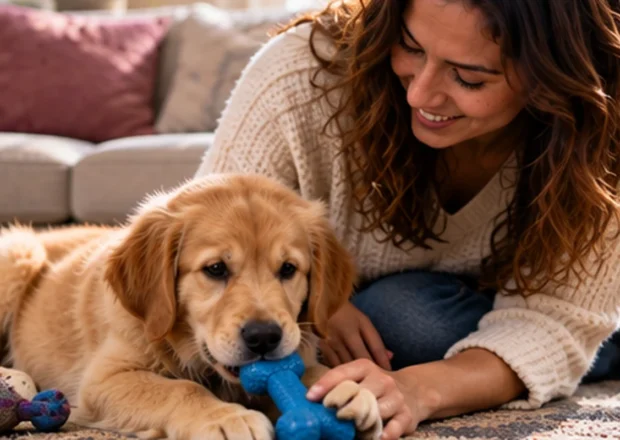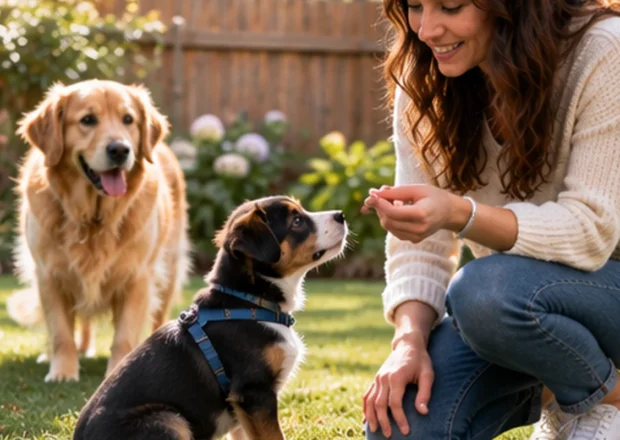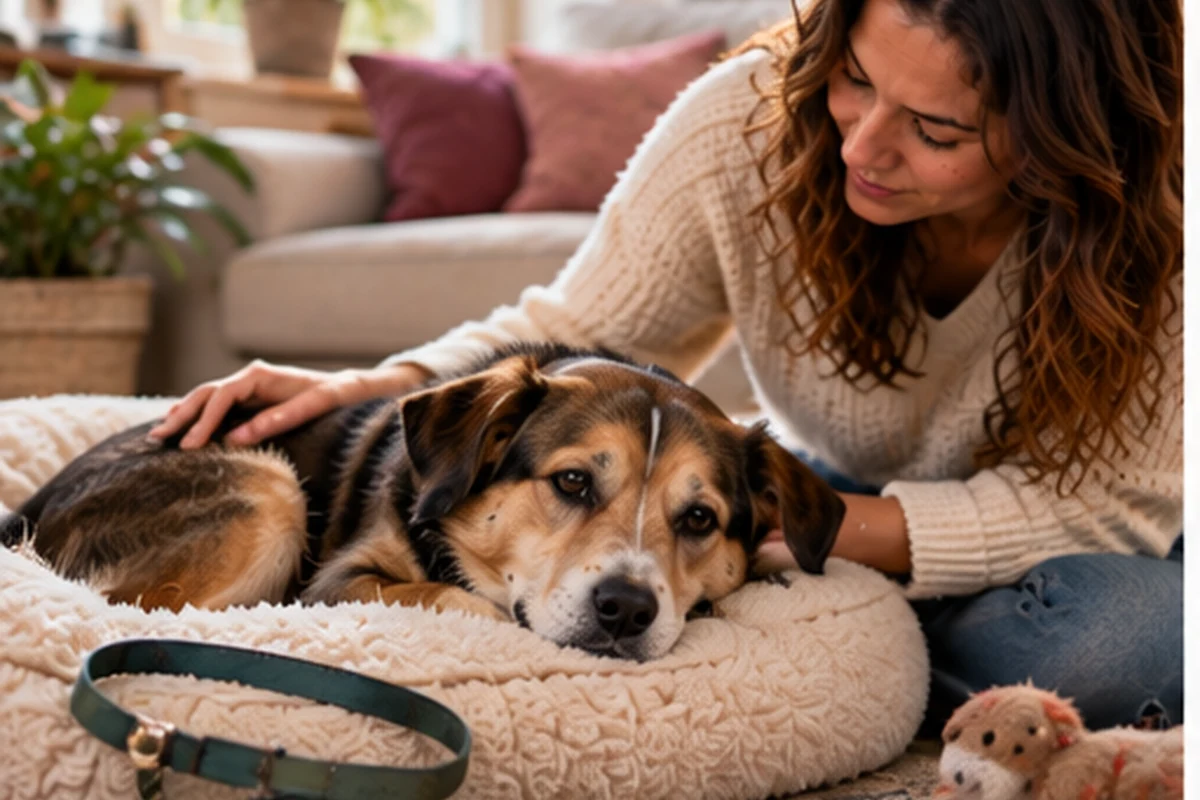
An adult rescue dog does not need an exciting welcome-home schedule. The more useful plan is a quiet arrival, a predictable household routine, secure exits, a veterinary follow-up, and time to learn what helps this particular dog feel safe. Some newly adopted dogs approach everyone immediately; others avoid touch, food, stairs or unfamiliar noises. Neither response tells you what their personality will look like after several weeks. Treat the first month as a period for observation and relationship-building, not a deadline for perfect behavior.
For most households, the practical order is safety first, basic routines second, training in small pieces third. Arrange veterinary care promptly if the dog appears sick, injured, persistently distressed or has a problem reported in the adoption paperwork. If the dog has difficulty breathing, collapses, cannot urinate, has repeated unproductive retching, or shows other alarming signs, seek emergency veterinary advice rather than assuming the behavior is adoption stress.
Prepare one predictable landing zone before pickup
A landing zone is a quiet place where the new dog can rest without children, visitors or resident pets continually approaching. It might be a bedroom corner behind a baby gate, an uncluttered section of the living room, or a crate the dog already chooses to enter. The crate should not be forced as a solution to distress. Provide water, an easy-to-clean sleeping surface, and a way for the dog to move away from people. Check that doors and windows latch securely and that loose cords, medicines, food, cleaners and small chewable items are inaccessible.
Plan the route from the car to the house. A new dog may slip a collar or attempt to bolt in an unfamiliar place. Ask the shelter which harness or collar the dog has tolerated; use properly fitted equipment, secure the leash before doors open, and avoid a crowd at the doorway. Check ID tags and arrange to update microchip contact information if one is registered. A microchip is useful identification but is not a substitute for a correctly fitted leash or secure fencing.
Prepare practical supplies without buying an entire pet-store aisle. An appropriately sized food bowl, water bowl, basic food the dog already eats, leash and harness, cleanup supplies, bedding and a few simple enrichment items are enough to begin. Ask the adopter or rescue what the dog was eating; sudden diet changes can cause digestive upset. If a food transition is needed, ask the veterinarian how to approach it when there are digestive signs or known health conditions.
The pickup day: take the quieter route home
Keep the journey simple. Skip introducing the dog to extended family, visiting a dog park, or touring pet stores on the way back. Many adult dogs have already experienced transport, confinement, unfamiliar handlers and new sounds. One more social event can make it harder for an owner to tell whether the dog is overwhelmed, tired, fearful or simply curious. Provide safe car restraint, a direct route, and breaks only where the dog can remain securely managed.
At home, allow time for sniffing a small, supervised area. Show the dog water and a suitable potty place. Keep voices, touching and excitement low. Let the dog initiate gentle contact instead of insisting on petting. A dog who hides under furniture may need quiet; a dog who follows every step may not yet feel safe alone. Neither requires a confrontation. Where there are children, explain that sleeping, eating and hiding are private activities for the dog.
Write down the first night’s essentials: drinking, eating, urinating, defecating, sleeping, coughing, vomiting, limping and any unusual behavior. You are establishing a baseline, not diagnosing a problem. If something appears wrong, call a veterinarian and describe what you observed, how long it lasted and what adoption records say. A video can help describe a movement or cough, but it cannot replace a clinical examination.
First three days: use repetition rather than a packed schedule
Adopters sometimes hear the “3-3-3” guideline: roughly three days for initial decompression, three weeks for emerging routines, and three months for fuller settling. The ASPCA presents it as an illustration of adjustment, not a rule governing every pet. A nervous dog does not become abnormal on day four; an outwardly relaxed dog may encounter new fears later. The numbers should encourage patience, not create a stopwatch.
Select a consistent wake-up, feeding and potty schedule that your household can genuinely maintain. Frequent, low-pressure potty opportunities are reasonable while you learn the dog’s habits. Do not assume housetraining history translates perfectly to a new home. Reward appropriate elimination calmly. Accidents should trigger more supervision and a check of the schedule, not punishment. Watch for straining, very frequent attempts, blood in urine or inability to pass urine; those are medical concerns, not training failures.
Keep walks short and useful at first. A nearby low-traffic route may be easier than a busy trail where bicycles, off-leash dogs and construction noises arrive at once. Let the dog observe at a comfortable distance. If you notice freezing, frantic pulling, trembling or repeated attempts to retreat, increase distance from the trigger and head home. You do not need to introduce the dog to every person or animal in the neighborhood to prove social success.
Introductions to people and resident animals require management
For visitors, explain the ground rules before they arrive: ignore the dog at first, avoid reaching over its head, do not lean into its sleeping place, and never corner it for a photo. Even a dog that enjoys affection may need control over the duration of contact. If the dog growls, the goal is to create distance and assess the setting, not to suppress the warning. Growling can communicate discomfort. Seek a qualified, humane behavior professional for escalating fear or aggression.
Resident dogs need their own plan. Separate meals and high-value chews; provide separate resting spaces; supervise initial time together; and avoid forcing shared beds or toys. Some pairings improve through parallel walks at comfortable distances, but the exact approach depends on both dogs’ histories and behavior. If there has been biting, guarding, intense fixation or marked stress, ask your veterinarian for an appropriate behavior referral before attempting further direct introductions.
Resident cats should have dog-free vertical and enclosed refuge, litter boxes and feeding areas that the dog cannot access. Do not allow an excited dog to chase a cat “just once.” A baby gate or separate rooms give each animal the chance to observe and disengage. Success may mean peaceful avoidance, not friendship. During this stage, progress should be measured in relaxed body language and predictable routines, not in how quickly the animals share a sofa.
Arrange a veterinary intake visit without inventing a clean slate
Collect every available document from the shelter or prior household: vaccine dates, parasite prevention, spay/neuter information, medication list, relevant test results, microchip number, prior dental or orthopedic concerns, and any reported behavioral triggers. Missing documents do not prove the dog had no earlier symptoms or treatment. Tell the veterinary team what you know and identify unknowns honestly.
At the visit, ask the clinic to establish a preventive-care plan appropriate to the dog’s age, environment, medical history and local risks. This may include reviewing vaccination status, parasite screening or control, body condition, dental health, and follow-up for any existing problem. Do not administer human medications or start supplements merely because another dog benefited. Decisions about treatment, dose and clinical urgency belong with the veterinarian.
The visit is also a chance to get guidance on handling. If the dog is fearful of examination, explain that in advance. Ask about shorter appointments, low-stress handling or a behavior consultation if needed. It is better to work toward safe future veterinary care than to treat one unpleasant encounter as proof that your dog is “difficult.” Keep an organized record of what the clinic recommends and the date of the next visit.
The second week: teach household skills in tiny sessions
Once basic routines feel steadier, identify two or three skills that would genuinely improve everyday safety. Coming when called indoors, walking calmly through doorways, resting on a mat, and allowing brief harness handling may matter more than “sit” for an adopted dog with uncertain experience. Use brief, rewarding sessions and stop while the dog is still comfortable. If a task causes distress, simplify it. For separation problems, do not assume forced lengthy isolation will build independence.
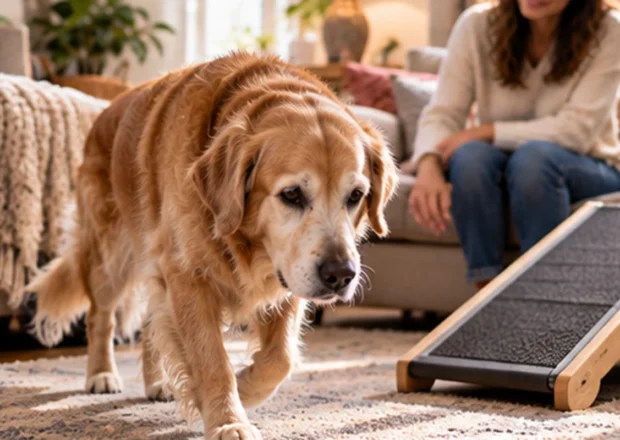
Watch for patterns rather than single incidents. Does the dog seem to relax after a short walk? Does it bark only when people pass a window? Is it avoiding one doorway or floor surface? These observations help distinguish a practical environmental change from a problem requiring medical or behavior support. For example, a dog reluctant to climb stairs may be fearful, in pain, unfamiliar with that surface or dealing with several factors; do not diagnose the cause from behavior alone.
Keep enrichment appropriate to the dog. Food puzzles may work for some dogs; others prefer sniffing games, quiet chewing or gentle supervised play. Avoid enrichment items that can break into swallowable pieces, especially if the dog tends to ingest objects. Introduce new foods conservatively. The measure of usefulness is whether the activity leaves the dog settled and engaged, not how stimulating it looks in a social-media video.
Weeks three and four: expand the world according to the dog’s response
As you learn what the dog enjoys, gradually introduce the ordinary parts of your household: a longer neighborhood route, brief visits from one trusted person, short car journeys, or a new room. Add one meaningful change at a time so you can tell what is working. A dog who now seeks play or follows a predictable schedule may be ready for more; a dog still hiding or reacting strongly to noises may need a slower plan and professional guidance.
Consider whether the dog will need a regular dog walker, boarding arrangement or sitter. Arrange introductions before the first urgent occasion and share practical instructions about handling, escape risks, medications, feeding and signs of stress. If the dog is uncomfortable around unfamiliar dogs, choose care that does not depend on crowded group play. Your care plan should fit this dog rather than a generic image of a sociable pet.
Financial planning can also start in this period. Record initial equipment, adoption fees, the first veterinary appointment, training costs and ongoing food or preventive expenses. Insurance may be a financial choice for future eligible accidents and illnesses, but it does not retroactively cover known conditions and it is not a substitute for prompt veterinary care. Compare actual quotes and policy documents if considering it; never assume missing pre-adoption records eliminate pre-existing-condition exclusions.
What if progress is uneven?
Expect variation. A dog may be relaxed on Tuesday and startled by the dishwasher on Wednesday. Appetite and sleep can also change with environmental stress, but persistent loss of appetite, repeated vomiting, diarrhea, pain signs, breathing trouble or urinary problems deserve professional assessment. Sudden behavioral changes, particularly in an older dog, should not automatically be attributed to personality or a shelter background. Health and behavior often interact.
Keep a simple daily log with meals, toilet breaks, rest, interactions and triggers. Bring it to the veterinarian or qualified behavior practitioner if concerns persist. Avoid internet guarantees that a specific training device, supplement or schedule will “fix” every rescue dog. Recommendations should match the animal’s behavior, medical history and environment; good care sometimes involves slowing down or changing the household setup rather than training harder.
A first-month checklist that has a real purpose
By the end of month one, the goal is not a dog that obeys perfectly in every setting. You want the dog to have secure identification; a safe resting place; an understandable feeding and potty routine; an established veterinary relationship; managed introductions to resident animals; and a household that recognizes early signs of fear, pain and illness. You also want practical plans for times when the dog must be left with another caregiver.
If those foundations are in place, there is no need to rush into every activity. If they are not, choose one foundation to improve rather than adding new obligations. The owner’s next question is often “How do I know my new dog is settling?” A useful answer is that the dog is increasingly able to rest, eat, explore and choose contact without persistent distress. Trust builds through repeated predictable experiences, not through a calendar milestone.
Research sources
Research checked October 10, 2026. Provider terms and veterinary advice should be rechecked before publication. These sources support factual context; examples and analysis are labeled in the article.